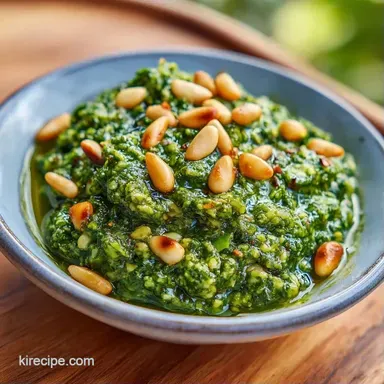
Fresh Vegetarian Basil Pesto: Nutty and Bright
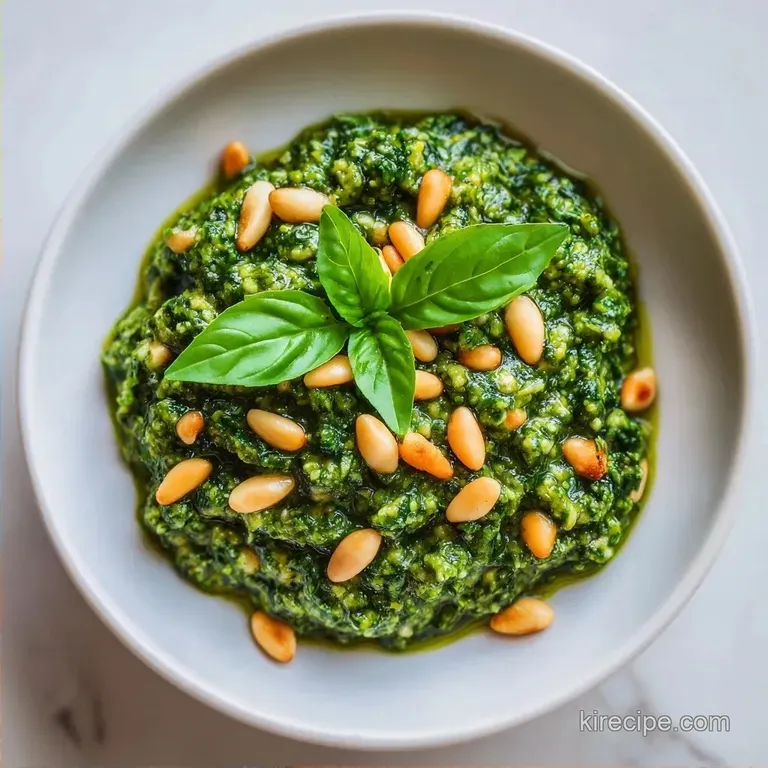
- Time: 5 min active + 3 min cooking
- Flavor/Texture Hook: Nutty, bright, and silky
- Perfect for: Weeknight dinner, meal prep, beginner friendly
That toasted, nutty scent hits you the second the pine nuts turn gold in the pan. It's a warm, earthy smell that signals the start of something great. When you add the fresh leaves, the aroma shifts to something sharp and peppery.
I used to think you needed an expensive mortar and pestle to get the right consistency. I spent a whole afternoon bruising leaves by hand only to end up with a chunky mess that tasted like raw garlic.
Now I stick to the food processor. This Basil Pesto gives you that rich, vibrant green color and a smooth finish in under ten minutes. It's the kind of sauce that makes a simple bowl of pasta feel like a real meal.
Making Fresh Basil Pesto
The Lemon Juice Trick: Acid prevents the basil from oxidizing and turning brown. It keeps the color bright and tastes fresher.
Nutritional Yeast: This provides the savory, cheesy depth without using dairy. It adds a boost of B vitamins to the mix.
| Method | Time | Texture | Best For |
|---|---|---|---|
| Food Processor | 8 mins | Smooth & Uniform | Quick weeknight meals |
| Mortar & Pestle | 25 mins | Chunky & Rustic | Traditional flavor profiles |
Ingredient Deep Dive
| Ingredient | What It Does | Best Swap |
|---|---|---|
| Pine Nuts | Provides fatty, nutty base | Walnuts or Almonds |
| Nutritional Yeast | Adds savory "cheese" flavor | Vegan Parmesan |
| Fresh Basil | Primary aromatic flavor | Baby Spinach (milder) |
| Olive Oil | Emulsifies and preserves | Avocado Oil |
Recipe Specifications
Right then, let's look at the numbers. This recipe makes about 1.5 cups of sauce, which is plenty for a family dinner or a few days of lunches.
The active work is minimal. You spend 5 minutes prepping and 3 minutes toasting the nuts. In total, you're looking at 8 minutes from start to finish.
Ingredients and Substitutes
Get your ingredients ready. I prefer weighing things for consistency, but cups work too.
- 2 cups (50g) fresh basil leaves, packed Why this? Fresh leaves provide the peppery punch.
- 1/3 cup (45g) pine nuts Why this? Classic buttery flavor.
- 3 cloves (9g) garlic, peeled Why this? Adds a sharp, pungent bite.
- 1 tbsp (15ml) fresh lemon juice Why this? Balances the fat and keeps it green.
- 1/3 cup (30g) nutritional yeast Why this? Nutritious, cheesy alternative to parmesan.
- 1/2 cup (120ml) extra virgin olive oil Why this? high quality oil carries the flavor.
- 1/2 tsp (3g) sea salt
- 1/4 tsp (1g) cracked black pepper
| Original Ingredient | Substitute | Why It Works |
|---|---|---|
| Pine Nuts | Walnuts | Earthier taste. Note: Slightly more bitter |
| Olive Oil | Avocado Oil | Neutral flavor. Note: Less aromatic |
| Lemon Juice | Apple Cider Vinegar | Similar acidity. Note: Changes the brightness |
Necessary Kitchen Tools
You don't need a fancy setup here. A standard food processor is the way to go. If you have a high speed blender, that works too, but be careful not to over blend.
I recommend a small skillet for the nuts. A heavy bottomed pan prevents them from burning too quickly. A rubber spatula helps you scrape every bit of the Basil Pesto out of the processor.
Step by step Process
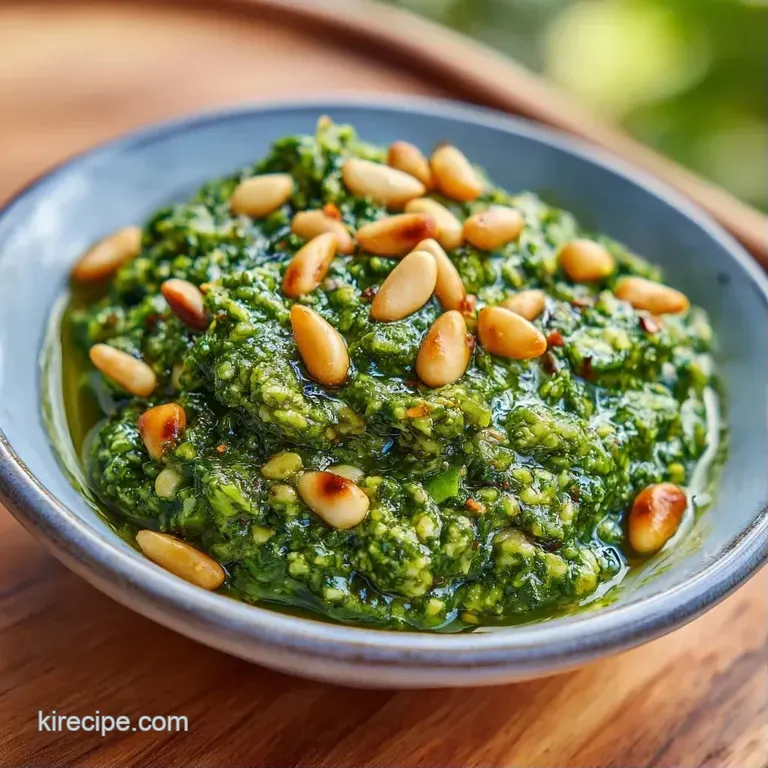
Let's crack on. Follow these steps for a balanced result.
- Heat a small skillet over medium heat. Toast the pine nuts for 2-3 minutes until they smell nutty and turn pale golden brown. Remove them from the heat immediately.
- Toss the toasted nuts, garlic, lemon juice, and nutritional yeast into the food processor. Pulse until the mixture looks like coarse sand.
- Add the fresh basil leaves. Pulse 5-7 times until the leaves are finely chopped. Note: Don't over process here or the heat from the blades will wilt the leaves.
- Turn the processor to low. Slowly drizzle in the olive oil in a steady stream until the sauce becomes a emulsion.
- Stir in the sea salt and cracked black pepper by hand.
Chef's Note: If you want a deeper flavor, try adding a tiny pinch of nutmeg. It doesn't make it taste like dessert, but it makes the nutritional yeast taste more like aged cheese.
Preventing Common Errors
It's easy to mess up the color or the texture if you're not paying attention. Most people just throw everything in and blend until it's a puree, which is a mistake.
Why Pesto Turns Brown
This happens because of oxidation. When the basil cells break, they hit the air and turn dark. To stop this, the lemon juice acts as a shield. According to Serious Eats, keeping the leaves cold and adding acid helps maintain that vibrant green.
Fixing a Grainy Texture
Graininess usually comes from not pulsing the nuts and garlic enough before adding the oil. If you add the oil too early, it coats the solids and prevents them from breaking down.
| Problem | Root Cause | Solution |
|---|---|---|
| Brown Color | Oxidation/Heat | Add lemon juice; avoid over blending |
| Grainy Texture | Oil added too soon | Pulse nuts/garlic into sand first |
| Separated Oil | Blended too fast | Drizzle oil slowly on low speed |
Flavor and Diet Tweaks
This version is naturally vegan and gluten-free, which makes it a great fuel for almost anyone. But you can still play with the flavors.
If you need a Vegan Basil Pesto Recipe that's even faster, I've got one that skips the toasting step. For those who want a different nut profile, pumpkin seeds work brilliantly.
Vegan Basil Pesto Recipe without Pine Nuts
Swap the pine nuts for 1/3 cup of sunflower seeds or toasted walnuts. The result is a bit more rustic but just as nutritious.
Traditional Dairy Version
If you aren't vegan, replace the nutritional yeast with 1/2 cup of freshly grated Parmesan. It's a classic move that adds a saltier, sharper profile.
The "Green Boost" Blend
Add a handful of baby spinach or kale to the mix. It increases the nutrient density without changing the taste too much.
Storage and Zero Waste
Don't let the leftovers go to waste. This Basil Pesto keeps in the fridge for about 5 days. Store it in a glass jar and pour a thin layer of olive oil over the top to seal out the air.
For long-term storage, freeze it in ice cube trays. Once frozen, pop the cubes into a freezer bag. They last for 3 months.
To avoid waste, don't throw away the basil stems. I toss mine into a vegetable stock or freeze them to use in a soup. Even the leftover nut dust from the toasted pan can be sprinkled over avocado toast.
Serving and Pairing Ideas
The most obvious choice is pasta, but don't stop there. A Vegetarian Basil Pesto works beautifully as a spread for sourdough sandwiches or a dip for raw carrots.
This works great as a marinade for Lemon Basil Tofu. Just coat the tofu and let it sit for 30 minutes before searing it in a pan.
If you're feeling fancy, dollop some on top of a roasted cauliflower steak or a caprese salad. The richness of the oil and the tang of the lemon make it a versatile tool in the kitchen.
Scaling the Batch
If you're making this for a crowd, don't just multiply everything by four in one go.
- Scaling Down (1/2 batch): Use a smaller food processor. Reduce blending time by about 20% so you don't over process the small amount of basil.
- Scaling Up (2x-4x): Work in batches. If you overload the processor, the leaves at the bottom turn to mush while the top stays chunky. Reduce the salt slightly, usually 1.5x the salt is enough for a 2x batch.
| Batch Size | Basil Amount | Oil Amount | Tip |
|---|---|---|---|
| Single (1x) | 2 cups | 1/2 cup | Standard method |
| Double (2x) | 4 cups | 1 cup | Blend in two batches |
| Half (0.5x) | 1 cup | 1/4 cup | Use a mini chopper |
Pesto Myths
A few things people get wrong about this dish:
First, some say you must use a mortar and pestle for "real" pesto. While it gives a different texture, a food processor is more efficient for daily nutrition.
Second, many believe that searing the basil improves the flavor. It actually does the opposite. Heat destroys the delicate aromatics of the leaves, turning your fresh sauce into something that tastes like cooked spinach. Keep the basil raw for the best result.
Recipe FAQs
What are common mistakes when making pesto?
Over-processing the basil leaves. Excessive pulsing creates friction heat from the blades, which wilts the leaves and turns the pesto a dull brown instead of vibrant green.
How to turn fresh basil into pesto?
Pulse toasted pine nuts, garlic, lemon juice, and nutritional yeast until coarse. Add the basil and pulse 5-7 times, then slowly drizzle in olive oil while the processor runs on low to create a creamy emulsion.
Is this a vegan pesto recipe?
Yes, it is entirely plant-based. Nutritional yeast is used instead of cheese to provide the signature savory, nutty flavor while remaining dairy-free.
What can be used as an alternative for fresh basil?
Baby spinach or kale are the best substitutes. These greens mimic the color and texture, though the resulting flavor will be more earthy and less aromatic.
Is pesto ok for diabetics?
Yes, in moderation. The high content of healthy fats from olive oil and pine nuts helps slow the absorption of glucose, but portion control is still key.
Is pesto ok for kidney patients?
Consult your healthcare provider first. Depending on your specific stage of kidney disease, you may need to monitor the phosphorus and potassium found in pine nuts and nutritional yeast.
What are some good dishes that incorporate basil pesto?
Use it as a pasta sauce, a sandwich spread, or a dip for crusty bread. If you enjoyed mastering the stable emulsion here, apply that same whisking principle to a homemade Italian dressing for a perfectly blended salad.
Basil Pesto in 8 Minutes