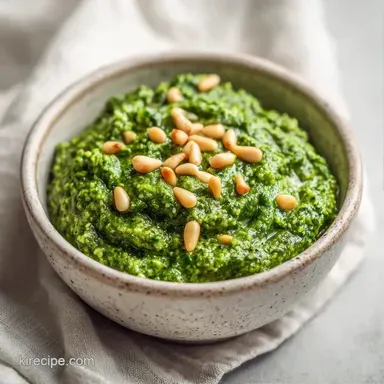
Vegan Basil Pesto Recipe: Zesty and Fresh
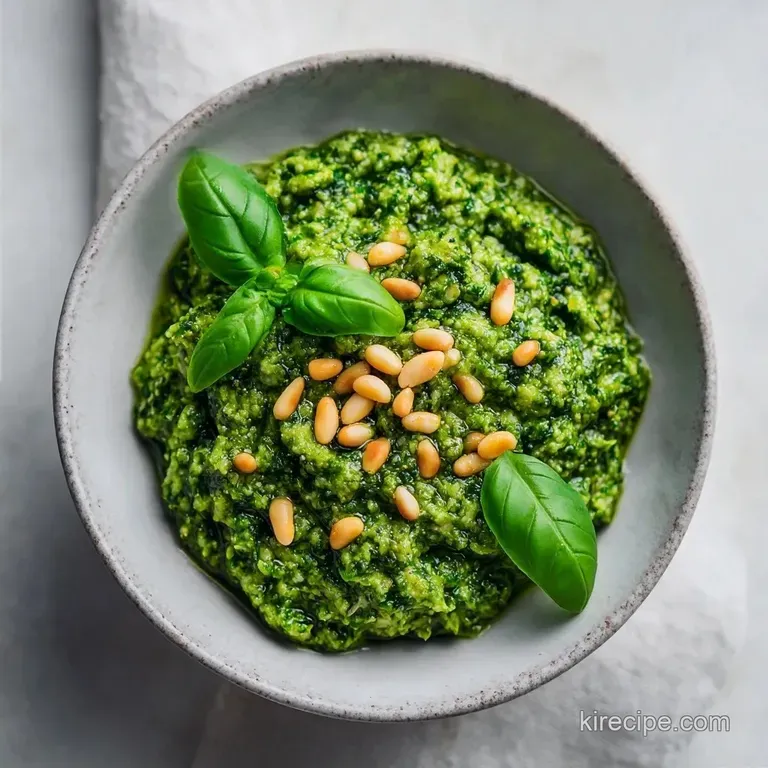
- Time: 5 min active + 0 min cooking
- Flavor/Texture Hook: Vibrant, zesty, and chunky
- Perfect for: Weeknight pasta, sandwich spreads, or meal prep
The scent of fresh basil hitting a food processor is one of those smells that just wakes up the whole kitchen. For a long time, I thought you needed a heavy hand with Parmesan to get that specific, salty punch. I tried adding too much salt or using odd substitutes that tasted like cardboard.
Forget the idea that vegan sauces lack richness. You don't need dairy to get a deep, savory flavor. Once I swapped the cheese for nutritional yeast and focused on the oil to lemon ratio, everything clicked.
This Vegan Basil Pesto Recipe is about fresh, raw ingredients and precision. You'll get a bright, nutrient dense sauce that works on everything from toasted sourdough to roasted vegetables.
Vegan Basil Pesto Recipe
Why It Works
- Nutritional Yeast: This provides the savory, nutty flavor typically found in aged cheeses.
- Slow Oil Integration: Drizzling the oil while the blades spin creates a stable emulsion for this Vegan Basil Pesto Recipe.
- Acid Balance: Fresh lemon juice cuts through the fat of the pine nuts, keeping the flavor sharp.
| Feature | Fresh Homemade | store-bought |
|---|---|---|
| Color | Bright Vibrant Green | Dull Olive Brown |
| Texture | Chunky and Raw | Over processed Puree |
| Salt Level | Controlled | Often Excessively High |
Ingredient Deep Dive
| Ingredient | What It Does | Best Swap |
|---|---|---|
| Pine Nuts | Adds creamy, buttery fat | Cashews or Walnuts |
| Basil Leaves | Provides the aromatic base | Spinach or Arugula |
| Nutritional Yeast | Delivers the umami "cheese" | Miso paste (small amount) |
| Olive Oil | Emulsifies and preserves | Avocado oil |
Precision Ingredient Guide
You'll need a few fresh items. I've listed the weights because that's where the consistency comes from.
- 2 cups (60g) packed fresh basil leaves Why this? high-quality Genovese basil has the best aroma
- 3 cloves (9g) garlic, peeled Why this? Fresh cloves are sharper than jarred garlic
- 2 tbsp (30ml) fresh lemon juice Why this? Prevents browning and adds brightness
- 1/3 cup (45g) pine nuts Why this? Traditional fat source for classic flavor
- 1/4 cup (15g) nutritional yeast Why this? Essential for the savory, vegan "cheese" note
- 1/2 cup (120ml) extra virgin olive oil Why this? High polyphenol count for health and taste
- 1/2 tsp (3g) sea salt Why this? Enhances all other botanical notes
- 1/4 tsp (1g) cracked black pepper Why this? Adds a subtle, warm back note
Chef's Note: If your pine nuts feel too raw, toast them in a dry pan for 2 minutes until they smell like popcorn. It adds a deeper, toasted layer to the sauce.
The Gear You Need
You can use a mortar and pestle if you have the patience, but a food processor is the way to go here. It handles the emulsion much faster. A small 4 cup processor works best so the ingredients don't just fly around the edges.
If you only have a blender, be careful. Blenders tend to over process the basil, which can lead to a grainy texture or a bitter taste if the blades run too hot. A food processor allows for "pulsing," which is the key to keeping that rustic, chunky feel.
Making the Sauce
This Vegan Basil Pesto Recipe takes about 5 minutes. The trick is the order of operations.
Pulse the Aromatics
Place the pine nuts and garlic cloves into the food processor. Pulse several times until the nuts are finely crumbled and the garlic is minced. Note: Don't let it turn into a paste.
Build the Body
Add the packed basil leaves, nutritional yeast, lemon juice, salt, and pepper. Pulse in short bursts until the basil is coarsely chopped into a thick, chunky paste. Listen for the processor to stop struggling before pulsing again.
Emulsify for Texture
While the processor is running on low speed, slowly drizzle in the extra virgin olive oil in a steady stream. Continue blending for 15-30 seconds until the sauce is well combined and velvety.
| Precision Checkpoint | Target Metric | Importance |
|---|---|---|
| Basil Weight | 60g | Prevents sauce from being too watery |
| Oil Volume | 120ml | Ensures proper emulsion stability |
| Blend Time | 15-30 seconds | Prevents basil from oxidizing (turning brown) |
Fixing Common Issues
Sometimes the texture or color doesn't hit the mark. Usually, it's a matter of temperature or timing.
Troubleshooting Common Issues
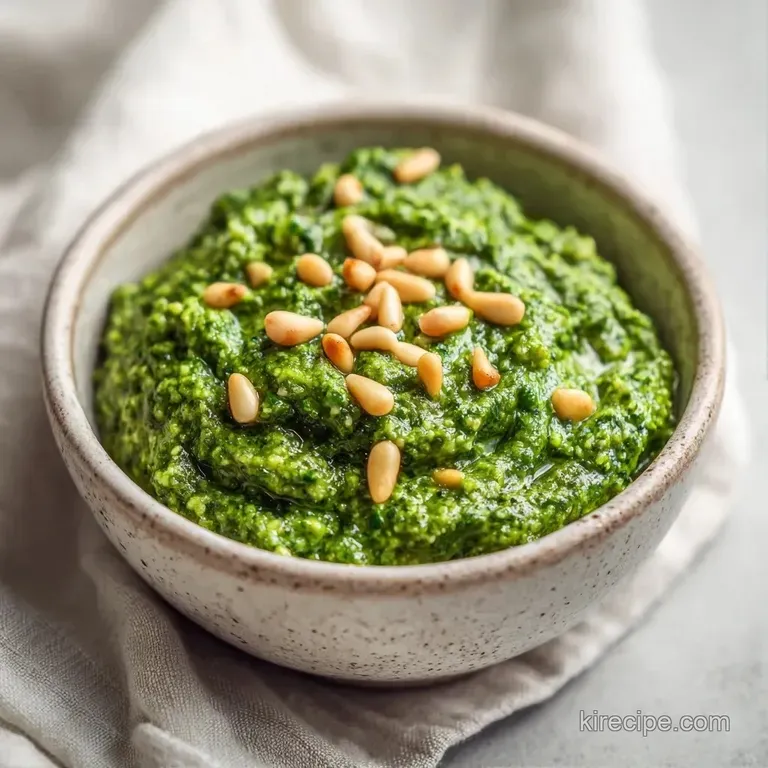
| Issue | Solution |
|---|---|
| Why Your Pesto Browns | Basil is sensitive to heat. If you run the processor for too long, the blades heat up and oxidize the leaves. To keep it green, use short pulses. |
| Why It's Too Thin | This usually happens if you add too much oil or if your basil was washed and not dried. Use a salad spinner to get the leaves bone dry. |
| Why It Tastes Bitter | Over processing garlic or basil can release bitter compounds. Also, using old lemon juice can add a funky, metallic tang. Always use fresh lemon. |
Tasty Flavor Twists
Once you have the base Vegan Basil Pesto Recipe down, you can play with the ratios. If you want a budget friendly version, swap the pine nuts for toasted sunflower seeds. They have a similar fat profile but cost a fraction of the price.
For a nut free experience, use toasted pumpkin seeds (pepitas). They add a slightly earthy flavor and a great dose of iron. If you want a "Garden Blend," replace half the basil with fresh baby spinach. This keeps the color bright but mellows out the pepperiness of the basil.
If you're feeling experimental, you can layer this over a red pepper sauce for a bold contrast. It also works as a base for a basil mozzarella pasta salad if you add some vegan cheese pearls.
Adjusting the Batch Size
Scaling a Vegan Basil Pesto Recipe is mostly straightforward, but the oil is where you need to be careful.
Scaling Down (Half Batch): Use a smaller processor if possible. If the blades are too big, you might have to scrape the sides more often. Reduce the blend time by about 20% because the smaller volume heats up faster.
Scaling Up (Double or Triple): Don't just triple the salt and pepper. Start with 1.5x the seasoning and taste it. Liquids like lemon juice and oil usually scale linearly, but aromatics like garlic can become overpowering if you just multiply them.
I recommend working in batches to avoid over processing the basil.
Debunking Pesto Myths
One big myth is that you must use a mortar and pestle to get "authentic" flavor. While the bruising of the leaves releases oils differently, a food processor is more than adequate for a home kitchen. The flavor difference is negligible compared to the time saved.
Another misconception is that you need to blanch the basil to keep it green. While blanching works for professional catering, it changes the flavor from "fresh" to "cooked." For a raw, nutritious sauce, just use the oil topping method for storage instead.
Storage and Waste
To keep this Vegan Basil Pesto Recipe fresh, transfer it to a glass jar. The most important part is the seal. Pour a thin layer of olive oil over the top of the pesto before closing the lid. This creates an air barrier that prevents the basil from turning brown.
Fridge: Store for up to 5 days. Freezer: Freeze in ice cube trays for 3 months. Thaw in the fridge overnight.
For zero waste, don't toss the basil stems. They hold a lot of flavor. Throw them into a freezer bag with other veggie scraps to make a homemade vegetable broth later. If you have leftover pine nuts, roast them and toss them into a salad for a quick protein boost.
Serving Your Pesto
The best way to serve this is over al dente pasta, but don't boil the sauce. Heating pesto too much destroys the fresh basil aroma and can separate the oil. Instead, toss the pesto into the pasta after you've removed it from the heat.
You can also use it as a spread for grilled eggplant or as a dip for raw crudités. For a balanced meal, pair it with a side of roasted cherry tomatoes. The sweetness of the roasted tomatoes balances the salty, umami notes of the nutritional yeast.
If you want a more substantial dish, spread a thick layer on sourdough, top it with sliced avocado, and add a pinch of red pepper flakes. It's a nutrient dense breakfast that keeps you full for hours.
Recipe FAQs
What's not vegan in traditional pesto?
Parmesan or Pecorino cheese. These traditional hard cheeses are made from animal milk, which is why this version uses nutritional yeast for a similar savory flavor.
How to make vegan pesto with basil?
Pulse pine nuts and garlic in a food processor. Add basil, nutritional yeast, lemon juice, salt, and pepper, then slowly drizzle in olive oil while blending on low for 15-30 seconds until velvety.
What is the secret ingredient for the cheesy flavor in vegan pesto?
Nutritional yeast. This ingredient provides the nutty, cheesy profile without dairy. If you enjoyed using a food processor for this, see how the same equipment works in our almond sauce.
What can be used as an alternative for fresh basil?
Spinach or kale. These greens maintain the vibrant color and texture, though the final taste will be milder and less aromatic than traditional basil.
How to store vegan pesto without it browning?
Pour a thin layer of olive oil over the top. This creates an air barrier in a glass jar that prevents oxidation; store in the fridge for up to 5 days or freeze in ice cube trays for 3 months.
Is it true that blending pesto for a long time makes it better?
No, this is a common misconception. Over processing causes the blades to heat up, which oxidizes the basil and turns the sauce brown.
Why does my pesto taste bitter?
Over processing the garlic or basil. Excessive blending releases bitter compounds, and using old lemon juice instead of fresh can also add a metallic tang.
Vegan Basil Pesto