Dinty Moore Beef Stew Recipe: Slow-Cooked Perfection
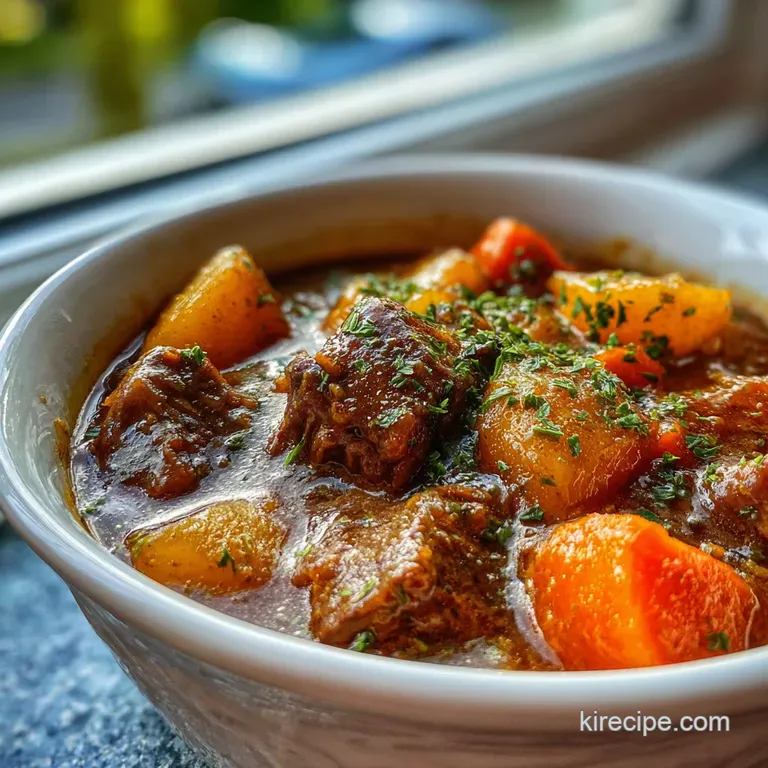
- Time: Active 20 minutes, Passive 8 hours, Total 8 hours 20 mins
- Flavor/Texture Hook: Deeply savory with a velvety gravy and fork tender beef
- Perfect for: Stress free family Sunday dinners or big batch meal prep
- Recreating the Iconic Dinty Moore Beef Stew Recipe
- Why This Stew Wins
- The Flavor Foundation Components
- Essential Flavor Building Blocks
- Minimal Tools for Success
- Clear Instructions for Velvety Stew
- Solving Common Stew Texture Problems
- Creative Ways to Mix Variations
- Scaling for a Crowd
- Busting Stew Misconceptions
- Storage and Zero Waste Tips
- Perfect Sides for Comfort
- Recipe FAQs
- 📝 Recipe Card
Recreating the Iconic Dinty Moore Beef Stew Recipe
Listen, we've all been there. It's a rainy Tuesday, you're exhausted, and you crack open that famous blue can because it’s the ultimate comfort shortcut. But then you taste it, and it's... fine. It's salty, the meat is a bit mystery ish, and the potatoes are soft.
I knew we could do better without making it a whole production. That’s why I set out to build this homemade Dinty Moore beef stew recipe that actually tastes like the memory we have of the canned version, only ten times richer.
The first time I tried to DIY this, I made a massive mistake. I just threw everything in the pot and walked away. The result? A watery mess with gray meat. I realized that to get that signature "Dinty" thickness and deep amber color, you have to treat the ingredients with a little respect before the long nap in the slow cooker.
We’re talking about a hard sear on the beef and toasting the tomato paste until it looks like mahogany.
When you walk through the door after eight hours of this simmering away, the aroma is going to hit you like a warm hug. It doesn't smell like "canned food," it smells like a home that’s been cared for.
It’s thick enough to stand a spoon in, the carrots have that slight resistance, and the beef just falls apart at the suggestion of a fork. Let's get into how we make this happen with zero fuss and maximum flavor.
Why This Stew Wins
- The Collagen Metamorphosis: Using chuck roast allows tough connective tissues to melt into gelatin over eight hours, naturally thickening the sauce and tenderizing the protein.
- Maillard Reaction Focus: Searing the beef in small batches creates a crust that dissolves into the broth, providing that iconic deep brown color without artificial dyes.
- Starch Gelatinization: A late stage cornstarch slurry creates a glossy, velvety sheen that mimics the canned texture while keeping the flavor clean.
- Acidic Balance: The Worcestershire sauce acts as a flavor bridge, cutting through the heavy fat of the beef to brighten the entire profile.
I’ve found that the cooking method you choose really dictates the final vibe of the dish. While I swear by the slow cooker for that "set it and forget it" magic, sometimes you need dinner on the table before the sun goes down.
| Method | Time | Texture | Best For |
|---|---|---|---|
| Slow Cooker | 8 hours | Fork tender, integrated | True hands off ease |
| Stovetop | 3 hours | Concentrated, rustic | Rainy afternoon cooking |
| Instant Pot | 1 hours 15 mins | Soft, cohesive | Last minute cravings |
Choosing the right method is just half the battle. The chemistry of your ingredients does the heavy lifting while you’re busy doing anything else. Using a Thin Steak Recipe technique for searing can actually help you understand how meat reacts to high heat before it hits the stew pot.
The Flavor Foundation Components
To get that specific copycat flavor, we need to be picky about our elements. This isn't just a random beef stew, it's a "Dinty" style one, which means the gravy is the star. We use russet potatoes specifically because they release just enough starch to help the thickening process, unlike waxy reds that stay too firm.
| Ingredient | Science Role | Pro Secret |
|---|---|---|
| Beef Chuck | Gelatin source | Sear until a dark crust forms don't crowd the pan. |
| Tomato Paste | Umami booster | Fry it with the onions until it turns brick red for depth. |
| Beef Bone Broth | Structural body | Use bone broth for extra collagen, making the gravy silkier. |
| Worcestershire | Flavor catalyst | Adds fermented complexity that mimics the "aged" canned taste. |
Each part of this homemade Dinty Moore beef stew recipe plays a specific part in the architecture of the dish. You can't just swap everything out and expect the same nostalgic hit, but there are some smart ways to pivot if your pantry is looking a little bare.
Essential Flavor Building Blocks
- 2.5 lbs beef chuck, cubed into 1 inch pieces
- Substitute: Bottom round or pot roast cuts. Why this? High collagen content is non negotiable for tender results.
- 3 tbsp vegetable oil
- Substitute: Grapeseed oil or lard. Why this? High smoke point allows for a hard sear without burning.
- 1 tsp salt
- 1 tsp black pepper
- 1 large yellow onion, diced small
- Substitute: White onion or shallots. Why this? Provides a sweet, aromatic base that dissolves into the sauce.
- 4 cloves garlic, minced
- 2 tbsp tomato paste
- Substitute: 1/4 cup tomato puree (reduce broth slightly). Why this? Adds the signature reddish brown hue and concentrated savory notes.
- 4 cups low sodium beef bone broth
- 2 tbsp Worcestershire sauce
- 4 large russet potatoes, peeled and cubed
- Substitute: Yukon Gold potatoes. Why this? Russets provide the classic starchy texture found in the original.
- 4 large carrots, sliced into thick coins
- Substitute: Parsnips. Why this? Thicker cuts prevent the carrots from turning into mush during long cooking.
- 1 cup frozen peas
- 3 tbsp cornstarch
- 3 tbsp cold water
- Substitute: Flour (but use 4 tbsp and cook longer). Why this? Creates a clear, glossy finish rather than a cloudy, floury one.
Minimal Tools for Success
You don't need a kitchen full of gadgets for this. In fact, keeping it simple is part of the charm. A heavy bottomed skillet is your best friend here for the initial sear. I prefer cast iron because it holds heat like a champ, which is vital for getting that beef brown.
Then, you just need a standard 6 quart slow cooker. If you use one that's too big, your liquids might evaporate too quickly; too small, and it'll overflow. A sharp chef's knife for those carrots and potatoes makes the prep go by in about 10 minutes if you're fast.
That's it no fancy emulsifiers or immersion blenders needed for this Dinty Moore beef stew copycat recipe.
Clear Instructions for Velvety Stew
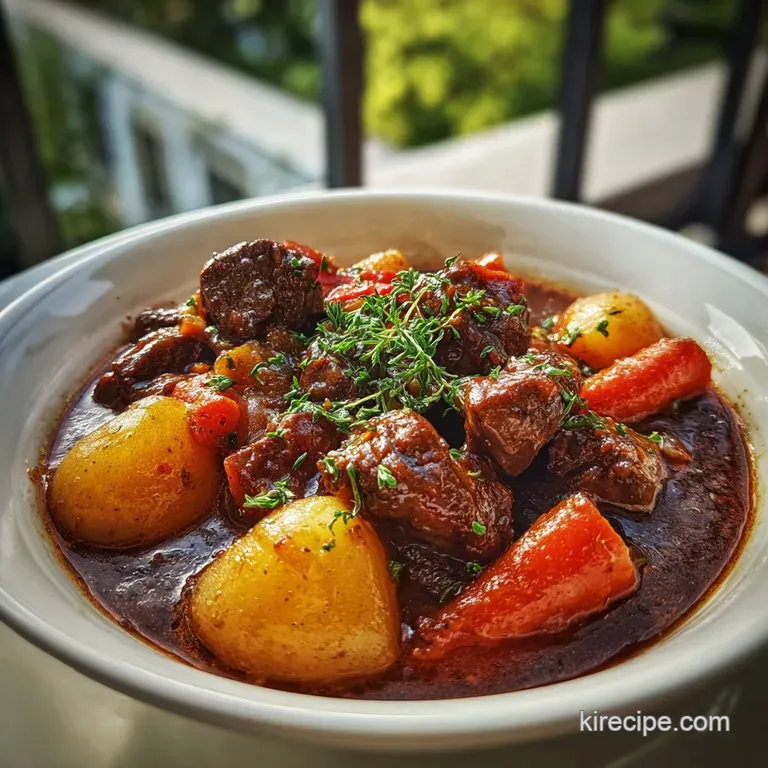
Collagen to Gelatin Magic
The secret to the melt away texture is the low and slow heat. When you maintain a steady temperature just below boiling, the tough fibers in the chuck roast don't seize up; they relax and eventually dissolve. This is why we don't rush the process. If you try to do this in two hours on high heat, the meat will be chewy.
Trust the eight hour clock.
Controlled Umami Balancing
We aren't just adding salt; we are layering savory notes. The Worcestershire sauce, tomato paste, and beef bone broth create a "triple threat" of umami. When these ingredients simmer together, they undergo a subtle transformation, rounding out the sharp edges of the vinegar in the Worcestershire and the acidity of the tomato.
Beginner Friendly Architecture
This recipe is built to be forgiving. Because we add the cornstarch slurry at the very end, you have total control over the final thickness. It’s a fail safe way to ensure you never end up with a "beef soup" when you were dreaming of a "beef stew."
The Flavor Lock Sear
Season the beef chuck generously with salt and pepper. Heat the oil in a large skillet over medium high heat. Brown the beef in batches until a dark, crusty sear develops on all sides. Note: Don't crowd the pan or the meat will steam instead of browning.
Deglaze and Build
Remove the meat and add the diced onion to the same pan. Cook for 5 minutes until translucent and golden. Stir in the minced garlic and tomato paste, cooking for another 2 minutes until the paste smells toasted and fragrant.
Pour in 1 cup of the beef broth to scrape up all those flavorful brown bits from the bottom.
The Long Simmer
Transfer the beef and the onion mixture into your slow cooker. Add the remaining beef broth, Worcestershire sauce, potatoes, and carrots. Stir gently to combine. Cover and cook on low for 8 hours until the beef is completely fork tender. This is similar to the patience required in an Arbys Beef and recipe where the sauce and meat need time to marry.
The Finishing Touch
About 20 minutes before serving, whisk the cornstarch and cold water in a small bowl. Stir the slurry and the frozen peas into the slow cooker. Cover and cook on high for another 15 minutes until the sauce is glossy and thick enough to coat a spoon.
Solving Common Stew Texture Problems
Fixing Thin Gravy
If you open the lid and it looks more like broth than gravy, don't panic. Sometimes potatoes don't release as much starch as we'd like. The solution isn't more cornstarch immediately; it's heat. Switch the slow cooker to high and leave the lid off for 20 minutes.
The evaporation will concentrate the flavors while the heat activates the existing thickeners.
Avoiding Mushy Vegetables
This usually happens if the vegetables are cut too small. For an eight hour soak, those carrots need to be at least half inch thick coins. If you've already made the mistake of dicing them small, add them four hours into the cooking time instead of at the beginning. This preserves their integrity.
| Problem | Root Cause | Solution |
|---|---|---|
| Tough Meat | Under cooked or high heat | Simmer longer on low; collagen takes time to melt. |
| Bland Flavor | Lack of salt or acidity | Add a splash of Worcestershire or a pinch of salt. |
| Cloudy Gravy | Using flour incorrectly | Switch to a cornstarch slurry mixed with cold water. |
Common Mistakes Checklist:
- ✓ Never skip browning the beef; it’s where 80% of the color comes from.
- ✓ Don't add the peas at the start; they will turn gray and mushy.
- ✓ Always mix cornstarch with cold water, never hot, to avoid lumps.
- ✓ Resist the urge to peek; every time you lift the lid, you lose 15 minutes of heat.
- ✓ Ensure you use russet potatoes for that authentic "Dinty" starchy mouthfeel.
Creative Ways to Mix Variations
Quick Biscuits Version
To make a Dinty Moore beef stew with biscuits recipe, simply bake a batch of flaky buttermilk biscuits separately. Split them open and ladle the thick stew directly over the top. The biscuits soak up the gravy like a sponge, turning a simple bowl of stew into a massive comfort meal.
Faster Instant Pot Method
If you're looking for a Dinty Moore beef stew instant pot recipe, follow the searing steps using the "Saute" function. Add all ingredients except peas and slurry. Lock the lid and set to High Pressure for 35 minutes.
Naturally release pressure for 15 minutes, then stir in the slurry and peas on the "Saute" setting until thickened.
Easy Pot Pie Twist
Transform your leftovers into a Dinty Moore beef stew pot pie recipe. Pour the cold stew into a pie dish, cover with a layer of store-bought puff pastry, and bake at 400°F for 20 minutes. It’s a brilliant way to give new life to day two stew.
Honestly, it might even be better than the original bowl.
Scaling for a Crowd
When you're scaling this down for two people, you can literally just halve everything. Use a smaller 3 quart slow cooker to ensure the liquid levels stay high enough to cover the meat. Reduce the cooking time by about an hour since there's less mass to heat up.
Scaling up for a big party is where things get tricky. If you're doubling the recipe (5 lbs of beef), don't double the salt or Worcestershire sauce immediately. Start with 1.5x the amount and taste at the end.
Large volumes of liquid don't evaporate as efficiently, so you might find you need 10% less broth to keep that signature thickness. Work in batches for the searing; trying to brown 5 lbs of beef in one pan will just result in boiled meat.
Busting Stew Misconceptions
One of the biggest lies in cooking is that searing meat "seals in the juices." Science tells us that's simply not true moisture escapes regardless. The real reason we sear is the Maillard reaction, which creates hundreds of different flavor compounds that don't exist in raw meat.
That crust is what makes the gravy taste "beefy" instead of just salty.
Another myth is that you must use wine to make a good stew. While a Guinness or a dry red can add depth, the original Dinty Moore profile is actually quite simple and relies on beef and vegetable notes.
You don't need fancy alcohol to get a complex result; you just need time and a good hit of Worcestershire sauce to provide that necessary fermented funk.
Storage and Zero Waste Tips
- Fridge
- Keep it in an airtight container for up to 4 days.
- Freezer
- You can freeze this for up to 3 months, but be warned: potatoes can get a little grainy when thawed. To fix this, just stir well while reheating.
- Reheating
- Use a splash of water or broth to loosen the gravy, as it will thicken significantly when cold.
For a zero waste approach, save your carrot peels and onion ends in a bag in the freezer. When you have enough, boil them down to make your own vegetable scrap broth for the next batch. Also, if you have just a little bit of gravy left but no meat, use it as a base for a Ground Beef Pasta recipe to add a boost of savory richness to a quick weeknight meal.
Perfect Sides for Comfort
Since this stew is so heavy and rich, I usually pair it with something that can stand up to the gravy. A big hunk of crusty sourdough is mandatory for swiping the bowl clean. If you want a bit of crunch, try serving it alongside a Recipe for Crispy hash patty to play with the different potato textures.
A simple green salad with a sharp lemon vinaigrette is also a great "palate cleanser" between bites of the heavy stew. It cuts through the fat and makes the whole meal feel a bit more balanced. Whatever you do, make sure you have plenty of it people always come back for seconds of this one.
It's exactly how to make Dinty Moore beef stew better without losing the soul of the dish.
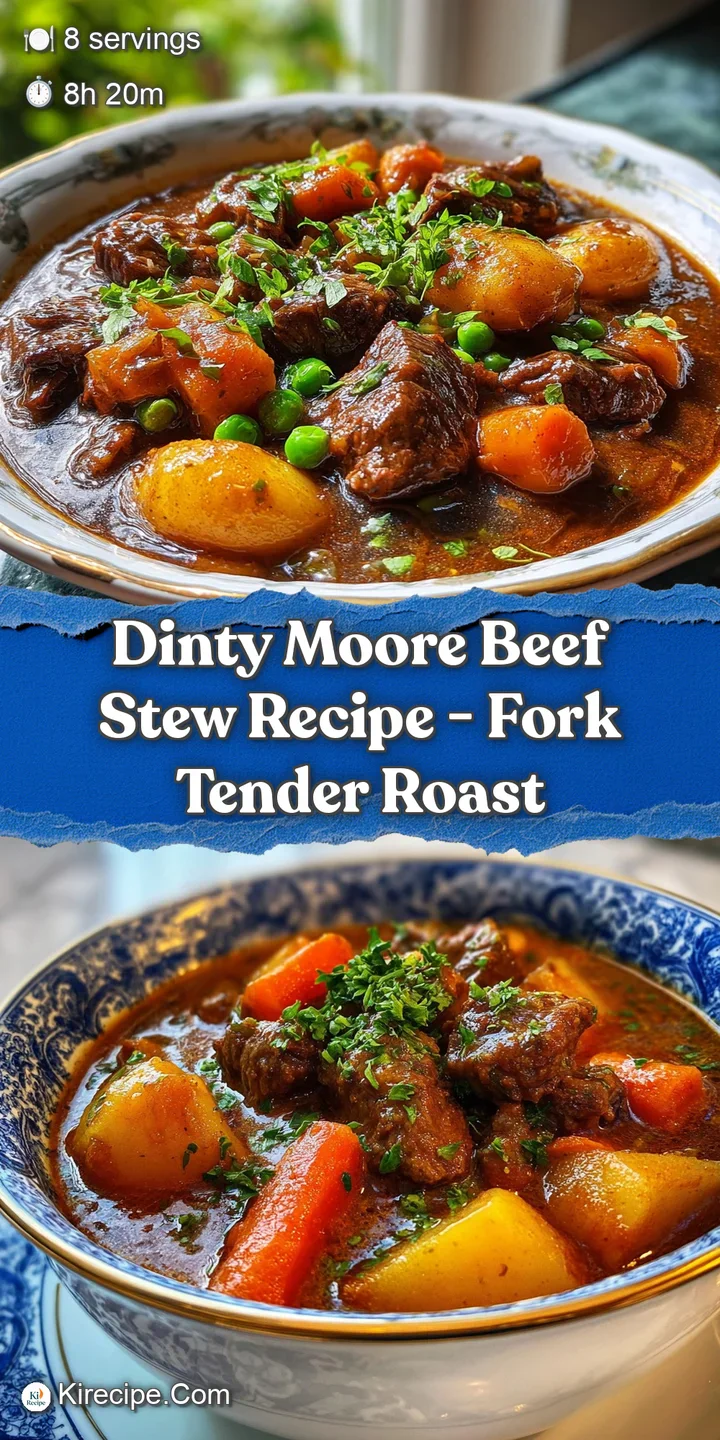
Recipe FAQs
What kind of meat is used in Dinty Moore beef stew?
Chuck roast is the ideal choice for this homemade version. The chuck contains significant connective tissue (collagen) which melts down during the long, slow cooking process, resulting in fork tender beef and a naturally thickened gravy.
What can I make with Dinty Moore beef stew?
Use the leftover stew to create a pot pie filling. Pour the thick stew into a pie dish, top with puff pastry, and bake until golden brown for a completely different comfort meal.
What is the secret ingredient for beef stew?
Worcestershire sauce is the key flavor catalyst for this copycat recipe. It adds a fermented depth and slight acidity that balances the richness of the beef, mimicking the complex, aged flavor profile of the canned version.
How do you doctor up a can of beef stew?
Stir in sautéed aromatics and fresh vegetables for instant improvement. Sauté diced onion and garlic until soft, then add them to the canned stew along with some frozen peas and a dash of soy sauce or dried herbs.
How do I ensure my beef stew gravy is thick and not watery?
Thicken the stew at the very end using a cold cornstarch slurry. Whisk three tablespoons of cornstarch into three tablespoons of cold water until smooth, then stir into the simmering stew on high heat until glossy and visibly thickened.
Can I use a different cut of beef instead of chuck roast?
Yes, you can substitute round roast or brisket, but adjust your expectations. These cuts are leaner, so they won't release as much gelatin; you may need to add a packet of unflavored gelatin or extra bone broth to achieve the proper mouthfeel, similar to making a stable roux in a Olive Garden Shrimp recipe.
What is the best way to cook this stew if I don't have a slow cooker?
Simmer the stew gently on the stovetop in a heavy bottomed pot. After searing the beef and creating the base, bring the stew to a bare simmer, cover tightly, and cook for three hours, checking occasionally to stir and ensure it doesn't scorch.
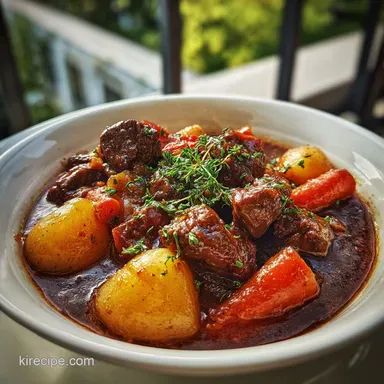
Dinty Moore Beef Stew Copycat
Ingredients:
Instructions:
Nutrition Facts:
| Calories | 584 kcal |
|---|---|
| Protein | 34g |
| Fat | 26g |
| Carbs | 38g |
| Fiber | 4.5g |
| Sugar | 4.2g |
| Sodium | 645mg |
