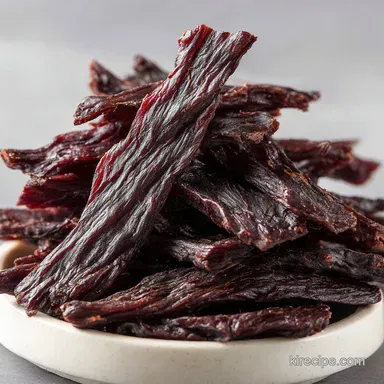
Teriyaki Beef Jerky: Savory Umami Glaze
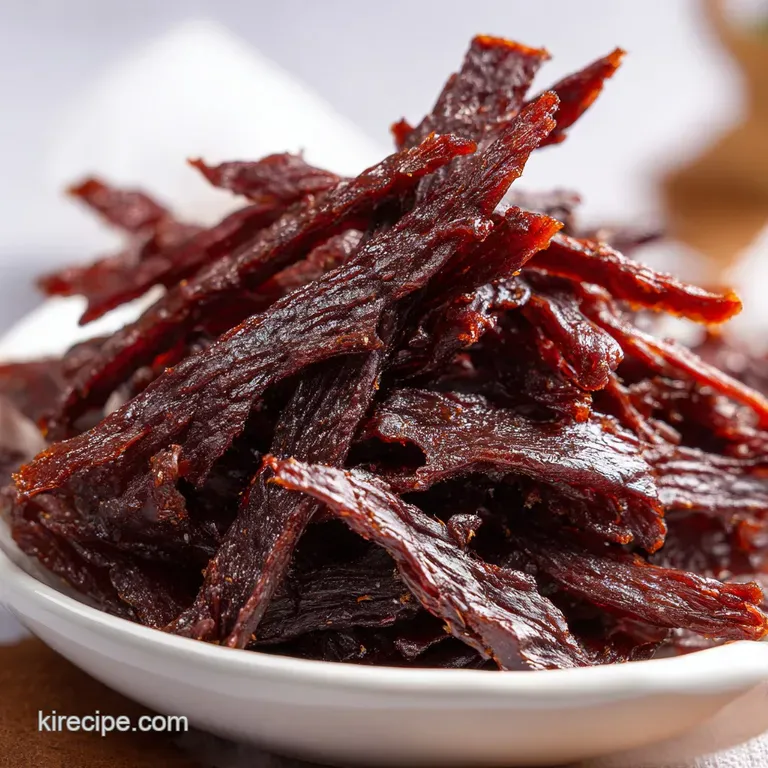
- Time: 30 min active + 12 hours marinating + 8 hours drying = Total 32 hours 30 mins
- Flavor/Texture Hook: Savory umami glaze with a slight surface shatter when bent
- Perfect for: High protein fuel, hiking trips, or healthy meal prep
Teriyaki Beef Jerky
That smell of toasted sesame and pungent ginger hitting the air is honestly the best part. But let's be real, most people've tried making this at home and ended up with something that feels like a rubber band or, worse, a piece of cardboard that could actually break a tooth.
I remember a batch I made where I sliced the meat with the grain instead of against it. It wasn't jerky, it was a workout for my jaw.
The secret isn't in some fancy machine, but in the precision of the cut and the patience of the dry. If you've struggled with jerky that's either too sticky or impossibly tough, we're fixing that today.
We're focusing on the balance of salt and sugar to get that classic Japanese inspired profile while keeping it as a clean, lean protein source.
Whether you're using a dedicated dehydrator or just your oven, this approach removes the guesswork. You'll get a snack that has that velvety interior and a tacky, savory exterior. Let's get into how to make your own teriyaki beef jerky that actually tastes professional.
Why This Works
The Salt Pull: Soy sauce and Worcestershire act as curing agents, drawing moisture out of the muscle fibers so the meat doesn't spoil. This creates space for the flavors to move in.
Sugar Tackiness: Brown sugar and mirin create a thin, glossy coating. This keeps the meat from drying out completely into a rock, giving it a slight chew.
Fiber Disruption: Slicing against the grain breaks up the long protein strands. This is why some jerky is easy to chew and some feels like leather.
Thermal Evaporation: Low, steady heat removes water without "cooking" the meat in a traditional sense. It's about dehydration, not roasting.
| Method | Time | Texture | Best For |
|---|---|---|---|
| Dehydrator | 6-8 hours | Consistent & Lean | Large batches |
| Oven | 4-6 hours | Slightly firmer | Quick fixes |
| Air Fryer | 4-6 hours | Tacky & Intense | Small portions |
I've found that the air fryer is great for a quick craving, but for a truly balanced batch, the dehydrator is the way to go. It provides the most uniform airflow, which is crucial for avoiding "wet spots" in your jerky.
Component Analysis
| Ingredient | Science Role | Pro Secret |
|---|---|---|
| Eye of Round | Lean Protein Base | Freeze for 2 hours to get paper thin slices |
| Soy Sauce | Curing & Umami | Use low sodium if you're sensitive to salt |
| Mirin | Tenderizer | Adds a subtle sweetness and shine |
| Liquid Smoke | Flavor Depth | A little goes a long way, don't overdo it |
Ingredients
- 900g (2 lbs) lean beef (Eye of Round or Top Round) Why this? Lowest fat content prevents rancidity
- 120ml (1/2 cup) soy sauce Why this? Provides salt and deep color
- 60g (1/4 cup) brown sugar Why this? Creates the classic teriyaki glaze
- 30ml (2 tbsp) mirin Why this? Adds a complex, acidic sweetness
- 15ml (1 tbsp) Worcestershire sauce Why this? Adds a savory, fermented punch
- 1 tbsp freshly grated ginger Why this? Fresh is way more pungent than powder
- 3 cloves minced garlic Why this? Essential aromatic base
- 5ml (1 tsp) liquid smoke Why this? Mimics traditional wood firing
- 1/2 tsp black pepper Why this? Subtle heat to balance sugar
- 1/2 tsp red pepper flakes Why this? Tiny sparks of spice
Essential Gear
You don't need a professional kitchen, but a few things make this way easier. A very sharp chef's knife is non negotiable. If your knife is dull, you'll tear the meat instead of slicing it, which ruins the texture.
I highly suggest using vacuum seal bags for the marinating phase. They force the liquid into every crevice of the meat. If you don't have one, a heavy duty Ziploc works, just make sure to squeeze out all the air.
For the drying phase, you'll need racks. If you're using an oven, use a wire cooling rack set inside a baking sheet. This allows air to circulate under the meat, so you don't have to flip the strips as often.
Key Steps
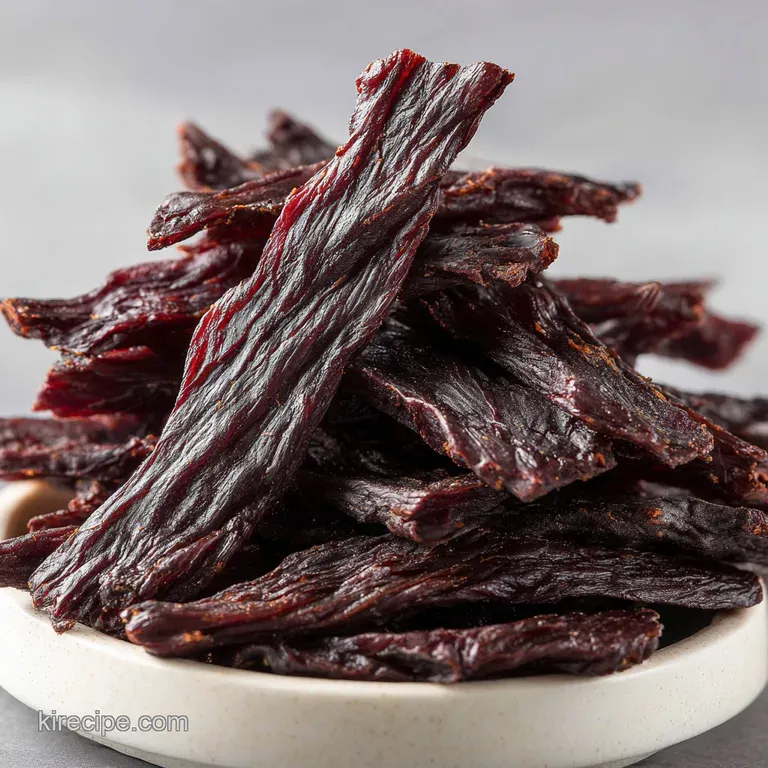
Phase 1: Precision Slicing
Partially freeze the beef for 1-2 hours until firm. Slice the meat into strips roughly 3mm (1/8 inch) thick, slicing perpendicular to the muscle fibers (against the grain). Note: This is the most important step for tenderness.
Phase 2: The Infusion
Whisk soy sauce, brown sugar, mirin, Worcestershire sauce, grated ginger, minced garlic, liquid smoke, black pepper, and red pepper flakes in a bowl until the sugar is fully dissolved.
Phase 3: The Marinating
Place the beef strips in a bag, pour the marinade over the meat, and massage the bag to ensure all pieces are evenly coated. Refrigerate for 12 to 24 hours. Note: Shorter times result in less flavor penetration.
Phase 4: The Prep
Pat the marinated beef strips slightly with a paper towel to remove excess surface liquid. Do this until the meat is tacky, not dripping, to avoid steaming the meat.
Phase 5: The Arrangement
Arrange the strips on dehydrator trays or oven racks, ensuring no pieces overlap for maximum airflow.
Phase 6: The Drying Process
Dry the meat: use a dehydrator at 71°C (160°F) for 6-8 hours, an oven at 77°C (170°F) for 4-6 hours with the door propped open, or an air fryer on the dehydrate setting at 71°C (160°F) for 4-6 hours.
Phase 7: The Doneness Test
Perform the doneness test by bending a piece; it should crack slightly on the surface but not snap in half. It should feel leathery and firm.
Chef's Tip: To get a more intense flavor, try adding a teaspoon of espresso powder to the marinade. It doesn't make it taste like coffee, but it deepens the brown sugar and soy notes.
Common Mistakes & Troubleshooting
Why Your Jerky is Too Tough
If your beef feels like a shoe sole, you likely sliced with the grain. When you slice parallel to the muscle fibers, you're forcing your teeth to break through those long strings of protein. Always look for the "lines" in the meat and cut across them.
The Jerky is Sticky/Tacky
Over marinating or using too much sugar can lead to a sticky finish. This is often caused by the sugar not evaporating during the drying process. Try patting the meat more thoroughly before it hits the racks.
Case Hardening
This happens when the outside dries too fast, trapping moisture inside. This is common in ovens that are too hot. According to the guidelines at Serious Eats, maintaining a consistent low temperature is key to avoiding this "raw center" effect.
| Problem | Root Cause | Solution |
|---|---|---|
| Rubbery Texture | Sliced with the grain | Slice perpendicular to fibers |
| Mold Growth | Trapped moisture | Ensure no overlapping on racks |
| Burnt Edges | Oven temp too high | Prop oven door open 1-2 inches |
Mistakes Checklist:
- ✓ Beef was partially frozen before slicing
- ✓ Slices are uniform in thickness (approx 3mm)
- ✓ Meat was patted dry before dehydrating
- ✓ Oven door was propped open for airflow
- ✓ No pieces were overlapping on the trays
Variations & Substitutions
If you're looking to switch things up, you can easily tweak the flavor profile. For a spicier Japanese kick, add a teaspoon of Sriracha or Togarashi. If you want something more like a almond asian sauce recipe, you can brush a thin layer of almond ginger glaze on the meat during the last hour of drying.
For those avoiding gluten, simply swap the soy sauce for Tamari or coconut aminos. Coconut aminos are slightly sweeter, so you might want to reduce the brown sugar by a tablespoon to keep it balanced.
If you're going for a low sugar or keto version, replace the brown sugar and mirin with a monk fruit sweetener and a splash of apple cider vinegar. Note that the texture will be slightly less "tacky" without the real sugar.
| Original Ingredient | Substitute | Why It Works |
|---|---|---|
| Soy Sauce (1/2 cup) | Tamari (1/2 cup) | Similar salt/umami. Note: gluten-free option |
| Brown Sugar (1/4 cup) | Monk Fruit (1/4 cup) | Low calorie. Note: Less caramelization/shine |
| Eye of Round (2 lbs) | Top Round (2 lbs) | Similar lean profile. Note: Slightly more flavor, slightly tougher |
When you're making your own teriyaki beef jerky, remember that the leanest cut is always safest. Avoid Ribeye or Brisket, as the fat doesn't dehydrate and can go rancid quickly.
Adjustment Guidelines
When scaling this recipe, you can't always just double everything. If you're making a double batch (4 lbs of beef), increase the salt and spices to about 1.5x instead of 2x. Too much salt can make the meat overly cured and bitter.
If you're cutting the recipe in half, use a smaller Ziploc bag to ensure the meat is fully submerged in the marinade. Since there's less mass in the dehydrator or oven, you might find it finishes about 20% faster, so start checking the bend test early.
For oven users scaling up, work in batches. Overcrowding the oven prevents the necessary airflow, which leads to steaming rather than drying. If you have to use two racks, rotate them halfway through the process.
Meat Truths
Some people think that searing the meat before dehydrating "locks in the flavor." This is a myth. Searing actually cooks the protein and changes the texture, which can make the final jerky feel more like dried steak than actual jerky.
Another common misconception is that you need a vacuum sealer to make your own teriyaki beef jerky. While it helps with infusion, a simple bag with the air squeezed out does 90% of the work.
Finally,, don't believe that the higher the heat, the faster it's done. If you crank the oven to 250°F, you'll just cook the beef. You want evaporation, not a roast.
Preservation Secrets
Storage: Keep your Teriyaki Beef Jerky in an airtight container or a vacuum sealed bag. In the fridge, it'll stay fresh for 2 weeks. In the freezer, it's good for 6 months. If storing at room temperature, it'll last about 1 week, but only if you've dried it thoroughly.
Zero Waste: Don't throw away the leftover marinade! Since it has been in contact with raw meat, you must simmer it in a small saucepan for at least 5 minutes until it reduces into a thick syrup. This reduced glaze is incredible on grilled salmon or as a dip for your ground beef sweet chili sauce variations.
Moisture Control: If you're storing it for a long time, toss a food grade silica gel packet into the jar. This absorbs any stray moisture and prevents the jerky from getting soft over time.
Serving and Enjoyment
The best way to enjoy this is at room temperature, which allows the sugars in the teriyaki glaze to soften slightly. It's a fantastic high protein fuel for long hikes or a midday energy boost.
If you want to take it to the next level, serve it on a platter with some sliced cucumbers, toasted sesame seeds, and a side of spicy mayo. The coolness of the cucumbers cuts through the salty sweet intensity of the beef.
Because we used lean cuts and a balanced marinade, this is a much healthier alternative to store-bought options that are often loaded with corn syrup and artificial preservatives. Trust me, once you've had the homemade version, you'll never go back to the gas station bags.
Now go ahead and make your own teriyaki beef jerky and enjoy the crunch!
Recipe FAQs
Can I use store-bought teriyaki sauce for jerky?
Yes, but homemade is preferred. Commercial sauces often contain high amounts of corn syrup and water, which can make the jerky overly sticky or slow down the drying time.
Do you have to marinate beef before making jerky?
Yes, marinating is essential. It infuses the lean meat with flavor and helps preserve the beef during the long drying process.
Is it cheaper to make beef jerky yourself?
Yes, it significantly reduces costs. Buying lean cuts like Eye of Round in bulk is much more affordable than purchasing pre-packaged gourmet jerky.
What are common jerky mistakes to avoid?
Avoid slicing with the grain and overcrowding trays. Slicing with the grain makes the meat tough, while overlapping pieces blocks airflow and prevents even drying.
How to slice beef for the best texture?
Partially freeze the beef for 1-2 hours until firm. Slice into 1/8 inch thick strips perpendicular to the muscle fibers to ensure a tender chew.
Can I change the flavor profile to something more savory?
Yes, you can swap the marinade base. If you enjoy the bold, sweet-savory balance of a Korean BBQ sauce, use those flavor principles to customize your beef.
Is it true that I must use a professional dehydrator to make beef jerky?
No, this is a common misconception. You can achieve great results using an oven at 170°F (77°C) with the door propped open or an air fryer on the dehydrate setting.
Teriyaki Beef Jerky for 16 Servings