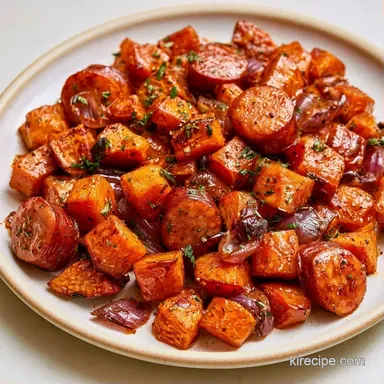
Sheet Pan Butternut Squash and Sausage
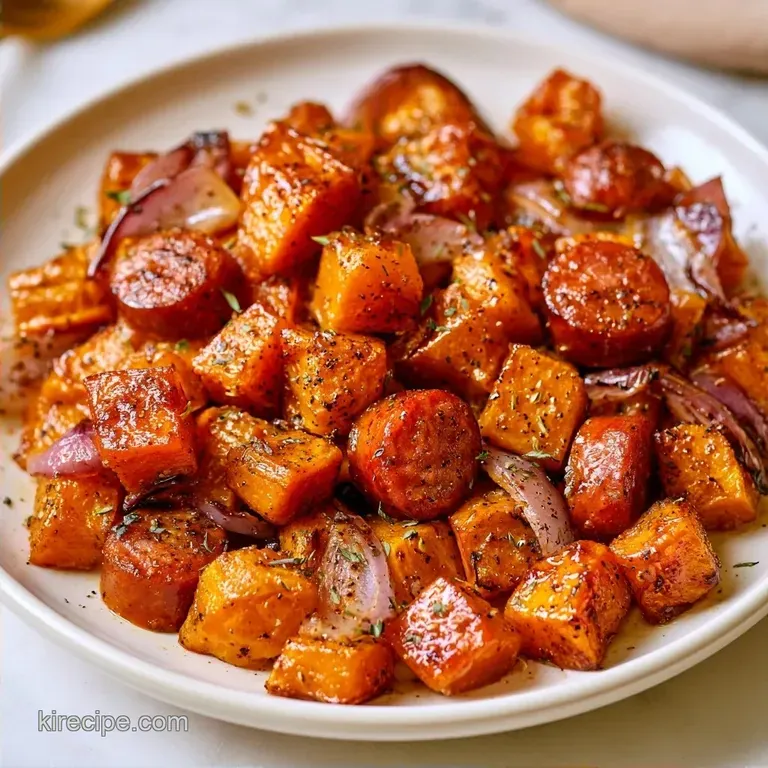
- Time: 10 min active + 30 min roasting
- Flavor/Texture Hook: Mahogany charred edges with a rich, tender center
- Perfect for: Busy weeknight dinners or healthy meal prep
Sheet Pan Butternut Squash
That smell when the smoked sausage starts to render and the maple syrup hits the hot pan is honestly the best part of autumn. I used to dread this dish because I'd end up with a tray of mushy, pale cubes that tasted more like boiled squash than roasted vegetables.
It happened every time I crowded the pan or used a temperature that was too low.
The fix is actually pretty simple. It comes down to giving every piece of vegetable its own breathing room and cranking the heat. When you do it right, the edges of the squash get those dark, sugary bits that taste like candy, and the sausage gets a snappy, browned crust.
You'll get a meal that feels fancy but takes almost no effort. We're talking about a dinner where the oven does 90% of the heavy lifting, leaving you to just toss things in a bowl and wait 30 minutes.
Why This Roast Works
- Air Circulation: By keeping the ingredients in a single layer, we avoid the "steaming" effect. Hot air hits every surface of the squash, which creates those charred edges and a concentrated sweetness.
- Fat Integration: The smoked sausage releases rendered fat as it cooks. This fat mixes with the olive oil and maple syrup, essentially frying the squash in a savory, smoky glaze.
- Acid Balance: Adding apple cider vinegar at the very end cuts through the richness of the sausage and the sugar of the maple syrup. This keeps the dish from feeling too heavy on the palate.
| Method | Time | Texture | Best For |
|---|---|---|---|
| Fast Roast (This recipe) | 30 mins | Charred & Tender | Weeknights |
| Classic Slow Roast | 60 mins | Soft & Uniform | Sunday Dinner |
What Each Ingredient Does
The butternut squash provides the hearty base. I prefer the pre cut cubes from the store if I'm in a rush, but cutting your own means you can ensure they are exactly 1 inch, which is the key to even cooking.
Smoked Italian sausage is a must here. Since it's already cured, it doesn't need as much time as raw sausage, meaning it finishes right when the squash does. If you use raw links, you'll likely overcook the veg before the meat is safe to eat.
The red onion adds a sharp contrast. As it roasts, it loses its bite and becomes jammy. The maple syrup isn't there to make it a dessert, but to help the sugars brown faster in the oven.
The Full Ingredient List
- 2 lbs butternut squash, peeled and cubed into 1 inch pieces Why this? Consistent sizing helps everything cook evenly.
- 1 lb smoked Italian sausage, sliced into ¼-inch rounds Why this? Smoked meats sear well without losing moisture.
- 1 large red onion, cut into 1 inch wedges Why this? Wedges maintain their structure better than thin slices.
- 3 tbsp extra virgin olive oil Why this? It offers a neutral taste and stable heat tolerance.
- 1 tbsp maple syrup Why this? This helps achieve a deep, caramelized char.
- 1 tsp dried rosemary or thyme Why this? These savory herbs offset the sugary tones.
- 1 tsp kosher salt Why this? It draws out the squash's inherent sweetness.
- ½ tsp black pepper Why this? Provides a gentle warmth to the final dish.
- 2 tbsp fresh parsley, chopped Why this? Gives the meal a vibrant look and crisp taste.
- 1 tbsp apple cider vinegar Why this? Adds a zingy acidity to balance the richness.
Substitutions
| Original Ingredient | Substitute | Why It Works |
|---|---|---|
| Maple Syrup | Honey | Comparable sugar levels. Note: Honey caramelizes more quickly, so keep an eye on the edges. |
| Italian Sausage | Kielbasa | Similar smoky flavor. Note: This option is typically saltier than Italian. |
| Red Onion | Shallots | A more delicate taste. Note: Chop into larger pieces to avoid burning. |
| Rosemary/Thyme | Sage | A quintessential fall flavor. Note: Sage has a more potent taste; use a bit less. |
Equipment Needed
No fancy gear is required here. Just make sure you use a large baking sheet with high rims. A shallow pan will let the sausage grease drip onto the oven bottom, creating a smoky mess.
I highly recommend using parchment paper. It stops the maple syrup from gluing itself to the pan, saving you from spending 20 minutes scrubbing later. A silicone mat is a great alternative if you're out of parchment.
You'll also need a big mixing bowl. Having plenty of room allows you to toss everything together without spilling ingredients across your workspace.
Chef's Tip: For those with a convection oven, try the "fan" setting. The increased airflow helps the squash brown and crisp up about 5 minutes faster.
How to Cook It
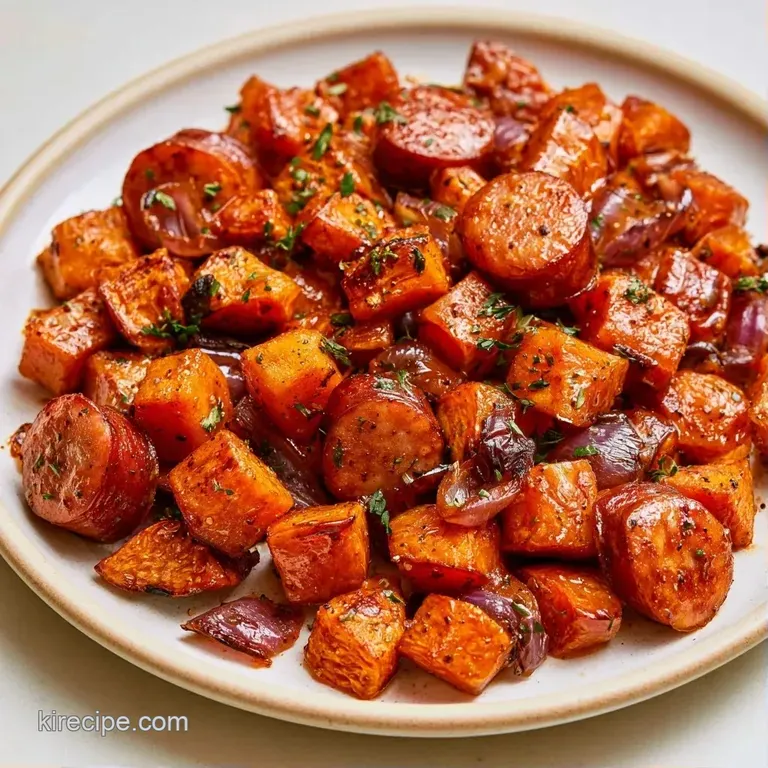
- Bring the oven temperature to 400°F (200°C). Line a large rimmed baking sheet with parchment paper.
- Peel the butternut squash and dice it into consistent 1 inch cubes. Note: Use a stable cutting board to avoid slips.
- Combine the cubed squash, sliced sausage, and red onion wedges in a large mixing bowl.
- Pour over the olive oil, maple syrup, dried herbs, salt, and pepper. Toss until all pieces are evenly coated and glistening.
- Spread the mixture in a single layer across the prepared baking sheet. Note: If pieces are overlapping, use a second pan.
- Roast for 25–30 minutes, tossing once halfway through, until the squash is fork tender and the sausage is browned.
- Take the pan out of the oven.
- Immediately drizzle apple cider vinegar over the hot vegetables.
- Sprinkle with chopped fresh parsley and serve.
Solving Common Pan Problems
The most frequent issue I see with Sheet Pan Butternut Squash is the "steamed" look. This happens when you use a pan that's too small. When vegetables are packed too tightly, they release moisture that gets trapped, turning your roast into a soggy medley. If you can't see the bottom of the pan between the pieces, you're crowding it.
Another common slip up is the timing of the aromatics. If you decide to add fresh garlic, don't toss it in at the start. Garlic burns at 400°F in about 10 minutes, leaving you with bitter black bits. Instead, toss minced garlic in for the final 10 minutes of roasting.
Finally, some people find the squash is still hard in the middle while the sausage is burnt. This almost always means the cubes were different sizes. One 2 inch chunk will take twice as long to cook as a 1 inch cube.
Fixing Soggy Vegetables
If you notice your vegetables are releasing too much liquid, crank the heat up by 10 degrees for the last 5 minutes. This helps evaporate the excess moisture.
Stopping Burnt Edges
If the maple syrup is browning too fast, move the pan to a lower rack in the oven. This puts it further from the top heating element.
Solving Uneven Cooking
Always toss your vegetables halfway through. The pieces on the edges of the pan cook faster than the ones in the middle.
| Problem | Root Cause | Solution |
|---|---|---|
| Soggy/Pale Squash | Pan too crowded | Use two baking sheets |
| Burnt Maple Glaze | Oven too hot/High rack | Move pan to lower rack |
| Hard Squash Centers | Uneven cube sizes | Cut all pieces to 1 inch |
| Bitter Taste | Garlic added too early | Add garlic in last 10 mins |
Keeping and Saving Leftovers
These leftovers keep quite well in the refrigerator. Keep them sealed in a container for 4 days. While the squash remains tender, the sausage may lose some of its firmness.
If freezing, make sure the roast is completely cooled first. Use a freezer-safe bag to store it for 2 months. When reheating, try to avoid the microwave, as it tends to make the squash mushy. Instead, pop the leftovers on a baking sheet at 350°F for 10 minutes to restore that roasted consistency.
To minimize waste, save the squash seeds. If you have the time, clean them, toss them with a little oil and salt, and roast at 325°F for 15 minutes for a tasty snack.
Best Side Dish Pairings
Because this dish provides both protein and vegetables, it just needs a bright accompaniment to balance the flavors. A lemon-dressed arugula salad is a perfect match, as the sharp, peppery leaves play off the sweet maple notes of the squash.
To make the meal more filling, try plating this over quinoa or farro. These grains absorb the leftover pan juices, which are essentially liquid gold. For a more decadent pairing, you could serve this alongside a Butternut Squash Risotto if you're hosting a themed dinner party.
A spoonful of Greek yogurt or a swirl of tahini sauce on top provides a creamy element that complements the charred edges.
Changing Up the Flavor
Feel free to switch up the protein. If sausage isn't your favorite, try cubed chicken breast. Just remember that chicken takes a bit longer to cook through, so you may need to increase the roasting time by 5-10 minutes or cut the meat into smaller pieces.
To make this vegetarian, replace the sausage with chickpeas. Toss them in the same oil and maple mixture for a lovely crunch that mimics the texture of the meat. To use up any leftover roasted cubes, my Butternut Squash Pasta is a fantastic option.
- For extra crunch
- Stir in 1/2 cup of chopped pecans during the last 5 minutes.
- For a spicy twist
- Use Chorizo instead of Italian sausage.
- For a vegan version
- Use chickpeas and replace the maple syrup with agave.
That covers everything you need for a hassle-free dinner. Just keep in mind: don't crowd the baking sheet, ensure your cubes are uniform, and don't forget that final splash of vinegar. It truly makes a difference. Happy roasting!
Critical in Sodium
1475 mg 1,475 mg of sodium per serving (64% 64% of daily value)
The American Heart Association recommends a daily limit of 2,300mg, though an ideal limit of 1,500mg is suggested for most adults to lower blood pressure.
Tips to Reduce Sodium
-
Swap the Sausage-25%
Replace smoked Italian sausage with a low-sodium alternative or use fresh ground turkey seasoned with smoked paprika to mimic the flavor.
-
Omit Added Salt-25%
Completely remove the kosher salt from the recipe; the cured sausage already provides significant sodium for the dish.
-
Boost the Acidity-10%
Increase the apple cider vinegar or add a squeeze of fresh lemon juice to brighten the flavors without needing extra salt.
-
Enhance the Aromatics
Double the amount of dried rosemary or thyme to add deeper earthy notes and complexity to the roasted vegetables.
Recipe FAQs
Should I peel the butternut squash before roasting?
Yes, peel the skin to ensure the cubes have a consistent, tender texture. The skin can remain tough even after roasting at 400°F.
Is it true that roasting squash in large halves is the only way to get a rich flavor?
That's a myth. Cubing the squash into 1-inch pieces increases the surface area for the maple syrup and oil to caramelize.
How to prevent the vegetables from steaming on the pan?
Spread the ingredients in a single layer to allow for maximum air circulation. Crowding the pan traps moisture and leads to a mushy texture.
Which oven temperature is best for these ingredients?
Set your oven to 400°F to achieve the best results. This heat level creates mahogany charred edges while keeping the centers tender.
Can I adjust the roasting time for different results?
Roast for 25–30 minutes to ensure the squash is fork-tender. If you enjoy the ease of preparing a hearty, all-in-one dinner, try our stuffed cabbage for another comforting meal.
Sheet Pan Butternut Squash with Sausage