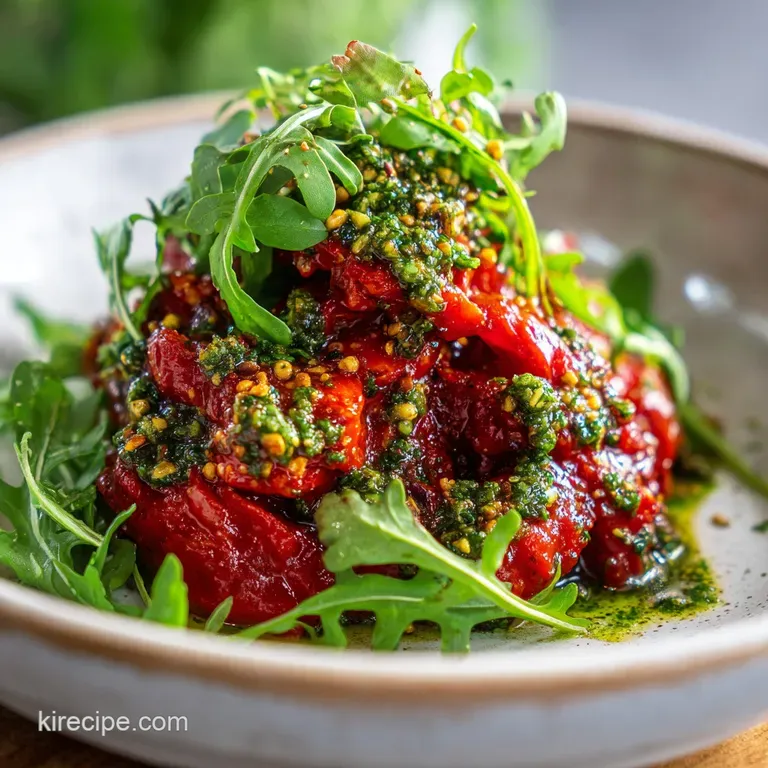
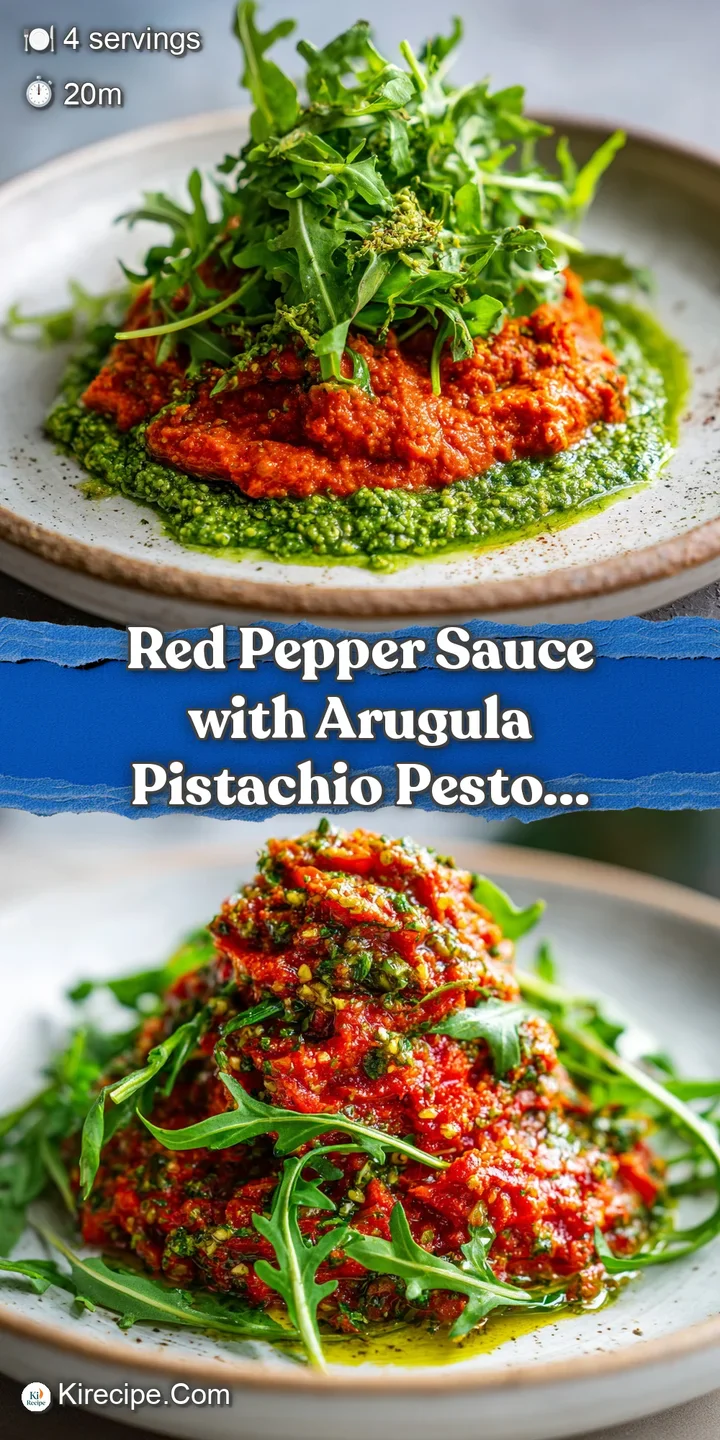
Red Pepper Sauce with Arugula Pistachio Pesto
- Time: Active 15 minutes, Passive 5 minutes, Total 20 minutes
- Flavor/Texture Hook: Velvety red pepper base meets the peppery crunch of pistachio pesto.
- Perfect for: Weeknight dinners when you need something sophisticated but fuss free.
- The Vibrant Red Pepper Sauce with Arugula Pistachio Pesto
- The Science of Flavor Harmony
- Component Analysis for Maximum Flavor
- Selecting the Best Possible Components
- Essential Tools for Kitchen Success
- Executing the Red Pepper Sauce Masterfully
- Expert Advice for Perfect Results
- Creative Variations for Any Occasion
- Storage and Leftover Management Strategies
- Elegant Serving and Plating Techniques
- Recipe FAQs
- 📝 Recipe Card
The Vibrant Red Pepper Sauce with Arugula Pistachio Pesto
The first time I threw these ingredients together, I was standing in my kitchen at 6:00 PM with nothing but a jar of peppers and some slightly sad looking arugula. I heard the sizzle of the garlic hitting the olive oil and smelled that instant, mouth watering aroma, and I knew I was onto something.
This Red Pepper Sauce with Arugula Pistachio Pesto Recipe will become your new go to flavorful topping because it balances heat, acidity, and creaminess perfectly.
I’ve made the mistake before of using low quality jarred peppers that taste like tin, but once you rinse them well and let them simmer with smoked paprika, they transform into something incredible.
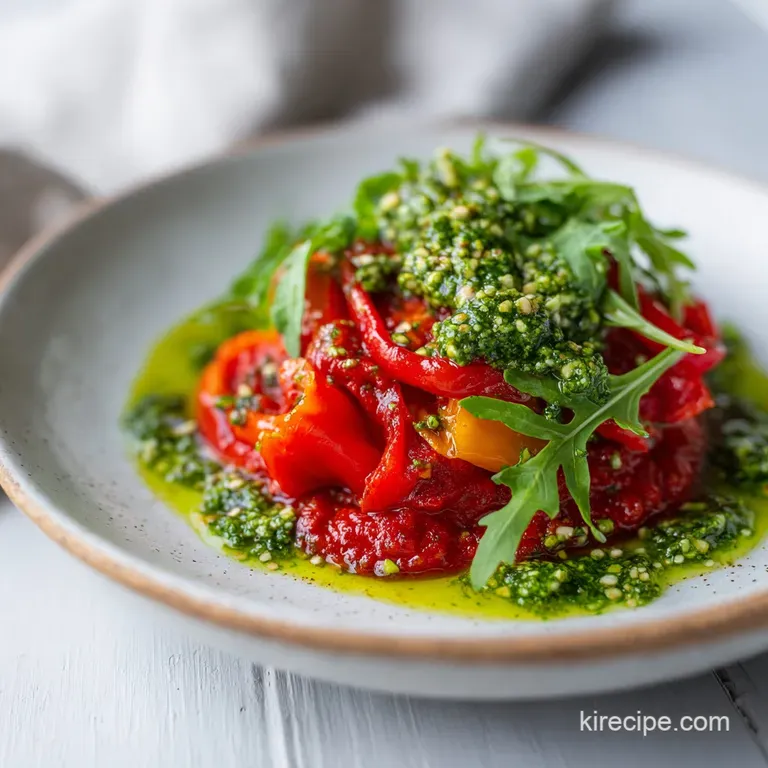
It’s the kind of meal that looks like you spent hours over the stove, but honestly, the blender does most of the heavy lifting. You'll love how the bright green pesto provides a sharp contrast to the deep, smoky orange of the sauce.
We aren't just making a sauce; we're creating a layering effect that hits every part of your palate. The silky texture of the cream infused peppers acts as a blanket for your pasta, while the arugula pesto adds a punchy, fresh finish that keeps things from feeling too heavy.
Trust me, once you see how the pistachios shatter into salty, nutty bits in the pesto, you’ll never go back to basic basil versions.
The Science of Flavor Harmony
The Physics of the Emulsion: The heavy cream acts as a molecular bridge between the acidic roasted peppers and the fats in the olive oil, creating a stable, velvety structure that clings to pasta rather than sliding off.
- Maillard Depth: Sautéing the onion and garlic until translucent creates sweet, savory compounds that balance the natural tang of the jarred peppers.
- Chlorophyll Preservation: Using raw arugula and cold pressed oil in the pesto prevents the greens from oxidizing, keeping the color vibrant and the flavor sharp.
- Lipid Soluble Aromatics: Toasting the smoked paprika in the olive oil for 30 seconds releases its flavor compounds into the fat, ensuring the smokiness permeates the entire batch.
| Method | Time | Texture | Best For |
|---|---|---|---|
| Stovetop Simmer | 20 minutes | Silky and warm | Standard weeknight dinner |
| Cold Blend | 5 minutes | Raw and punchy | Quick chilled pasta salad |
| Slow Cooker | 2 hours | Deeply caramelized | Large batch meal prep |
Choosing the right method depends on how much time you have. While the stovetop method is my favorite for a cozy dinner, the cold blend works surprisingly well if you're tossing this with a cold grain salad.
The stovetop simmer allows the flavors of the onion and garlic to really meld with the cream, resulting in a more sophisticated profile.
Component Analysis for Maximum Flavor
| Ingredient | Science Role | Pro Secret |
|---|---|---|
| Roasted Red Peppers | Acidic/Sugar Base | Rinse thoroughly to remove the harsh vinegar brine from the jar. |
| Pistachios | Fat & Texture | Use roasted unsalted nuts to control the seasoning levels yourself. |
| Heavy Cream | Emulsifier | Add at the very end to prevent the sauce from breaking under high heat. |
The key to this dish is the quality of your fats. Using a high-quality extra virgin olive oil makes a massive difference in the pesto's mouthfeel. If you want a slightly different creamy texture, you might find inspiration in my Cajun Alfredo Sauce recipe, which uses similar emulsification techniques to achieve a rich finish.
Selecting the Best Possible Components
- 16 oz jarred roasted red peppers: Drained and rinsed. Why this? Provides a smoky, sweet base with zero roasting effort.
- 2 tbsp extra virgin olive oil: For sautéing. Why this? high-quality fat carries the aromatics of the garlic and onion.
- 1 small yellow onion: Finely diced. Why this? Adds essential sweetness and body to the sauce base.
- 3 cloves garlic: Smashed for the sauce. Why this? Infuses the oil with savory depth without burning too quickly.
- 1 tsp smoked paprika: Why this? Mimics the flavor of peppers charred over an open flame.
- 0.5 cup heavy cream: Why this? Smooths out the acidity and creates a luxurious, velvety coating.
- 0.5 tsp sea salt: To taste. Why this? Enhances the natural sweetness of the peppers and pistachios.
- 2 cups baby arugula: Packed. Why this? Provides a peppery, fresh counterpoint to the rich red sauce.
- 0.5 cup shelled pistachios: Roasted unsalted. Why this? Adds a unique buttery crunch that basil based pestos lack.
- 0.5 cup Parmigiano Reggiano: Grated. Why this? Offers salty umami that binds the pesto together.
- 0.5 cup extra virgin olive oil: For the pesto. Why this? Creates the characteristic silky pour of a good pesto.
- 1 lemon: Zested and juiced. Why this? Cuts through the fat and brightens the arugula’s bitterness.
- 1 clove garlic: Raw for the pesto. Why this? Provides a sharp, spicy bite that contrasts with the cooked sauce.
| Original Ingredient | Substitute | Why It Works |
|---|---|---|
| Heavy Cream | Coconut Milk | Same fat content. Note: Adds a subtle tropical sweetness. |
| Pistachios | Walnuts | Similar fat profile but adds a slightly more bitter, earthy note. |
| Arugula | Fresh Spinach | Milder flavor. Note: Lacks the signature peppery bite of arugula. |
If you’re out of pistachios, pine nuts are the traditional choice, but walnuts actually mimic the texture of this Arugula Pistachio Pesto better. Just be sure to toast them lightly first. For another great topping option that relies on pantry staples, check out this Red Lobster Tartar recipe for your next seafood night.
Essential Tools for Kitchen Success
To get that perfectly smooth consistency for the red pepper base, you really need a high speed blender or a food processor. A standard blender works, but you might need to blend it for an extra minute to ensure there are no stray skins from the peppers.
I also recommend a microplane for the Parmigiano Reggiano; it creates a snow like texture that melts into the pesto instantly.
You will also need a large, heavy bottomed skillet. Stainless steel is great here because it allows you to see the onion's color as it changes, but cast iron works too if that's what you have.
Finally, make sure you have a glass jar for any leftover pesto plastic tends to absorb the garlic smell and the green color of the arugula.
Executing the Red Pepper Sauce Masterfully
- Pulse the pesto. Combine 2 cups baby arugula, 0.5 cup pistachios, 0.5 cup Parmigiano Reggiano, 1 raw garlic clove, and the lemon zest and juice in a food processor. Note: Keep it slightly chunky for better texture.
- Stream the oil. Slowly pour in 0.5 cup olive oil while pulsing until the pesto is vibrant and emulsified.
- Sauté the aromatics. Heat 2 tbsp olive oil in a skillet and add the diced onion and 3 smashed garlic cloves. Note: Use medium heat to avoid scorching.
- Cook until soft. Sauté for 5-7 minutes until the onion is translucent and smells sweet.
- Toast the spice. Add 1 tsp smoked paprika to the skillet and stir for 30 seconds until the oil turns a deep red.
- Blitz the peppers. Place the drained 16 oz roasted red peppers and the sautéed onion mixture into a blender and process until the mixture is completely velvety.
- Simmer and thicken. Return the blended sauce to the skillet and stir in 0.5 cup heavy cream and 0.5 tsp sea salt. Note: This integrates the fats.
- Combine and serve. Cook on low for 2-3 minutes until the sauce bubbles gently at the edges. Toss with your favorite pasta and dollop the pesto on top.
Expert Advice for Perfect Results
One trick I’ve learned is to save a little bit of the pasta water if you're serving this with noodles. The starch in the water helps the sauce with Arugula Pistachio Pesto Recipe adhere to the pasta even better.
Also, don't be afraid to let the sauce sit for a minute before serving; it thickens slightly as it cools, making it even more luxurious.
Chef's Tip: Freeze your lemon for 10 minutes before zesting. It firms up the skin and prevents the microplane from tearing the bitter white pith.
My sauce looks orange?
This usually happens because the heavy cream lightens the deep red of the peppers. If you want a darker color, use a bit more smoked paprika or add a tablespoon of tomato paste during the sautéing phase. The flavor will still be amazing regardless of the exact shade.
Why is my pesto bitter?
Arugula can sometimes have a very strong bite, especially if it's older. To fix this, add a tiny pinch of sugar or an extra squeeze of lemon juice. This balances the bitterness without masking the peppery flavor.
| Problem | Root Cause | Solution |
|---|---|---|
| Sauce is watery | Peppers weren't drained well | Simmer for 5 extra mins to reduce moisture. |
| Pesto is too thick | Not enough olive oil | Add oil 1 tbsp at a time while pulsing. |
| Sauce tastes flat | Needs more acidity | Add a splash of the lemon juice to the red sauce. |
The red pepper base is very forgiving, but the pesto requires a bit more finesse. If you find the garlic in the pesto too sharp, you can blanch the clove in boiling water for 30 seconds before blending it. It takes the edge off while keeping the flavor.
Common Mistakes Checklist:
- ✓ Always rinse jarred peppers to remove the metallic "can" flavor.
- ✓ Don't boil the sauce after adding the cream, or it might separate.
- ✓ Pulse the pesto; don't over blend it into a flavorless paste.
- ✓ Taste the sauce before adding salt, as jarred peppers can be salty.
Creative Variations for Any Occasion
If you're looking to scale this for a crowd, you can easily double the red pepper base. However, for the spices and salt, I recommend only going up to 1.5x the original amount and then tasting as you go.
Liquids like the heavy cream should be reduced by about 10% when doubling to ensure the sauce doesn't become too thin.
For a smaller portion, simply use half the ingredients. If you have half an egg left over from another recipe, don't use it here this sauce doesn't need binders. For those who want more heat, a pinch of red pepper flakes added with the smoked paprika works wonders.
- For a Protein Boost
- Add grilled shrimp or sliced chicken breast on top.
- For a Vegan Version
- Swap the heavy cream for full fat coconut milk and use nutritional yeast in the pesto.
- For a Crispy Finish
- Top the finished dish with toasted breadcrumbs mixed with lemon zest.
If you enjoy the silky texture of this sauce, you might also like the creamy consistency found in my Arbys Beef and recipe, which uses similar principles to achieve that perfect cheese sauce.
Storage and Leftover Management Strategies
You can store the Red Pepper Sauce in an airtight container in the fridge for up to 4 days. When reheating, do it over low heat on the stove and add a splash of milk or water to loosen it up. The Arugula Pistachio Pesto is best used within 2 days, as the arugula will eventually lose its bright green color.
For long term storage, you can freeze the pesto in ice cube trays for up to 2 months. The red pepper sauce also freezes well, but I recommend freezing it before adding the heavy cream. When you're ready to eat, thaw the sauce, heat it up, and then stir in the fresh cream for the best texture.
To reduce waste, don't toss the stems from the arugula! If they are tender, they can go right into the pesto. If you have leftover red pepper sauce, it makes a fantastic spread for sandwiches or a base for a Mediterranean style shakshuka the next morning.
Elegant Serving and Plating Techniques
To get that "Restaurant Swirl," use a pair of tongs to twirl your pasta into a nest in the center of the bowl. Spoon the red pepper sauce generously around the base, then place a large, rustic dollop of the pesto right on top.
This allows the guest to mix the two components themselves, keeping the colors distinct and beautiful.
Garnish the plate with a few reserved whole pistachios and a final grating of Parmigiano Reggiano. The contrast between the deep orange sauce and the bright green pesto is visually stunning. If you're serving this as a main course, a side of crusty ciabatta is essential for mopping up every last drop of that velvety sauce. For another impressive pasta presentation, my Olive Garden Shrimp recipe offers great tips on balancing seafood and cream.
Recipe FAQs
What are some common pesto mistakes to avoid?
Over processing the nuts and herbs. You want a coarse, textured result, not a smooth paste, otherwise, the flavor flattens out. If you enjoyed controlling the spread in this recipe, see how the same principle of texture control works in the Beef and Cheese recipe.
Can you use arugula instead of basil in pesto?
Yes, arugula makes an excellent substitute. Arugula provides a necessary peppery bite that cuts through the richness of the red pepper sauce. Just be mindful that it can be slightly more bitter than basil, so balance it with extra Parmesan or a touch more lemon.
What pairs well with pistachio pesto?
Rich, slightly sweet, or earthy flavors pair best. Pistachio pesto shines alongside roasted root vegetables, creamy cheeses, or rich seafood like scallops. This pesto would also be fantastic tossed with simple pasta, similar to the light but flavorful coating achieved in our Food Processor Almonds recipe.
How do I make red pepper sauce?
Sauté aromatics, blend peppers, and finish with cream. Begin by sweating diced onion and garlic in olive oil until sweet, then toast smoked paprika briefly.
Blend this mixture with drained jarred roasted red peppers until velvety smooth, then return to the pan to simmer gently with heavy cream until thickened.
Can I use sun-dried tomatoes instead of jarred roasted peppers?
No, sun-dried tomatoes will drastically change the flavor profile. Jarred roasted peppers offer high water content, a smoky sweetness, and easy blending, while sun-dried tomatoes are intensely flavored and chewy. If you prefer a strong tomato base, try using the Celebrity Cruise Lines recipe as a starting point instead.
Why did my red pepper sauce separate after adding the cream?
You likely added the cream while the heat was too high. If you boil the sauce after incorporating the cream, the emulsion breaks, causing the fat and liquid to separate. Always reduce the heat to low or remove the pan from the burner entirely just before stirring in the final dairy component.
Is toasting the pistachios necessary for the pesto?
Yes, lightly toasting the nuts elevates the flavor significantly. Toasting releases essential oils, making the nuts richer and slightly sweeter, preventing a raw, flat taste in the final pesto. This process is crucial for achieving maximum flavor depth.
Pepper Sauce Arugula Pesto
Ingredients:
Instructions:
Nutrition Facts:
| Calories | 584 kcal |
|---|---|
| Protein | 8.9 g |
| Fat | 55.7 g |
| Carbs | 15.8 g |
| Fiber | 3.2 g |
| Sugar | 5.4 g |
| Sodium | 638 mg |
