Diced Chicken Recipe for Dinner with Garlic and Herbs
- Time: Active 10 minutes, Passive 0 minutes, Total 20 minutes
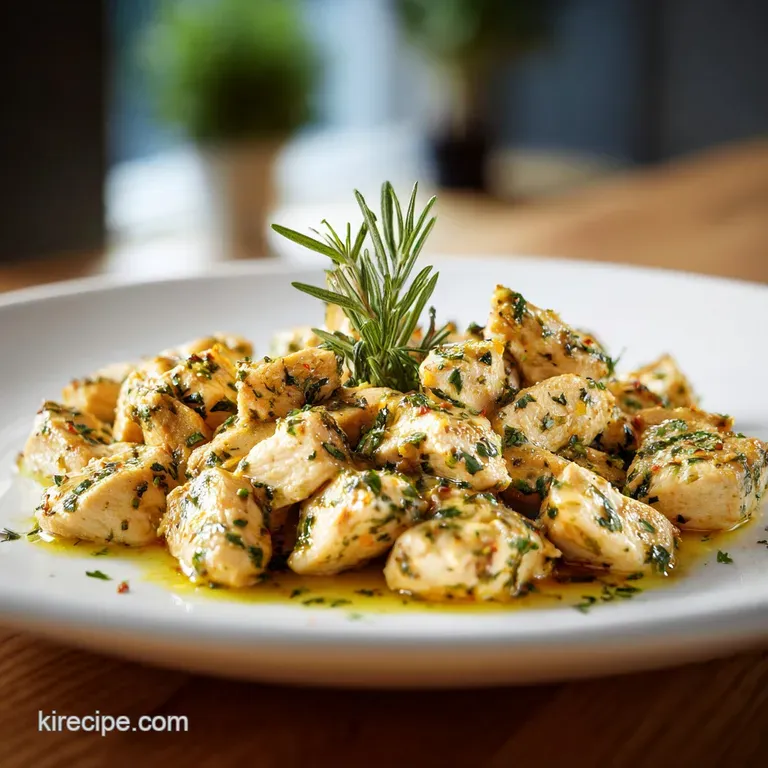
- Flavor/Texture Hook: Golden, sizzle browned exterior with a buttery, citrus garlic finish
- Perfect for: Rapid weeknight dinners, healthy meal prep, or beginner cooks
- The Best Diced Chicken Recipe with Garlic Herbs
- Master These Essential Pan Searing Techniques
- Component Analysis for Maximum Flavor Impact
- Selecting Fresh Ingredients for the Perfect Infusion
- Essential Tools for Achieving a Golden Crust
- Step by Step Flow for This Meal
- Common Mistakes to Avoid for Tender Results
- Creative Variations to Keep Your Routine Exciting
- Adjusting Quantities for Different Group Sizes
- Debunking Common Searing and Herb Myths
- Safe Storage and Reheating Methods
- Perfect Side Dish Pairings for Your Table
- Recipe FAQs
- 📝 Recipe Card
The Best Diced Chicken Recipe with Garlic Herbs
You know that sound when cold, seasoned meat hits a shimmering pan and it creates that immediate, aggressive sizzle? That is the sound of a good night. I remember one Tuesday when I was staring at a pack of chicken breasts, exhausted, and almost reached for the takeout menu.
Instead, I grabbed my heaviest skillet, chopped the meat into tiny bites, and threw in every herb I had. The result was so much better than anything I could have ordered.
This recipe offers a flavorful and easy diced chicken recipe for dinner with garlic and herbs. It is all about the contrast between the browned edges and the juicy interior. We are not just cooking meat here, we are building layers of flavor in a single pan.
You get the punch of the garlic, the earthy notes of the rosemary, and that final hit of lemon that cuts right through the richness of the butter.
Trust me, once you see how quickly these little pieces turn golden and fragrant, you will never go back to baking whole breasts. It's about speed, but it is also about that velvety sauce that forms at the very end. Let's get into how to make this work every single time without ending up with rubbery bits.
Master These Essential Pan Searing Techniques
The secret to this dish lies in the Maillard reaction, which is a fancy way of saying we want a brown crust. When you dice the meat into small pieces, you increase the surface area significantly. More surface area means more places for that delicious browning to happen.
But if your pan isn't hot enough, the meat will just release its juices and boil in its own liquid.
We also use a technique called "mounting with butter" at the very end. By adding a cold tablespoon of grass fed butter after the heat is turned down, we create a quick emulsion with the lemon juice. This coats every single piece of chicken in a glossy, herb flecked sauce that stays on the meat rather than running off. If you like this technique, you might also enjoy the sear on my Thin Steak Recipe.
- Thermal Shock
- High heat causes protein fibers to contract and brown quickly before the interior dries out.
- Aromatic Volatility
- Adding garlic and herbs at the end prevents the delicate oils from burning and turning bitter.
- Acidic Brightness
- Lemon juice breaks down any lingering surface proteins and balances the heavy fats.
| Thickness | Internal Temp | Rest Time | Visual Cue |
|---|---|---|---|
| 1.5 cm cubes | 74°C (165°F) | 2 minutes | Opaque center, no pink |
| 2 cm cubes | 74°C (165°F) | 3 minutes | Golden edges, firm touch |
| 2.5 cm cubes | 74°C (165°F) | 3 minutes | Deep brown crust |
Adding the aromatics too early is a mistake I once made, and it turned my garlic into tiny bitter charcoal bits. Always wait until the meat is almost done before the herbs enter the chat.
Component Analysis for Maximum Flavor Impact
| Ingredient | Science Role | Pro Secret |
|---|---|---|
| Chicken Breast | Lean Protein | Pat bone dry with paper towels to ensure a shatter crisp sear. |
| Fresh Garlic | Sulfuric Aromatics | Mince right before using to keep the flavor sharp and punchy. |
| Grass fed Butter | Lipid Emulsifier | Use cold butter to create a thicker, creamier pan sauce. |
| Lemon Juice | pH Balancer | Freshly squeezed juice provides much better enzymes than bottled versions. |
Every ingredient in this list serves a specific purpose, from the high smoke point of the olive oil to the brightness of the parsley.
Selecting Fresh Ingredients for the Perfect Infusion
- 1.5 lb boneless skinless chicken breasts: The main lean protein. Why this? It cooks quickly and absorbs the garlic herb butter beautifully.
- Substitute: Turkey breast or boneless thighs for more moisture.
- 6 cloves fresh garlic, minced: The primary flavor driver. Why this? Fresh cloves have much more depth than the pre minced jarred stuff.
- Substitute: 1 teaspoon garlic powder (but fresh is better).
- 2 tbsp fresh rosemary and thyme, chopped: Earthy aromatics. Why this? These hardy herbs stand up well to the heat of the pan.
- Substitute: 1 tablespoon dried Italian seasoning.
- 0.25 cup fresh Italian parsley, chopped: A hit of freshness. Why this? It adds color and a clean finish to the heavy butter.
- Substitute: Fresh chives or cilantro.
- 2 tbsp extra virgin olive oil: The cooking medium. Why this? It has a high enough smoke point for a quick sear.
- Substitute: Avocado oil or grapeseed oil.
- 1 tbsp grass fed butter: For the velvety finish. Why this? Grass fed butter has a richer flavor and higher nutrient profile.
- Substitute: Ghee or a plant based butter alternative.
- 0.5 tsp sea salt: Essential seasoning. Why this? It draws out moisture to help the browning process.
- Substitute: Kosher salt.
- 0.25 tsp cracked black pepper: For a subtle heat. Why this? Freshly cracked pepper has more floral notes than ground pepper.
- Substitute: White pepper.
- 0.5 lemon, juiced: The acidic finish. Why this? It cuts through the fat and brightens the whole dish.
- Substitute: 1 tablespoon apple cider vinegar.
Chef's Tip: Freeze your butter for 10 minutes before dicing it into the pan. This delay in melting allows the butter to emulsify with the lemon juice more effectively, creating a silkier sauce that clings to the chicken.
Essential Tools for Achieving a Golden Crust
You don't need a kitchen full of gadgets for this, but a heavy bottomed pan is non negotiable. I prefer a large cast iron skillet or a heavy stainless steel pan. These materials hold heat much better than thin aluminum, which means when you drop the chicken in, the temperature doesn't plummet.
A sharp chef's knife is also your best friend here. Since we are dicing 1.5 lb of chicken, you want clean cuts rather than tearing the meat. If the pieces are uneven, some will be dry while others stay raw. Grab a pair of kitchen shears if you find dicing with a knife too fiddly.
It's actually a great shortcut for getting those pieces uniform.
step-by-step Flow for This Meal
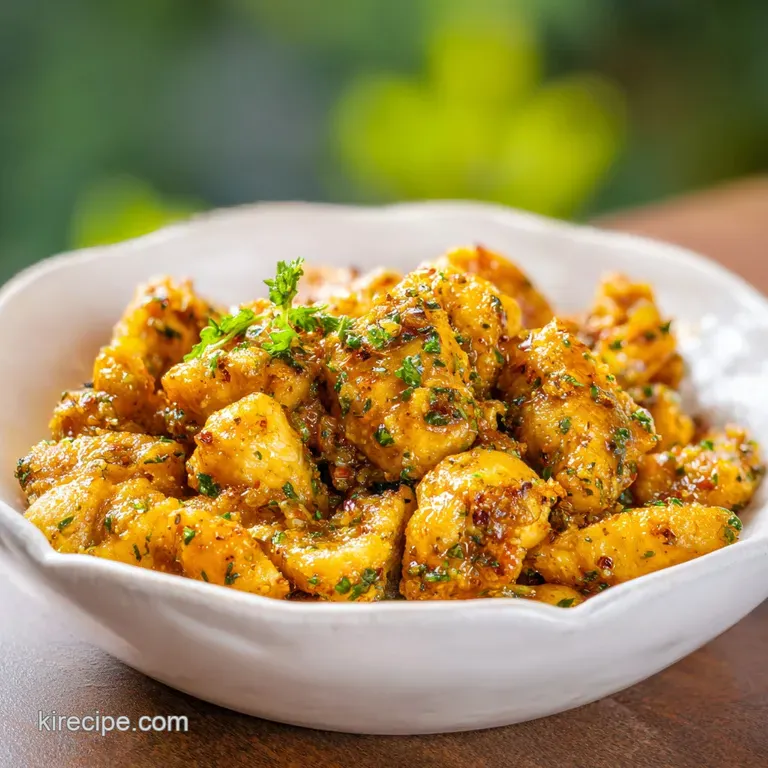
- Prep the chicken. Pat the 1.5 lb chicken breasts dry with paper towels and dice into 2 cm cubes. Note: Dry meat sears, wet meat steams.
- Season thoroughly. Toss the chicken cubes with 0.5 tsp sea salt and 0.25 tsp cracked black pepper.
- Heat the pan. Add 2 tbsp olive oil to a large skillet over medium high heat until the oil shimmers and barely smokes.
- Sear the meat. Place the chicken in the pan in a single layer. Let it sit undisturbed for 3 minutes until a deep golden crust forms.
- Flip and finish. Stir the chicken and cook for another 3 minutes until the pieces are mostly opaque.
- Add the aromatics. Toss in the 6 minced garlic cloves and 2 tbsp of chopped rosemary and thyme.
- Butter and herbs. Add 1 tbsp grass fed butter and 0.25 cup parsley to the pan.
- The final toss. Stir constantly for 1 minute until the butter is foamy and the garlic is fragrant.
- Deglaze with lemon. Squeeze the juice from 0.5 lemon over the chicken, scraping any browned bits from the bottom.
- Rest and serve. Remove from heat immediately and let rest for 2 minutes until the juices redistribute.
Common Mistakes to Avoid for Tender Results
The biggest tragedy with diced chicken is the "rubber ball" effect. This happens when the pan is crowded and the chicken essentially boils in its own escaping liquid. If you are doubled up on the recipe, work in batches. It is better to spend five extra minutes cooking than to eat chewy, grey chicken.
Another thing to watch for is the garlic. Garlic has a high sugar content and will burn in seconds at high heat. That is why we add it at the very end. If it turns dark brown or black, it will be bitter. If that happens, honestly, wipe out the pan and start the garlic/butter step over.
It is worth the two minutes to save the flavor.
Why Your Chicken Released Liquid
If you see a pool of water in your pan, your temperature was too low or you overcrowded the surface. The meat begins to "weep" its internal moisture before the outside can sear shut.
| Problem | Root Cause | Solution |
|---|---|---|
| Dry/Tough Meat | Overcooking | Remove pieces as soon as they reach 74°C (165°F). |
| Pale Chicken | Pan not hot enough | Wait for the oil to shimmer before adding meat. |
| Bitter Flavor | Burnt garlic | Add garlic only in the last 60-90 seconds of cooking. |
Common Mistakes Checklist
- ✓ Pat the chicken completely dry before dicing or seasoning.
- ✓ Use a pan large enough to leave space between the chicken pieces.
- ✓ Wait for the "sizzle" sound before letting go of the meat.
- ✓ Use fresh lemon juice instead of the bottled concentrate for better acidity.
- ✓ Don't skip the resting period, even for small diced pieces.
Creative Variations to Keep Your Routine Exciting
Once you have the base method down, you can change the flavor profile easily. For a Mediterranean twist, swap the rosemary for oregano and add some feta cheese and kalamata olives at the very end. If you want a bit of a kick, a teaspoon of red chili flakes added with the garlic does wonders.
For those watching their carbs, this is already a fantastic keto friendly option. I usually serve it over cauliflower rice or with a side of roasted zucchini. If you have leftovers, they make a killer base for a salad the next day, similar to how I use the Arlington Chicken Salad recipe for meal prep lunches.
Three Ways to Pivot
- If you want more sauce: Add 0.25 cup of chicken broth with the lemon juice and let it reduce by half.
- If you want it crispy: Lightly dust the chicken in arrowroot powder or cornstarch before searing.
- If you want it spicy: Add a dollop of harissa or sriracha during the final butter toss.
Adjusting Quantities for Different Group Sizes
When scaling down for a solo dinner, use a smaller 20 cm skillet. If you use a massive pan for a single chicken breast, the oil and juices will spread too thin and burn. You can still use the full amount of garlic, though I won't tell anyone.
When scaling up for a crowd, do not just throw 3 lb of chicken into one pan. You must work in batches. Sear half the chicken, remove it to a plate, sear the second half, then add everything back in for the final garlic and herb toss. This ensures every piece gets that "shatter" crisp exterior.
| Servings | Chicken Amount | Pan Size | Batch Count |
|---|---|---|---|
| 2 people | 0.75 lb | 25 cm | 1 batch |
| 4 people | 1.5 lb | 30 cm | 1 batch |
| 8 people | 3 lb | 30 cm | 2 batches |
Debunking Common Searing and Herb Myths
There is a long standing myth that searing meat "seals in the juices." Science has proven this isn't true; moisture is lost during the cooking process regardless of the crust. However, the sear is essential for the Maillard reaction, which creates hundreds of different flavor compounds that raw or boiled chicken simply doesn't have.
Another misconception is that dried herbs are always inferior to fresh. While fresh is definitely better for the "finish" of this dish, dried rosemary actually holds up quite well if you crush it in your palms first to release the oils.
However, for the parsley and the lemon, fresh is non negotiable for that vibrant, velvety end result.
Safe Storage and Reheating Methods
This chicken stays great in the fridge for up to 4 days if stored in an airtight container. The butter sauce will solidify, so when you reheat it, do it gently. I recommend a splash of water or chicken stock in a pan over medium low heat.
This recreates the steam needed to moisten the meat without overcooking it into a rubbery texture.
You can freeze this for up to 3 months, though the texture of the chicken changes slightly upon thawing. If you are looking to reduce waste, save any leftover herb stems or garlic skins. Throw them into a bag in your freezer to make a quick bone broth later.
It’s an easy way to get every bit of value out of your groceries.
Perfect Side Dish Pairings for Your Table
Since this chicken is quite savory and herbaceous, it pairs beautifully with something that can soak up that garlic butter sauce. Fluffy jasmine rice or a simple pearl couscous works wonders. If you want something lighter, a massaged kale salad with a lemon vinaigrette mirrors the flavors in the chicken.
For a more comforting meal, I love serving this alongside a big bowl of roasted root vegetables. The sweetness of roasted carrots or sweet potatoes balances the sharp garlic. It also goes surprisingly well as a protein topper for a creamy pasta, similar to the flavor profile found in a Chicken and Shrimp recipe. No matter what you choose, just make sure you have something on the plate to catch that extra sauce!

Recipe FAQs
What is the target internal temperature for diced chicken pieces?
Yes, 74°C (165°F). Remove the chicken from the heat immediately upon reaching this temperature to prevent the lean protein from drying out.
How do I prevent the diced chicken from boiling instead of searing?
Heat the pan until the oil shimmers. Ensure your skillet is large enough so the chicken pieces are in a single layer, avoiding overcrowding which lowers the pan temperature.
How to add the garlic and herbs for maximum flavor without burning them?
Add them during the last 90 seconds of cooking. High heat burns the delicate compounds quickly; reserve them until the chicken is nearly done to build the final aromatic layer.
Is it true that searing meat instantly seals in all the internal juices?
No, this is a common misconception. Searing does not trap moisture, but it is crucial for initiating the Maillard reaction which develops hundreds of essential flavor compounds.
How should I adjust the recipe when cooking for eight people instead of four?
Cook in two separate batches. Use the same size pan but sear half the chicken, remove it, sear the second half, and then combine both batches for the final butter toss.
What technique creates the glossy, velvety coating on the finished chicken?
Emulsify cold butter off-heat with lemon juice. Adding a cold fat element to a warm acid base creates a stable emulsion that coats the meat, similar to the method used in making our Longhorn Parmesan Chicken recipe.
What is the best substitution if I don't have fresh thyme and rosemary?
Use 1 tablespoon of dried Italian seasoning. Dried herbs are more concentrated, so you need less, but fresh is superior for the final bright notes in this quick dish.
Diced Chicken Garlic Herb
Ingredients:
Instructions:
Nutrition Facts:
| Calories | 374 kcal |
|---|---|
| Protein | 53.2 g |
| Fat | 16.2 g |
| Carbs | 2.4 g |
| Fiber | 0.4 g |
| Sugar | 0.6 g |
| Sodium | 368 mg |
