Chocolate Cream Cheese Pound Cake: Tight Crumb
- Time: Active 20 minutes, Passive 1 hour 10 mins, Total 1 hour 30 mins
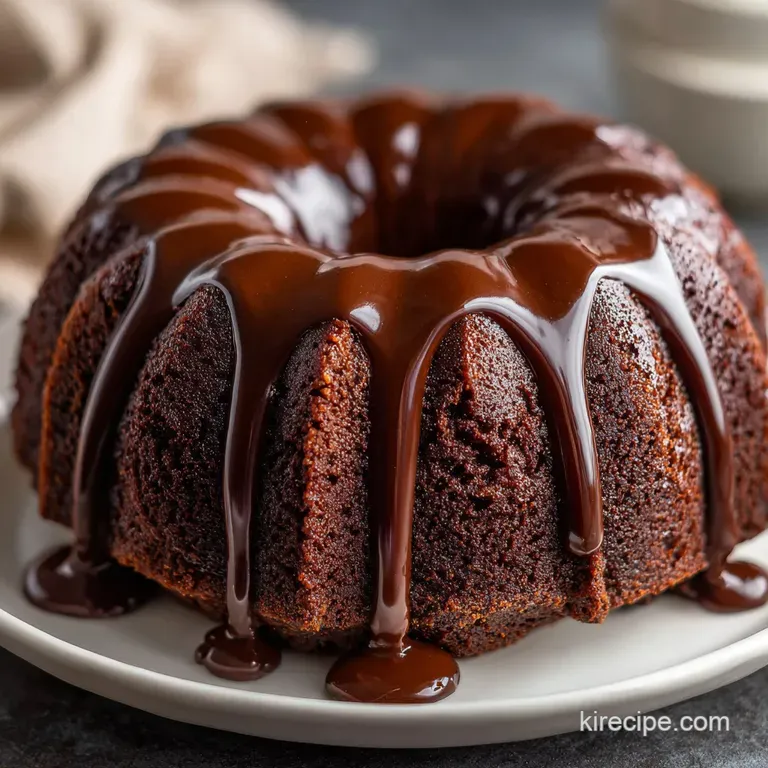
- Flavor/Texture Hook: Velvety, tight crumbed chocolate with a subtle tangy finish
- Perfect for: Holiday gatherings, weekend brunch, or high end gift giving
- Why This Chocolate Cream Cheese Pound Cake Is My Favorite
- The Molecular Magic Behind a Velvety Crumb
- Timing and Yield for Your Chocolate Masterpiece
- The Analytical Breakdown of Our Key Components
- Selecting the Best Elements for Your Batter
- Essential Tools for a Flawless Baking Experience
- Executing the Perfect Chocolate Pound Cake Steps
- Identifying and Resolving Common Baking Structural Issues
- Adjusting the Recipe for Diverse Dietary Needs
- Maximizing Freshness and Minimizing Kitchen Waste
- Completing the Plate with the Right Pairings
- Recipe FAQs
- 📝 Recipe Card
Why This Chocolate Cream Cheese Pound Cake Is My Favorite
The air in my kitchen changes the second the Dutch processed cocoa hits the wet ingredients. It’s a deep, earthy scent that promises something much more substantial than a standard sponge.
I remember making this for a friend's housewarming and the way the serrated knife slid through the crust it didn't crumble or tear; it yielded with a soft, muffled sound that told me the crumb was exactly where it needed to be.
This isn't your average supermarket loaf. We are talking about a heavy, substantial cake that feels expensive on the tongue. The cream cheese doesn't make it taste like "cheesecake" in the traditional sense, but it provides a creamy background note that balances the intense bitterness of the chocolate.
It’s the kind of cake you eat in thin, cold slices while standing at the kitchen counter at midnight.
I’ve spent years tweaking the ratios because pound cakes are notoriously finicky. If the butter is too cold, the emulsion breaks; if the oven is too hot, the top cracks like a canyon. We’ve solved all that here. You are going to get a flat, even rise and a texture that feels like literal velvet.
It’s foolproof if you follow the temperature cues I’ve laid out for you.
The Molecular Magic Behind a Velvety Crumb
- Acidic Tenderization: The lactic acid in the cream cheese and Greek yogurt weakens gluten bonds, ensuring the cake remains plush rather than rubbery.
- Fat Stabilized Aeration: Creaming butter at 65°F creates millions of microscopic air pockets that expand during baking, providing lift without a "holy" texture.
- Starch Gelatinization: The high sugar content delays the setting of the flour, allowing the cake to rise fully before the structure locks into place.
| Baking Method | Time | Texture | Best For |
|---|---|---|---|
| Standard Bundt | 1 hour 10 mins | Crisp exterior, moist core | Dinner parties |
| Standard Loaf | 1 hour 25 mins | Uniform slices, denser | Toasted morning slices |
| Mini Loaf Pans | 40 minutes | High crust to crumb ratio | Gifting or bake sales |
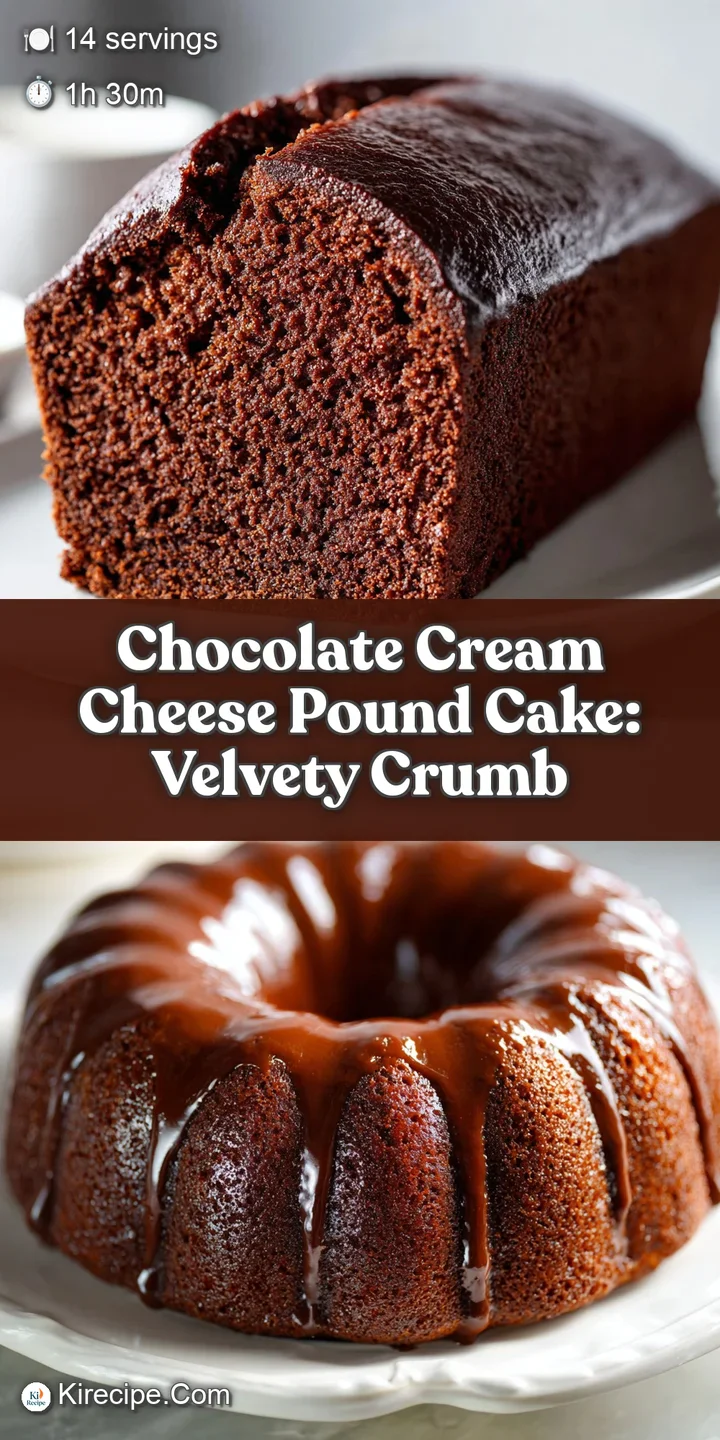
Choosing the right pan changes the sensory experience significantly. A Bundt pan allows for more surface area to caramelize, creating that slight "shatter" when you bite into the edge, whereas a loaf pan keeps the moisture concentrated for a heavier, fudgy center.
Timing and Yield for Your Chocolate Masterpiece
When planning your bake, remember that pound cakes are marathons, not sprints. You need to account for the cool down time, as the structure doesn't fully set until the fats have reached room temperature. Cutting into it too early will result in a gummy texture that masks the complexity of the cocoa.
- Yield: 14 generous slices
- Prep:20 minutes
- Cook: 1 hour 10 mins
- Total: 1 hour 30 mins
The Analytical Breakdown of Our Key Components
| Ingredient | Science Role | Pro Secret |
|---|---|---|
| Dutch Processed Cocoa | Lowers acidity, darkens color | Sift twice to prevent "cocoa pockets" in the crumb. |
| Full Fat Cream Cheese | Provides structural fat | Must be 70°F to emulsify perfectly with the sugar. |
| Large Eggs | Acts as the primary emulsifier | Add one at a time to prevent the batter from curdling. |
The interaction between the Dutch processed cocoa and the baking powder is vital. Since the cocoa is neutralized, we rely on the baking powder for the lift, whereas natural cocoa would react differently with the pH levels. This specific balance is what creates the dark, uniform color you see in professional bakeries.
Selecting the Best Elements for Your Batter
Getting the right ingredients is half the battle. If you love the deep, dark notes found in a Mounds Cake Recipe, you'll notice we use a similar high fat cocoa base here to ensure the chocolate flavor isn't "lost" behind the sugar.
- All purpose flour (315g): Provides the protein needed for a sturdy cake. Why this? Bread flour would be too tough; cake flour too weak.
- Dutch processed cocoa (60g): For that "Oreo" dark color and smooth flavor. Why this? Regular cocoa is too acidic and light for this profile.
- Unsalted butter (225g): Softened to exactly 65°F. Why this? This is the "Goldilocks" temp for air retention.
- Full fat cream cheese (225g): Philadelphia brand is the gold standard for consistency. Why this? low-fat versions contain too much water, ruining the crumb.
- Granulated cane sugar (350g): For sweetness and moisture retention.
- Pure vanilla extract (10ml): Enhances the chocolate's floral notes.
- Large eggs (5 units): Must be at room temperature to maintain the emulsion.
- Plain Greek yogurt (60g): Adds moisture and a slight tang.
- Mini chocolate chips (170g): Distributed better than large chips.
| Original Ingredient | Substitute | Why It Works |
|---|---|---|
| Unsalted Butter | Salted Butter | Adds saltiness; reduce sea salt in recipe to 1g. |
| Greek Yogurt | Sour Cream | Similar fat/acid profile. Note: Slightly richer mouthfeel. |
| All Purpose Flour | 1:1 GF Flour | Use a blend with xanthan gum for structural mimicry. |
Using sour cream is a classic move if you find your yogurt is too thin. It adds a luxurious weight to the batter that mimics the technique used in my Purple Velvet Cake Recipe, where fat and acid work together to keep the crumb tender over several days.
Essential Tools for a Flawless Baking Experience
You don't need a professional kitchen, but a few specific tools are non negotiable for this chocolate cream cheese pound cake. Accuracy is your best friend when dealing with 315g of flour a single extra tablespoon can turn your cake from "velvety" to "dry."
- Digital Kitchen Scale: Essential for the 315g flour and 350g sugar measurements.
- Stand Mixer: Use the paddle attachment (not the whisk) to avoid over incorporating air.
- 10 cup Bundt Pan: Or two 9x5 loaf pans if you prefer smaller portions.
- Thermometer: To check the internal temperature of the cake (210°F is the goal).
- Fine Mesh Sieve: Essential for the cocoa and flour to ensure no lumps.
Chef's Tip: Before you even start the mixer, grease your pan with a "cake goop" (equal parts melted shortening, flour, and oil) rather than just butter. The cocoa in this recipe makes the batter extra sticky, and this mixture ensures a clean release every time.
Executing the Perfect Chocolate Pound Cake Steps
1. The Aeration Phase
Cream the 225g butter and 350g sugar on medium speed for a full 5 minutes. Note: The mixture should look pale and fluffy, not just combined.
2. The Cream Cheese Integration
Add the 225g cream cheese and 10ml vanilla, beating until no white streaks remain. Wait until the mixture looks like smooth frosting before moving to the next step.
3. The Emulsion Build
Incorporate the 5 eggs one-by-one, beating for 30 seconds after each addition. Note: If the batter looks curdled, add a tablespoon of your flour to bind it.
4. Sifting the Dry Base
Sift the 315g flour, 60g cocoa, 5g baking powder, and 3g sea salt into a separate bowl. Until the mixture is a uniform, pale brown dust.
5. The Low Speed Mix
Add half of the dry ingredients to the mixer on the lowest setting. Note: This prevents a "flour poof" and keeps the gluten development low.
6. The Moisture Boost
Mix in the 60g Greek yogurt until just incorporated. Until the batter looks glossy and thick.
7. The Final Fold
Add the remaining dry ingredients and the 170g mini chocolate chips. Fold by hand using a spatula until no flour streaks are visible at the bottom of the bowl.
8. The Low and Slow Bake
Pour into your prepared pan and bake at 325°F for 1 hour 10 mins. Until a skewer comes out with just a few moist crumbs.
9. The Initial Cool
Let the cake sit in the pan for exactly 10 minutes. Note: This allows the steam to pull the edges away from the pan.
10. The Final Set
Invert onto a wire rack and cool completely. Until the cake is cool to the touch, usually about 2 hours.
Identifying and Resolving Common Baking Structural Issues
Why Your Pound Cake Sank
If the center of your cake resembles a crater, it’s usually a temperature or aeration issue. Over creaming the butter and sugar at the start can incorporate too much air, causing the cake to rise rapidly and then collapse when the air escapes.
Also, opening the oven door too early causes a sudden drop in temperature that the fragile structure can't handle.
Why Your Cake Is Too Dry
This is almost always a measurement or timing error. Flour is highly compressible; if you "scoop" it with a cup, you might be using 20% more than the required 315g. On top of that,, pound cakes continue to cook after they leave the oven. If you wait until the skewer is "perfectly clean," you've likely overbaked it.
| Problem | Root Cause | Solution |
|---|---|---|
| Heavy/Dense Bottom | Ingredients too cold | Ensure eggs and cream cheese are 70°F before mixing. |
| Large Air Holes | Mixing speed too high | Keep the mixer on "low" once flour is added. |
| Dry/Crumbly Texture | Too much flour | Use a digital scale to measure 315g exactly. |
Common Mistakes Checklist
- ✓ Never use "cold" eggs; they will seize the butter and break the emulsion.
- ✓ Avoid over mixing once the flour is added; this develops gluten and makes the cake "bread like."
- ✓ Don't skip sifting the cocoa cocoa powder is naturally clumpy and won't dissolve on its own.
- ✓ Check your oven temperature with an external thermometer; many ovens run 25°F hot.
- ✓ Always grease the "inner cone" of the Bundt pan thoroughly, as this is where most cakes stick.
Adjusting the Recipe for Diverse Dietary Needs
For a Velvet Like Crumb
To achieve an even finer texture, replace 50g of the all purpose flour with cornstarch. This lowers the overall protein content, mimicking the delicate nature of a Berry Chantilly Cake recipe while maintaining the chocolate pound cake's weight.
For a gluten-free Alternative
Use a high-quality 1:1 gluten-free flour blend. Because this cake relies heavily on fats (butter and cream cheese) for its structure rather than just gluten, it actually adapts to GF versions much better than a light sponge cake would.
To Make it dairy-free
Substitute the butter with a vegan block butter and use a coconut based cream cheese. For the yogurt, a thick almond milk yogurt works well. Note that the chocolate chips must be certified dairy-free to maintain the integrity of the adaptation.
Maximizing Freshness and Minimizing Kitchen Waste
Storage: This cake is actually better on day two. Wrap it tightly in plastic wrap and keep it at room temperature for up to 3 days. If you prefer it cold (which I do!), it will last in the fridge for 7 days, but the texture will become firmer, almost like a truffle.
Freezing: This is a fantastic cake for freezing. Slice it first, wrap each slice in parchment paper, then foil, and place in a freezer bag for up to 3 months. Thaw at room temperature for 30 minutes before eating.
Zero Waste Tip: If you have leftovers that have gone slightly stale, don't toss them! This cake makes the most incredible "chocolate croutons." Cube the leftovers, toss them in a little melted butter, and air fry at 350°F for 4 minutes.
They become crunchy on the outside and fudgy on the inside perfect for topping vanilla bean ice cream.
Completing the Plate with the Right Pairings
Because this cake is so rich and cocoa forward, you want to pair it with items that offer high acidity or a clean, palate cleansing finish. A dollop of unsweetened whipped cream or a handful of macerated raspberries works wonders.
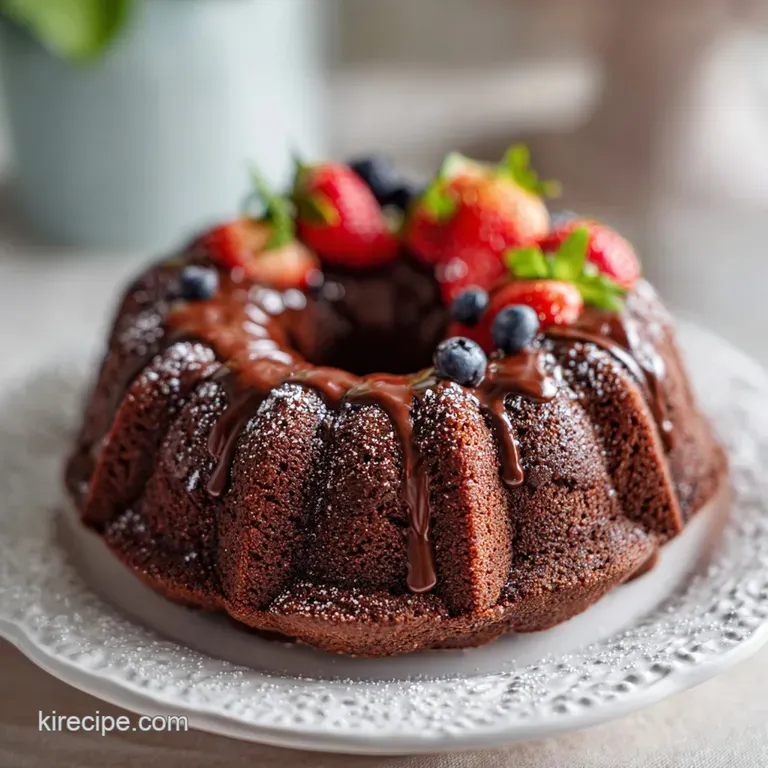
If you are serving this as a formal dessert, a quick espresso ganache can take it to the next level. The bitterness of the coffee highlights the Dutch processed cocoa beautifully. Alternatively, a simple dusting of powdered sugar is all it needs if the crumb is as velvety as it should be.
- Fresh Fruit: Tart berries like blackberries or raspberries.
- Dairy: A scoop of crème fraîche or a pour of cold heavy cream.
- Beverage: A glass of cold milk or a robust, dark roast coffee.
This chocolate cream cheese pound cake is a labor of love, but the precision pays off in every bite. Trust your scale, watch your temperatures, and don't be afraid to let it sit for a day your patience will be rewarded with the best texture you've ever achieved in a home kitchen.
Recipe FAQs
What temperature should the butter and cream cheese be before mixing?
The butter must be 65°F and the cream cheese 70°F. This specific temperature range is critical for creating a stable emulsion that traps air, preventing the dense cake structure from collapsing later.
How do I prevent the chocolate chips from sinking to the bottom of the cake?
Lightly dust the chocolate chips in a tablespoon of the dry flour mixture before folding them in. This slight coating prevents the smooth, dense batter from immediately pulling the heavier chips to the bottom during the bake.
How do I check if this pound cake is truly done baking?
Insert a wooden skewer into the center; it should come out with moist, clinging crumbs, not wet batter. The internal temperature should register around 210°F; pulling it out slightly underdone ensures the residual heat finishes the cooking process gently.
Can I substitute the Greek yogurt with milk?
No, substituting milk will result in a much drier cake. The Greek yogurt contributes both necessary fat and lactic acid, which tenderizes the crumb structure similarly to how the acid works in our Ground Beef Pasta recipe for enhanced moisture.
Why is Dutch processed cocoa recommended over natural cocoa powder?
Dutch processed cocoa is recommended because it is less acidic. This means we rely solely on the baking powder for lift, resulting in a darker color and a smoother, less tangy chocolate flavor profile compared to natural cocoa.
How long should I cream the butter and sugar for optimal lift?
Cream the butter and sugar on medium speed for a full 5 minutes. This extended time incorporates the microscopic air pockets necessary to give the heavy pound cake batter its structure without relying excessively on chemical leaveners.
Is it true that I must use a springform pan for this cake?
No, a Bundt pan is actually superior for this specific recipe. The design of the Bundt pan ensures heat circulates evenly to the center, providing uniform baking for a dense cake that benefits from the slightly crispy exterior caramelization.
Chocolate Cream Cheese Pound Cake
Ingredients:
Instructions:
Nutrition Facts:
| Calories | 448 kcal |
|---|---|
| Protein | 7.5 g |
| Fat | 24.5 g |
| Carbs | 53.1 g |
| Fiber | 2.8 g |
| Sugar | 42.4 g |
| Sodium | 145 mg |
