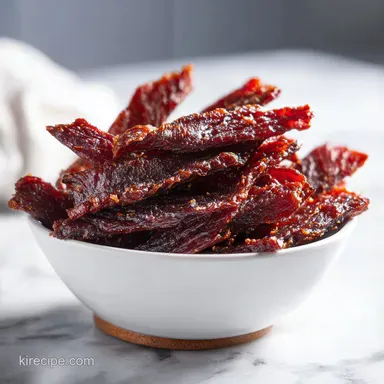
BBQ Beef Jerky: Failure-Proof and Tangy
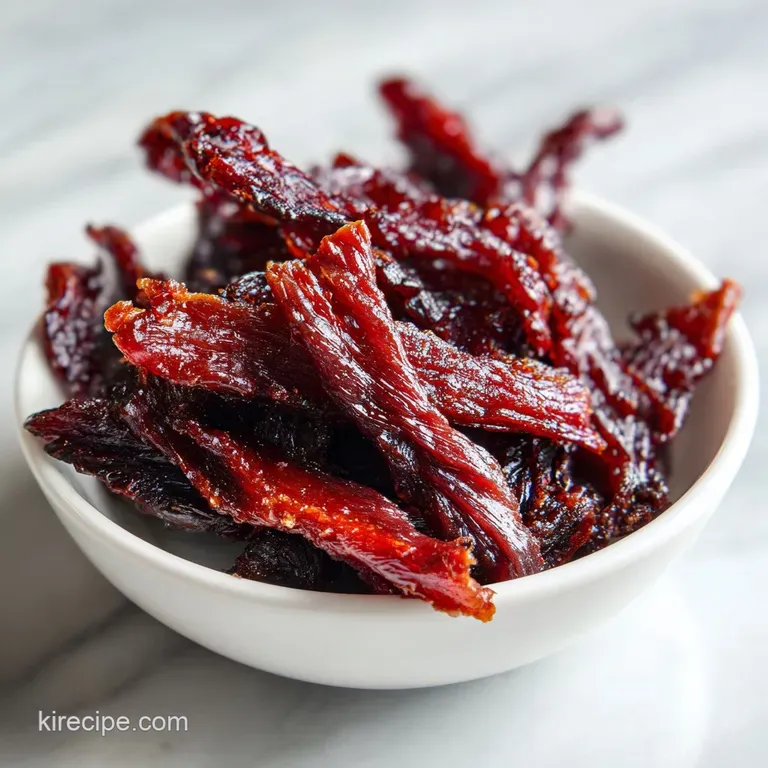
- Time: 30 min active + 12-24 hr marinating + 7 hr drying = 25 hours 30 mins
- Flavor/Texture Hook: Tangy, smoky, and slightly tacky with a satisfying snap
- Perfect for: High protein road trip snacks, hiking fuel, or budget-friendly meal prep
- Making the Best BBQ Beef Jerky
- Secret to the Chew
- Essential Ingredient Breakdown
- The Tool Kit
- Step-by-Step Guide
- Fixing Common Errors
- Troubleshooting Common Issues
- Flavor Variation Ideas
- Adjusting Your Batch Size
- Common Jerky Misconceptions
- Storage and Waste
- Best Serving Tips
- Recipe FAQs
- 📝 Recipe Card
That smell of liquid smoke and warm honey hitting the air is honestly one of my favorite things about making jerky at home. There's something so satisfying about watching a few slabs of lean beef transform into these dark, savory strips that you can just munch on for days.
I'll be real with you, I used to think any lean meat would work, but I once tried using a ribeye for a batch. It was a disaster. The fat didn't dehydrate, it just stayed greasy and went rancid quickly. That's when I learned that Eye of Round is the absolute hero here.
It's lean, it's usually the cheapest cut at the butcher, and it takes a marinade like a sponge.
If you've been craving a snack that's a bit more exciting than the store-bought stuff, this BBQ Beef Jerky is the answer. We're going for a balance of sweet, salty, and tangy that feels like a backyard cookout in a bag. Trust me, once you try the homemade version, the commercial bags taste like cardboard.
Making the Best BBQ Beef Jerky
Right then, let's get into why this actually works. Jerky isn't just "dried meat," it's a preservation process. To get that classic texture, we need to manage moisture and salt.
Salt Infusion: The soy and Worcestershire sauce pull moisture out of the muscle fibers, which prevents bacteria from growing.
Sugar Glaze: Honey and brown sugar create a sticky surface that traps the smoky flavors against the meat.
Acid Tenderizing: The apple cider vinegar breaks down tough proteins, so you aren't fighting for your life every time you take a bite.
Controlled Evaporation: Keeping the temp at exactly 160°F (71°C) allows water to leave the meat without "cooking" it into a hard cracker.
But how do you actually want your jerky? Some people like it fast and slightly soft, while others want that traditional, long haul chew.
| Feature | Fast (Oven Method) | Classic (Dehydrator) |
|---|---|---|
| Time | 4-6 hours | 7-8 hours |
| Texture | Slightly more "cooked" | Uniformly chewy |
| Control | Harder to maintain temp | Precise temperature |
| Best For | Quick cravings | Large budget batches |
It's worth noting that according to USDA Food Safety guidelines, maintaining a consistent internal temperature is key to preventing spoilage during the drying process.
Secret to the Chew
When you're looking at your ingredients, it's not just about the flavor, it's about what they do to the beef. I've found that a few key components do most of the heavy lifting.
| Ingredient | Science Role | Pro Secret |
|---|---|---|
| Soy Sauce | Cure & Salt | Use low sodium if you're sensitive to salt |
| Apple Cider Vinegar | pH Balance | Cuts through the heavy sugar of the BBQ sauce |
| Liquid Smoke | Aroma Profile | A little goes a long way; don't overdo it |
The real trick is the Eye of Round. It's the leanest part of the cow, which is why it's so budget-friendly. Since there's almost no intramuscular fat, the marinade can penetrate deep into the meat, and the dehydrator can remove the water without leaving behind oily pockets.
Essential Ingredient Breakdown
Here is everything you'll need. I've kept this budget smart, using pantry staples that punch above their weight.
For the Meat 2 lbs Eye of Round beef Why this? Leanest cut, prevents spoilage and ensures chew Substitute: Top Round (Slightly more expensive, similar result)
- Substitute
- Coconut Aminos (Slightly sweeter, gluten-free)
- Substitute
- Maple syrup (Lighter, more floral flavor)
- Substitute
- White vinegar (Sharper, less fruity)
- Substitute
- Any thick tomato based BBQ sauce
- Substitute
- Agave nectar (More neutral taste)
- Substitute
- Fish sauce (Use half the amount)
- Substitute
- Smoked paprika (Adds color but less "smoke")
- Substitute
- Garlic paste (Can make marinade chunky)
- Substitute
- Finely grated onion (Avoid for Long-term storage)
- Substitute
- White pepper (Milder, cleaner taste)
- Substitute
- Red pepper flakes (Less uniform heat)
The Tool Kit
You don't need a professional kitchen, but a few things make this way easier. A dehydrator is the gold standard, but a low temp oven with a rack works too.
I always suggest using Ziploc bags for the marinating phase. It's the easiest way to ensure every single strip is coated without wasting a drop of that liquid gold. Also, grab some paper towels.
Patting the meat dry before it hits the trays is a step most people skip, but it's the difference between "chewy" and "soggy."
Step-by-step Guide
Let's crack on with the actual process. This takes time, but the active work is minimal.
Phase 1: The Precision Prep
- Place the beef in the freezer for 1-2 hours. Note: This firms up the meat so you can get thin, consistent slices
- Slice the beef into 1/4 inch (6mm) strips. Slice against the grain for a softer chew, or with the grain if you want that old school, tough texture.
Phase 2: The Deep Infusion
- Whisk together soy sauce, brown sugar, apple cider vinegar, BBQ sauce, honey, Worcestershire sauce, liquid smoke, garlic powder, onion powder, black pepper, and cayenne pepper until the sugar is completely dissolved.
- Place beef strips in Ziploc bags, pour the marinade over them, massage to coat, and refrigerate for 12 to 24 hours. Note: 24 hours is the sweet spot for flavor
Phase 3: The Slow Dry
- Remove strips from marinade and pat slightly with paper towels to remove excess liquid.
- Arrange strips on dehydrator trays without overlapping. Ensure there is a small gap between strips for airflow.
- Set dehydrator to 160°F (71°C) and process for 6 to 8 hours.
Phase 4: The Doneness Test
- Remove a piece, let it cool for 2 minutes, and bend it. It should flex and develop small surface cracks without snapping cleanly in half. If it snaps, it's overdone; if it's spongy, keep it going.
Fixing Common Errors
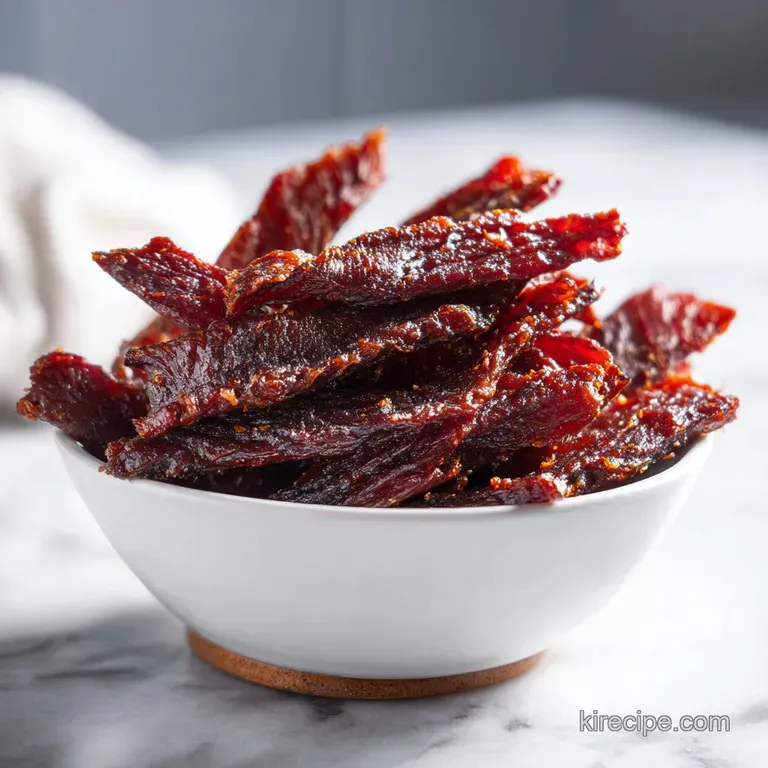
Even for the most obsessed cooks, things can go sideways. Usually, it's a temperature or slicing issue.
Troubleshooting Common Issues
| Issue | Solution |
|---|---|
| Jerky too hard | This usually happens if the temperature was too high or if you left it in for too long. Once the moisture is totally gone, the proteins bond too tightly, turning your snack into a rock. |
| Why did my jerky develop mold | Mold happens when the meat isn't dried enough or is stored in a container that traps moisture. If the center is still "wet" when you bag it, you're basically creating a greenhouse for spores. |
| Why is the outside dry but the inside raw | This is called "case hardening." It happens when the heat is too high, sealing the outside of the meat and trapping the moisture inside. Stick to 160°F. |
Quick Check for Success:
- ✓ Meat is sliced to a uniform 1/4 inch
- ✓ No overlapping on the trays
- ✓ Dehydrator is set to 160°F (71°C)
- ✓ Meat passes the "bend and crack" test
Flavor Variation Ideas
Once you've nailed the base BBQ Beef Jerky, you can start playing with the flavors. I love taking the base marinade and tweaking it for different moods.
If you want a honey heavy version, simply double the honey and halve the brown sugar. This gives it a more floral, sticky sweetness. For those who like things spicy, you can swap the cayenne for sriracha or add a tablespoon of crushed red pepper.
For a different twist, you could try incorporating a grape jelly BBQ sauce into the marinade for an even deeper, jammy sweetness. It sounds weird, but the fruitiness pairs perfectly with the salt of the soy sauce.
Adjusting Your Batch Size
Scaling jerky is pretty straightforward, but you can't just multiply everything blindly, especially the salt and heat.
Scaling Down (1 lb beef) Use half of all ingredients. If you're using an oven instead of a dehydrator, reduce the time by about 20% because the smaller mass of meat will lose moisture faster.
Scaling Up (4 lbs beef) Increase the meat and liquids, but only increase the salt and spices (soy, cayenne, pepper) to 1.5x or 2x. Too much salt in a large batch can make the jerky overwhelmingly salty. Work in batches on your trays to avoid crowding, which slows down the air circulation.
| Cut Type | Leanliness | Best For | Budget Impact |
|---|---|---|---|
| Eye of Round | Very High | Long-term Jerky | Low Cost |
| Top Round | High | Chewier Jerky | Medium Cost |
| Flank Steak | Medium | Gourmet Jerky | High Cost |
Common Jerky Misconceptions
I've heard a lot of bad advice over the years. Let's clear a few things up.
Some people think that searing the meat before dehydrating "locks in the flavor." It doesn't. All it does is pre cook the meat, which can actually make the final jerky tougher and more brittle.
Another myth is that you can use any cut of beef if you just slice it thin enough. Not true. High fat cuts like brisket or ribeye have fat that doesn't dry out. This fat can go rancid, meaning your jerky will smell like old oil after a week.
Storage and Waste
Since we've removed most of the water, this stuff lasts a while, but it's not immortal.
Storage Guidelines Keep your BBQ Beef Jerky in an airtight container or vacuum sealed bag. In the fridge, it'll stay fresh for about 2 weeks. In the freezer, it can last up to 6 months without losing its flavor.
If you're storing it at room temperature, stick to 1 week, and keep it in a cool, dark place.
Zero Waste Tips Don't throw away the leftover marinade! Since it has touched raw meat, you can't use it as a dip. However, you can simmer it in a small saucepan for 5-10 minutes until it reduces into a thick syrup.
Use this reduced glaze for grilled chicken or as a base for a quick stir fry sauce.
Best Serving Tips
While jerky is a great standalone snack, you can actually dress it up. I like to serve it on a platter with some sharp cheddar cubes and spicy mustard.
If you're feeling fancy, you can toss the finished strips in a bit of melted butter and extra cayenne for a "Buffalo" style kick. For a dipping experience, a small bowl of smashburger sauce provides a creamy, tangy contrast to the smoky intensity of the beef.
Right then, you're all set. Just remember: patience is the key. Don't rush the marinating or the drying, and you'll have the best BBQ Beef Jerky you've ever tasted. Let's get to slicing!
Recipe FAQs
Can you make beef jerky in a barbecue?
Yes, if your grill has a low-temperature setting. You must be able to maintain a steady 160°F (71°C) to dry the meat without overcooking it.
Which beef jerky is best for diabetics?
Avoid versions containing honey or brown sugar. Because this recipe uses both, those managing diabetes should modify the marinade to remove sugars or consult a healthcare provider.
Does beef jerky help anemia?
Yes, because beef is a rich source of heme iron. The iron found in eye of round beef supports the production of hemoglobin in the blood.
Is beef jerky good for cholesterol?
Generally no, due to high sodium levels. While eye of round is a lean cut, the salt used in the curing process can be problematic for those managing cholesterol and blood pressure.
How to slice beef for jerky?
Freeze the beef for 1–2 hours until firm. Slice into 1/4 inch strips against the grain for a softer chew or with the grain for a tougher, traditional texture.
How to tell when beef jerky is done?
Bend a piece of meat after letting it cool for 2 minutes. It is finished when it flexes and develops small surface cracks without snapping cleanly in half.
What should I serve with BBQ beef jerky?
Pair it with a sharp, creamy dip for contrast. A zesty horseradish sauce balances the smoky sweetness of the beef perfectly.
BBQ Beef Jerky for 12 Servings