Basil Pesto Pasta in 20 Minutes

- Total20 Mins
- Servings6 bowls
- Calories514 kcal
- Time: 10 min active and 10 min cooking
- Flavor & Texture: Vibrant, herbal, and indulgent with a coarse, nutty crunch
- Perfect for: An easy weeknight meal that feels like a gourmet treat
Fresh Basil Pesto Pasta
Ever wonder why restaurant pesto clings to the pasta while homemade versions often slide right off into a puddle of oil? It usually comes down to how the sauce is combined with the noodles.
This basil pesto pasta comes together in under 20 minutes. You get a vibrant, aromatic meal where fresh basil and sharp Parmesan create a rich coating.
It's a great option for those nights when you want something flavor-packed but don't have time for a long simmer. You just need a food processor and a pot of boiling water.
The Technique Behind It
- Starchy Water: Reserved pasta water helps emulsify the oil and pasta into a cohesive sauce.
- Cold Assembly: Stirring in the pesto at the final stage over the lowest heat limits the heat that speeds up the basil's browning.
What You'll Use
A food processor is the best tool here. It chops the basil and nuts quickly without generating too much heat, which keeps the color bright. You'll also need a dry skillet for the nuts and a large pot for the pasta.
Ingredients and Swaps
| Ingredient | Role | If You Don't Have It |
|---|---|---|
| Fresh Basil | Flavor base | Spinach (approximation, less punchy) |
| Pine Nuts | Creamy nuttiness | Walnuts (approximation, more bitter) |
| Parmesan | Salty depth | Pecorino (saltier) |
For the Fresh Pesto
- 2 cups (50 g) fresh basil leaves, packed Why this? Provides the core peppery, aromatic flavor
- 1/3 cup (50 g) pine nuts Why this? Adds a buttery, rich texture
- 1/2 cup (50 g) Parmesan cheese, freshly grated
- 1/2 cup (120 ml) extra virgin olive oil
- 2 cloves (6 g) garlic, peeled
- 1 tsp (5 ml) lemon juice
- 1/2 tsp (3 g) salt
- 1/4 tsp (1 g) black pepper
For the Pasta
- 1 lb (450 g) dried linguine or trofie pasta
- 4 quarts (3.8 L) water
- 1 tbsp (15 g) kosher salt
Recipe Specs
| Nut Choice | Taste Profile | Consistency |
|---|---|---|
| Pine Nuts | Mild, buttery | Smooth |
| Walnuts | Bold, earthy | Coarser |
| Almonds | Light, sweet | Grainy |
This recipe serves 6 people as a main course. It is an efficient way to prepare a high-impact meal.
Key Steps
Activating the Aromatics
Place pine nuts in a dry skillet over medium heat. Stir constantly for 3-5 minutes until they smell nutty and turn a light golden brown, then immediately remove from heat. Wash and thoroughly dry the basil leaves. Note: Excess water on the leaves causes the oil to separate.

Blending the Pesto
Add the toasted pine nuts, garlic, and basil to a food processor. Pulse 5-7 times until coarsely chopped. While the processor is running on low, slowly stream in the 1/2 cup (120 ml) of olive oil. Process for 25-30 seconds until a saucy consistency is reached.
Stir in the grated Parmesan, lemon juice, salt, and black pepper by hand or with one final short pulse. Note: Over-processing the cheese can make the sauce gummy.

The Pasta Assembly
Bring 4 quarts (3.8 L) of water to a boil and add 1 tbsp (15 g) of kosher salt. Add the 1 lb (450 g) of pasta and cook according to package directions. Before draining, reserve 1 cup (240 ml) of the starchy pasta water.
Drain the pasta and return it to the pot over the lowest heat setting. Add the prepared pesto and 1/4 cup (60 ml) of the reserved pasta water, tossing vigorously with tongs. Continue adding reserved pasta water 1 tablespoon at a time until the sauce is velvety and clings to the pasta.

Quick Fixes
A broken or thin sauce typically means there wasn't enough pasta water to bind the oil. The starch is the key to making the sauce cling. If the color is off, the basil was likely over-processed or exposed to too much heat.
Fixing a Brown Sauce
Basil oxidizes when exposed to heat or air. To prevent this, stir in a small squeeze of extra lemon juice and always cover stored pesto with a layer of olive oil.
Fixing an Oily Sauce
This happens when the oil fails to emulsify. The solution is to add more reserved pasta water and toss the noodles vigorously over very low heat.
Fixing Dry Pasta
If the pesto is too dense, incorporate the leftover pasta water in one-tablespoon increments until the noodles slide easily.
| Problem | Root Cause | Solution |
|---|---|---|
| Pesto turns brown | Oxidation or overheating | Add lemon juice and oil seal |
| Sauce separates | Lack of starch | Add reserved pasta water |
| Pasta is dry | Sauce too thick | Add reserved pasta water 1 tbsp at a time |
Storage and Leftovers

Keep leftover pesto in a sealed glass container in the refrigerator for up to 4 days. Lay a piece of plastic wrap over the sauce before capping the jar. This prevents oxygen from reaching the pesto and maintains its green color.
For longer storage, freeze the pesto in ice cube trays. Once set, transfer the cubes to a freezer bag. They will stay fresh for 3 months. When reheating pasta, stir in a small amount of water before microwaving to loosen the sauce.
When reheating cooked leftovers, check with a food thermometer that the center reaches 165°F (74°C); the appliance temperature and time alone do not confirm this.
Make It Your Own
Feel free to customize this dish with your favorite proteins. For a heartier option, try adding chicken by searing breast strips in a pan and tossing them in at the end. Shrimp is another great choice; sauté them for 2 minutes per side and stir them in just before serving.
If you prefer a plant-based version, this vegan basil sauce works perfectly.
Presentation Tips
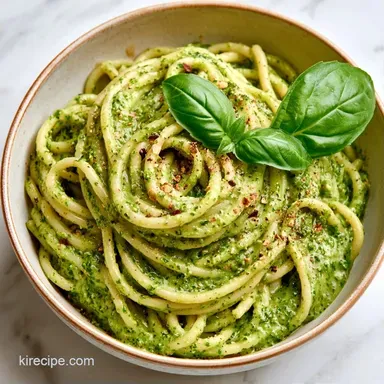
To achieve a polished presentation, use a carving fork to swirl the pasta into a compact nest in the center of the bowl. Garnish with a few whole basil leaves and a dusting of additional Parmesan. Finishing with a sprinkle of freshly cracked black pepper provides a lovely visual contrast against the green sauce.
Common Questions
What pasta goes best with basil pesto?
Linguine or trofie are the best choices. These shapes effectively capture the coarse texture of the pesto.
Can basil pesto be mixed with tomato sauce?
Yes, these flavors pair well. The combination creates a richer, more complex sauce.
How to prevent the pesto from turning brown?
Press plastic wrap directly onto the sauce surface. This limits oxygen contact with the basil, which slows oxidation.
Does this recipe require a specific amount of pasta?
Use 1 lb (450 g) of pasta. This quantity is balanced for the amount of pesto produced in the recipe.
Where should leftovers be stored and for how long?
Keep them in a sealed glass jar in the refrigerator for up to 4 days. Press plastic wrap against the sauce surface to maintain the color.
Basil Pesto Pasta
Ingredients:
Instructions:
Keep Cooking

Red Pepper Sauce with Arugula Pistachio Pesto
Master this Red Pepper Sauce with Arugula Pistachio Pesto recipe using pantry staples.

Trader Joes Fall Pasta Sauce
A nutty, creamy dinner featuring Trader Joes Fall Pasta Sauce.

The Best San Marzano Sauce Recipe for Italian Pasta
Master The Best San Marzano Sauce Recipe for Italian Pasta with our step-by-step guide to making…

Vegan Basil Sauce
This Vegan Basil Sauce is rich and fresh. A great Creamy Vegan Pesto Sauce or Vegan Basil Pasta…
