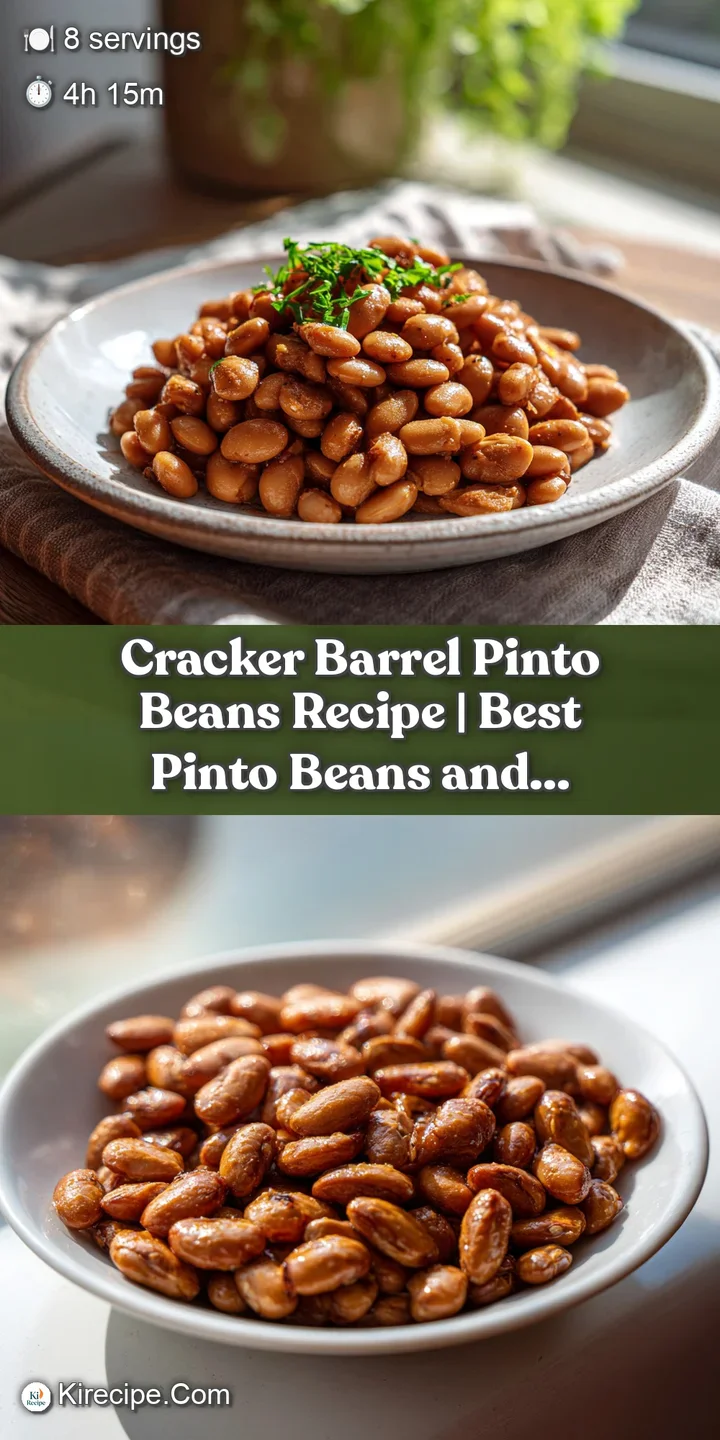
Cracker Barrel Pinto Beans: Slow-Cooked and Creamy
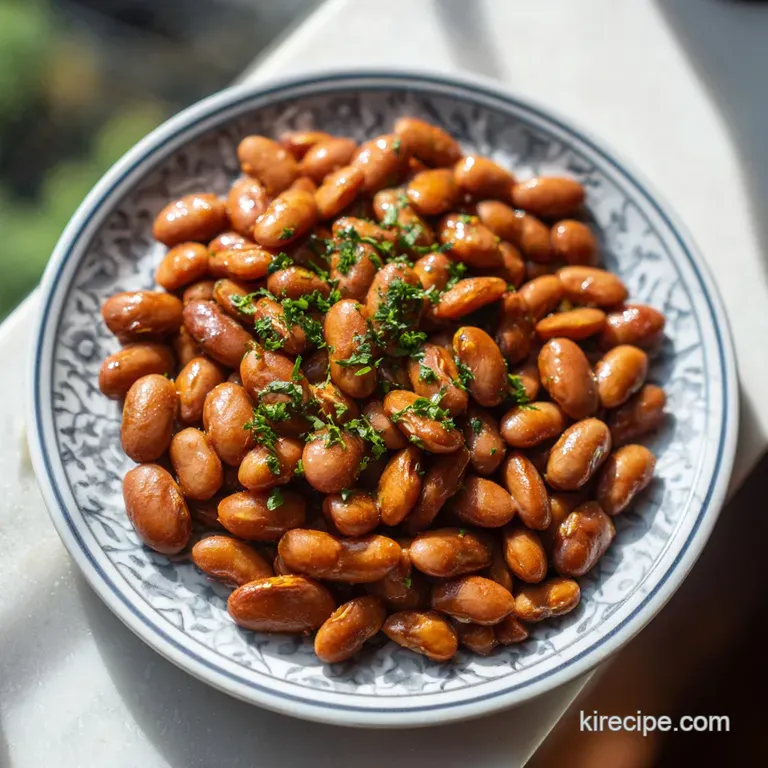
- Time: Active 15 minutes, Passive 240 minutes, Total 255 minutes
- Flavor/Texture Hook: Velvety, rich, and earthy with a savory "pot liquor" that thickens naturally.
- Perfect for: A budget-friendly Sunday dinner side or a hearty meal prep staple.
- Making This Cracker Barrel Pinto Beans Recipe
- Essential Recipe Statistics and Times
- Selecting High Quality Pantry Ingredients
- Recommended Tools for This Recipe
- Detailed Stovetop Cooking Steps
- Fixing Common Bean Texture Issues
- Creative Recipe Swaps and Tweaks
- Smart Storage and Leftover Tips
- Professional Plating and Pairing Ideas
- Recipe FAQs
- 📝 Recipe Card
Making This Cracker Barrel Pinto Beans Recipe
Have you ever sat down at a restaurant, excited for a side of beans, only to bite into something that feels like wet gravel? It's the worst. Either the skins are tough and plasticy, or the inside is grainy and chalky.
I've been there more times than I'd like to admit in my own kitchen, especially when I was rushing the process. For the longest time, I thought pinto beans were just supposed to be "fine," but then I had the version at the big porch rocker restaurant and realized what I was missing.
The secret isn't some expensive, fancy ingredient or a secret spice blend. It’s actually about patience and the way the fat interacts with the bean starch. If you’ve struggled with beans that stay hard despite boiling them for hours, or a broth that looks like thin dishwater, this method is your fix.
We're going to transform humble dry beans into something silky and deeply savory that costs next to nothing to make.
We're focusing on a low and slow stovetop method because it gives us total control over the evaporation. That evaporation is what concentrates the flavor of the salt pork and the onions into a thick, luscious liquid that Southerners call "pot liquor." It's liquid gold, and it's the entire reason we make this dish.
Let's get into the mechanics of why this works so you can stop guessing and start cooking with confidence.
Essential Recipe Statistics and Times
Starch Gelatinization: As the beans simmer for 240 minutes, the starch molecules inside swell and eventually burst through the cell walls. This doesn't just soften the bean, it thickens the surrounding water into a creamy sauce without needing any flour or thickeners.
Fat Emulsification: The 0.25 lb of diced salt pork slowly renders its fat into the water. Because we keep the pot at a gentle simmer, those tiny fat droplets stay suspended in the broth, creating a velvety mouthfeel rather than an oily layer on top.
Osmotic Balance: By waiting to add the salt until the very end, we allow the water to penetrate the bean skins freely. Adding salt too early can sometimes interfere with the softening of the pectin in the bean skins, leading to that dreaded "tough bean" syndrome.
| Method | Time | Texture | Best For |
|---|---|---|---|
| Stovetop | 240 minutes | Intact beans, thick broth | Maximum flavor control |
| Slow Cooker | 8 hours | Very soft, slightly thinner | Set it and forget it |
| Pressure Cooker | 45 minutes | Uniformly soft, less depth | Last minute meals |
Providing these options helps you decide which path fits your schedule, though the stovetop remains the king for that authentic restaurant finish. The stovetop allows the liquid to reduce just enough to concentrate the sugars and salts naturally present in the ingredients.
Selecting high-quality Pantry Ingredients
| Component | Science Role | Pro Secret |
|---|---|---|
| Salt Pork | Provides lipid based richness | Sear it for 2 minutes first to jumpstart the fat rendering. |
| White Sugar | Balances the earthy tannins | A tiny amount acts as a flavor bridge between the salt and the bean starch. |
| Yellow Onion | Adds aromatic depth | Dice it finely so it practically disappears into the sauce. |
| Pinto Beans | The main structural starch | Use beans from a high turnover store to ensure they aren't years old and dried out. |
When it comes to the "pot liquor," it's all about how these few elements play together over several hours. The salt pork is non negotiable for that specific flavor, but you can swap it if your wallet or diet requires it.
Just remember that the fat content is what carries the flavor of the onion and pepper throughout the whole pot.
Recommended Tools for This Recipe
You don't need a kitchen full of gadgets to pull this off, which is the beauty of a wallet friendly meal. A heavy bottomed pot is your best friend here. I personally love using a large Dutch oven because the thick walls distribute heat evenly, which prevents the beans at the bottom from scorching while you’re not looking.
A thin pot will have hot spots that can burn your beans before the 4 hours are up.
A good colander is essential for that initial rinse. You'd be surprised how much dust and "bean debris" comes off dry beans. And honestly, grab a wooden spoon. There’s something about the way a wooden spoon feels when you’re stirring a big pot of simmering beans that just feels right.
It’s also gentler on the beans than a sharp metal spoon, meaning you won’t accidentally smash them into a paste while you’re checking for doneness.
- 1 lb dry pinto beans: Look for uniform color. Why this? Dry beans provide a much better texture than canned versions. (Substitute: Canned beans, but reduce liquid by half and cook for only 30 minutes).
- 6 cups water: Standard tap is fine. Why this? This ratio allows for evaporation while keeping the beans submerged. (Substitute: Low sodium chicken broth for more savory depth).
- 0.25 lb salt pork, diced: Found in the bacon aisle. Why this? It provides the classic smoky, fatty base that defines the dish. (Substitute: 4 slices of thick cut bacon, though it adds more smoke).
- 1 medium yellow onion, finely diced: Essential aromatics. Why this? Onions soften and sweeten the broth as they melt away. (Substitute: 1 tbsp onion powder if you’re in a massive rush).
- 1 tsp white sugar: Just a hint. Why this? It cuts through the heavy iron like flavor of the beans. (Substitute: Brown sugar for a slight molasses note).
- 1 tsp kosher salt: Add at the end! Why this? Salt seasons the bean throughout once the structure is soft. (Substitute: Sea salt, use slightly less by volume).
- 0.5 tsp coarse black pepper: For a bit of bite. Why this? Provides a necessary counterpoint to the rich fat. (Substitute: White pepper for a more subtle heat).
Detailed Stovetop Cooking Steps
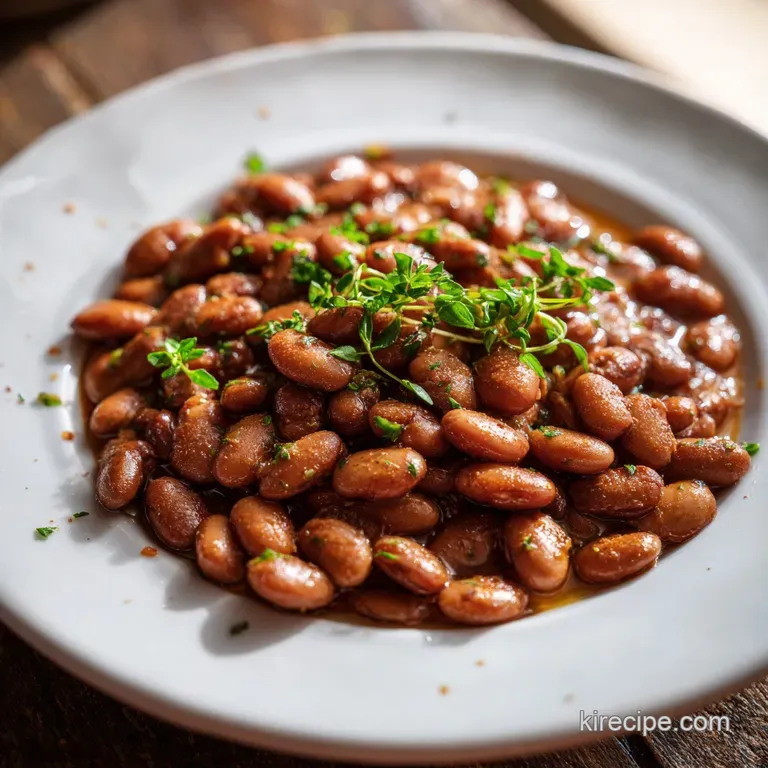
- Inspect the dry beans. Spread your 1 lb of pinto beans on a baking sheet or clean counter. Pick through them to find any small stones or shriveled beans that look like tiny raisins. It's a rare mistake I once made, and trust me, biting a rock is a quick way to end dinner.
- Start the long soak. Place the beans in a large bowl and cover with 3 inches of water. Let them sit for 8 hours. Note: This hydrates the starches evenly so the centers don't stay hard while the outsides turn to mush.
- Rinse and prep. Drain the soaking water through a colander. Rinse the beans under cold water until the water runs clear. This removes the complex sugars that often cause digestive upset.
- Build the pot. Add the rinsed beans to your Dutch oven. Pour in 6 cups of fresh water. Add your diced salt pork, finely diced yellow onion, 1 tsp white sugar, and 0.5 tsp black pepper.
- Boil then drop. Turn the heat to medium high. Once you see the first big bubbles breaking the surface, immediately turn the heat down to the lowest setting possible.
- The gentle simmer. Cover the pot and let it simmer for 4 hours. You want a "lazy bubble" every few seconds, not a frantic boil. Note: Violent boiling will break the beans apart and make the skins fall off.
- Check the liquid. Every hour, give it a quick stir with your wooden spoon. If the water has dropped below the level of the beans, add a splash more. You want them just barely covered.
- The seasoning finish. At the 4 hour mark, take a spoon and pull out a couple of beans. If they mash easily against the roof of your mouth, they're done. Now, stir in your 1 tsp of kosher salt.
- Thicken the liquor. If the broth is still too thin for your liking, take the lid off for the last 15 minutes of simmering. This allows a bit more water to escape, concentrating the starches.
- Rest before serving. Turn off the heat and let the pot sit for 10 minutes. The liquid will continue to thicken as the temperature drops slightly.
Fixing Common Bean Texture Issues
Why Your Beans Are Still Hard
If you've been simmering for hours and the beans still have a "snap" to them, it's usually one of two things: old beans or hard water. Beans that have sat on a store shelf for three years lose their ability to absorb moisture.
Similarly, water with high mineral content (calcium/magnesium) can react with the bean cell walls and keep them tough.
What If My Liquid Is Too Thin
A thin broth usually means you didn't have enough starch release. This happens if the simmer was too low or if the beans were particularly stubborn. You don't want to add cornstarch because it ruins the flavor. Instead, use the "mash trick" to get that restaurant style thickness.
| Problem | Root Cause | Solution |
|---|---|---|
| Gritty Center | Insufficient soaking time | Simmer for another 45 minutes with the lid tight. |
| Tough Skins | Added salt too early | Next time, wait until the beans are soft to salt. |
| Bland Broth | Not enough salt pork rendered | Smash a few beans against the side of the pot and stir back in. |
If you ever find yourself with a pot of beans that just won't thicken, don't panic. Just take about half a cup of the beans out, mash them into a paste with a fork, and stir them back into the pot. This is a brilliant hack for instant creaminess.
- ✓ Checklist for Success
- ✓ Check the "sell by" date on your bean bag before buying.
- ✓ Use a heavy bottomed pot to prevent scorched beans at the base.
- ✓ Never let the water level drop below the beans during the 4 hour cook.
- ✓ Wait until the very last 5 minutes to adjust your final salt levels.
- ✓ Let the beans rest for 10 minutes after turning off the heat to set the broth.
Creative Recipe Swaps and Tweaks
If you find yourself missing an ingredient, don't worry. This is a very forgiving dish. While the salt pork is the gold standard for this specific pinto beans recipe, a ham hock is a fantastic alternative that adds a deep, bone marrow richness.
It's often cheaper than salt pork depending on your local butcher, making it a great wallet friendly choice.
For those who want more of a kick, adding a diced jalapeño (seeds removed if you're a wimp like me) along with the onions works wonders. If you're looking for something more substantial to serve alongside this, you might consider how it compares to a Ina Garten Beef Chili — where the beans are part of a larger, meatier profile.
| Servings | Ingredient Adjustments | Pan Size | Cook Time |
|---|---|---|---|
| 4 people | 0.5 lb beans, 3 cups water | 3 quart pot | 3 hours 30 mins |
| 8 people | 1 lb beans, 6 cups water | 6 quart Dutch oven | 4 hours |
| 16 people | 2 lbs beans, 11 cups water | 12 quart stockpot | 4 hours 30 mins |
When scaling down, be careful with the water. Smaller pots often have higher evaporation rates relative to their volume, so keep an eye on that liquid level. If you're doubling the recipe, you don't actually need to double the sugar; 1.5 teaspoons is usually enough to balance a 2 lb batch of beans without making them sweet.
Smart Storage and Leftover Tips
Pinto beans are one of those rare foods that actually taste better on the second day. As they sit in the fridge, the starches continue to set and the flavors of the pork and onion fully permeate the bean. Store them in an airtight container in the fridge for up to 5 days.
They will thicken significantly as they cool, looking almost like a gelatinous block, but don't worry they'll liquify again once heated.
For long term storage, these beans freeze beautifully. I like to freeze them in 2 cup portions in freezer bags. They’ll stay good for up to 6 months. When you're ready to eat, just thaw them overnight in the fridge and reheat on the stove with a tiny splash of water to loosen the broth back up.
Zero Waste Tip: If you have leftover liquid but no more beans, don't toss it! That pot liquor is an incredible base for a soup. You can use it to replace the broth in a Texas Cowboy Stew to give the whole dish an underlying smoky creaminess that water or plain beef broth just can't match.
Professional Plating and Pairing Ideas
Searing meat does not "seal in juices." Moisture loss occurs regardless of the crust. The crust on the salt pork adds flavor through a reaction between proteins and sugars, but the real moisture in the beans comes from the long, slow hydration.
Don't believe the myth that you must soak beans for 24 hours. While an 8 hour soak is ideal, you can do a "quick soak" by boiling the beans for 2 minutes, turning off the heat, and letting them sit for one hour.
It's a handy hack when you forget to start the night before, and the texture is almost identical.
When it comes to serving, pinto beans are the ultimate "brown food" that needs a bit of visual help. A sprinkle of fresh chopped parsley or a few rings of raw green onion provides a sharp, fresh contrast to the rich, heavy beans. Serve them in a shallow bowl with a big hunk of buttered cornbread on the side.
The cornbread is basically a sponge for that pot liquor, and honestly, it’s the best part of the meal. If you want to go full Southern, a side of vinegary collard greens or some sliced raw white onion on the side provides the acidity needed to cut through the fat of the salt pork.
It's a humble, filling, and incredibly satisfying meal that proves you don't need expensive ingredients to eat like royalty.
Recipe FAQs
What meat is in Cracker Barrel pinto beans?
Salt pork is the traditional meat used. It provides the rendered fat necessary to create a rich, velvety broth while seasoning the beans throughout the long simmer.
How to make pinto beans taste like restaurant quality?
Simmer the beans low and slow for exactly 4 hours. This duration allows the starches to leach into the water, creating a thick, flavorful pot liquor that defines the restaurant experience. If you enjoyed mastering the reduction technique to concentrate flavors here, you will find the same principle applies to perfecting the consistency of this bean broth.
Are pinto beans good for diabetes?
Yes, they are generally considered a healthy option. Pinto beans are high in fiber and plant based protein, which can help manage blood sugar levels when included in a balanced diet.
Are Cracker Barrel style pinto beans worth making at home?
Yes, they are highly rewarding to prepare. Making them at home is incredibly cost effective, and you gain control over the texture and seasoning while the kitchen fills with a savory aroma that canned versions simply cannot match.
How to ensure the bean skins do not become tough?
Add the salt only at the very end of the cooking process. Adding salt too early can toughen the outer skins of the beans, preventing them from softening properly during the four hour simmer.
How to check if the beans are properly hydrated before cooking?
Soak the beans for at least 8 hours or overnight. Thorough hydration is essential for ensuring the beans cook uniformly and achieve that signature creamy, non-grainy texture.
How to fix beans if the broth is too thin?
Continue simmering the beans uncovered. This allows more moisture to evaporate, concentrating the starches and intensifying the savory flavor of the pot liquor.
Cracker Barrel Pinto Beans
Ingredients:
Instructions:
Nutrition Facts:
| Calories | 296 kcal |
|---|---|
| Protein | 13.1 g |
| Fat | 10.6 g |
| Carbs | 37.2 g |
| Fiber | 8.8 g |
| Sugar | 1.4 g |
| Sodium | 485 mg |
