Chicken Enchilada Casserole: Creamy and Tangy
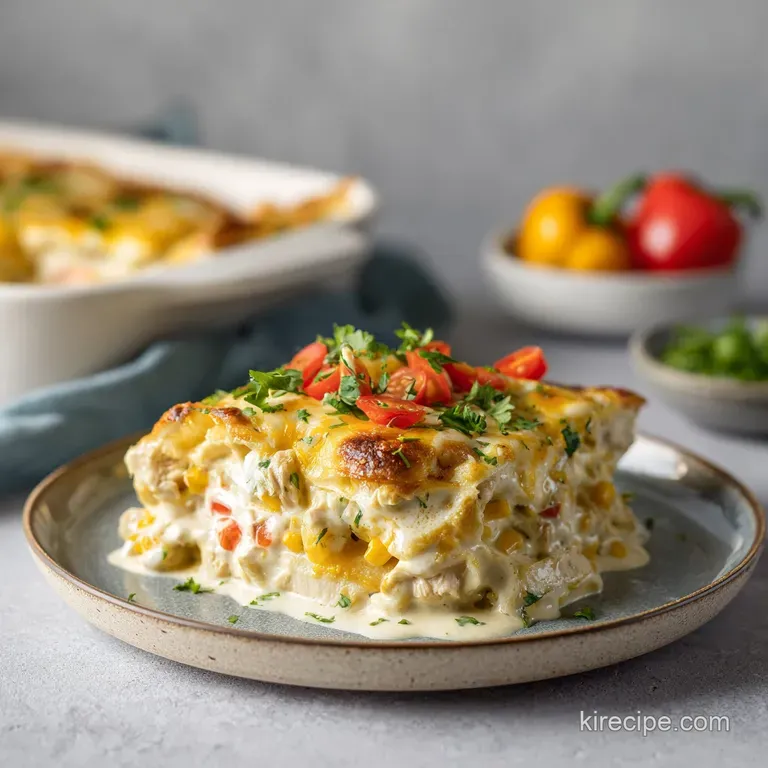
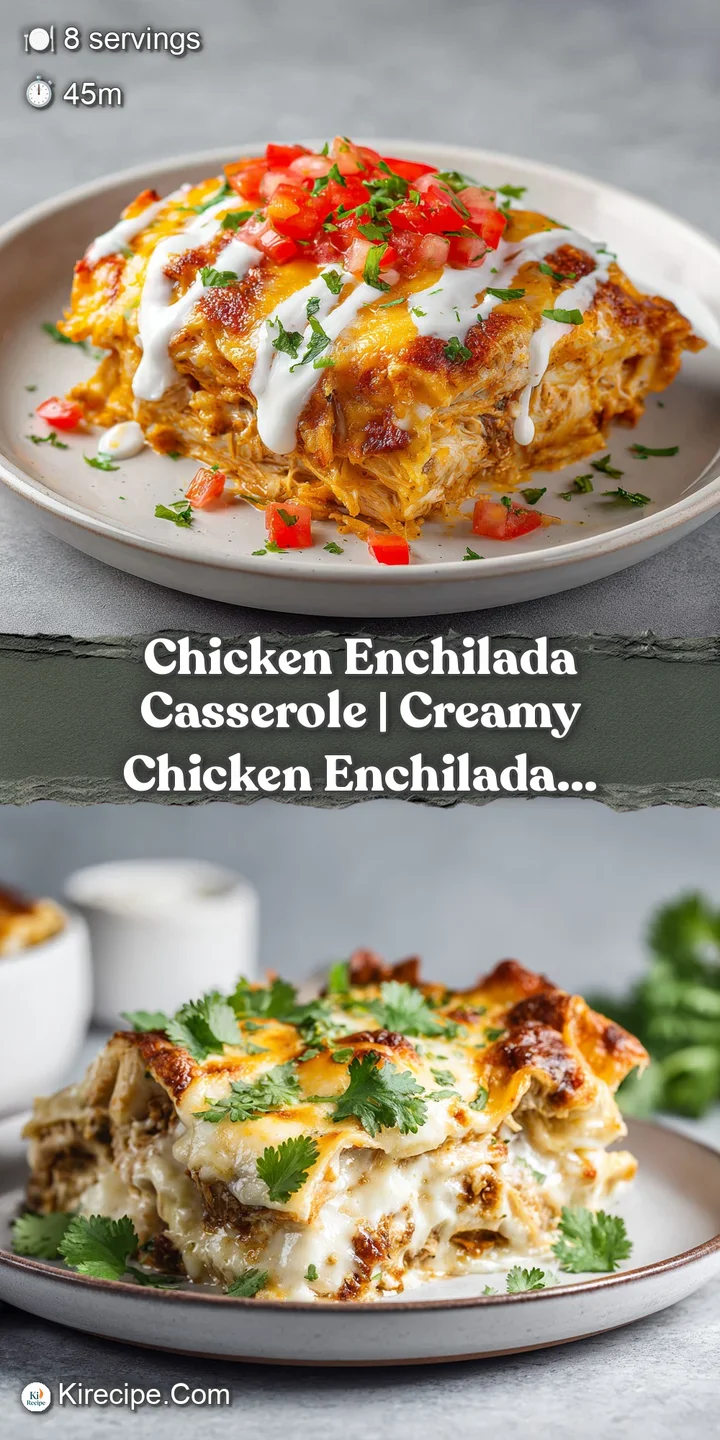
- Time: Active 15 minutes, Passive 30 minutes, Total 45 minutes
- Flavor/Texture Hook: Tangy, velvety sauce with golden, bubbling cheese
- Perfect for: Busy weeknights, potlucks, and beginner cooks
- Comforting Layers: The Chicken Enchilada Casserole
- Why the Sauce Stays Velvety
- Benchmarks for Your Enchilada Casserole
- Analyzing Your Component Deep Dive
- Selecting Your Enchilada Elements
- Minimal Tools for Efficient Cooking
- Building the Perfect Layered Casserole
- Fixing Common Casserole Issues
- Easy Ways to Scale This
- Debunking Common Kitchen Myths
- Smart Storage and Zero Waste
- Best Ways to Serve Your Casserole
- Very High in Sodium
- Recipe FAQs
- 📝 Recipe Card
Comforting Layers: The Chicken Enchilada Casserole
Enchiladas have been a staple of Mexican culinary history since the time of the Aztecs, when people in the Valley of Mexico would fold fish into tortillas and drench them in chili sauces.
That ancient "tlaxcalli" evolved over centuries, eventually merging with Spanish and Tex Mex influences to give us the creamy, comforting dishes we love today. This specific style, often called "Enchiladas Suizas" or Swiss style enchiladas, was popularized in Mexico City by Sanborns cafe in the early 20th century.
The addition of dairy like sour cream and cheese was a nod to European tastes, creating a fusion that feels like home regardless of where you are.
When you pull this Chicken Enchilada Casserole out of the oven, the first thing you'll notice is that specific sizzle of the cheese edges hitting the hot ceramic. The aroma of toasted cumin and roasted green chiles fills the room immediately.
It is the kind of smell that brings everyone to the kitchen before you even set the table. There is something deeply satisfying about the way the corn tortillas soften into the sauce, losing their chew and becoming almost velvety, like a savory Mexican lasagna.
I promise you that this recipe is the ultimate shortcut for when you want those big, bold flavors but don't have the patience to roll fifteen individual tortillas. We are going for maximum flavor packed results with minimal tools.
You will end up with a dish that has distinct layers of corn, seasoned chicken, and a sauce that is both sharp from the green chiles and cooling from the sour cream. It is a reliable, hearty meal that has saved my sanity on many Tuesday nights.
Why the Sauce Stays Velvety
- Fat Stabilization: The full fat sour cream acts as a buffer, preventing the green enchilada sauce from breaking under high heat.
- Starch Softening: Corn tortillas release tiny amounts of starch into the sauce as they bake, which thickens the liquid and binds the layers together.
- Moisture Diffusion: Pre mixing a cup of sauce with the shredded chicken ensures the protein stays juicy rather than drying out in the oven's dry heat.
- Heat Regulation: Diced green chiles provide a steady background warmth without the aggressive bite of fresh peppers, keeping the flavor profile balanced for kids and adults.
| Method | Time | Texture | Best For |
|---|---|---|---|
| This Casserole | 45 minutes | Soft, layered, creamy | Busy weeknights and families |
| Classic Rolled | 1 hour 15 mins | Defined rolls, firmer bite | Formal dinner or traditionalists |
| Slow Cooker | 4 hours | Porridge like, very soft | Set and forget meal prep |
The difference between a "good" casserole and a "stellar" one often comes down to how you handle the tortillas. In a classic rolled version, you have to fry each tortilla in oil to keep it from falling apart. With our Chicken Enchilada Casserole, we skip the frying.
Instead, we rely on the sauce to tortilla ratio to achieve that perfect "bite" that isn't mushy but isn't tough either. It's a faster way to get the same satisfaction.
Benchmarks for Your Enchilada Casserole
To ensure this turns out right every single time, I rely on a few specific numeric checkpoints. These help you know exactly where you are in the process. First, your oven needs to be at a solid 350°F (175°C).
Second, make sure your baking dish is the standard 9x13 inch size; anything smaller will cause the sauce to bubble over the sides. Finally, the internal temperature should hit at least 165°F (74°C) if you're checking with a probe, though the visual cue of the bubbling cheese is usually enough.
- If you want a crunchier top, leave the casserole uncovered for the final 10 minutes of baking.
- If you want a spicier kick, add a teaspoon of cayenne or double the green chiles.
- If you want a sturdier structure, let the dish rest for a full 10 minutes after it comes out of the oven.
| Thickness | Internal Temp | Rest Time | Visual Cue |
|---|---|---|---|
| 2-3 inches | 165°F | 10 minutes | Golden cheese with bubbling edges |
Analyzing Your Component Deep Dive
Understanding why we use these specific items helps you become a more intuitive cook. For example, the green enchilada sauce is the backbone of the flavor profile, providing acidity that cuts through the heavy cheese. If you're interested in how other creamy dishes manage their moisture, you might find my Broccoli Casserole recipe helpful for understanding how to balance a Ritz cracker crust with a creamy base.
| Ingredient | Science Role | Pro Secret |
|---|---|---|
| Sour Cream | Emulsifier and base | Use full fat to prevent the sauce from becoming watery or grainy. |
| Corn Tortillas | Structural foundation | Use slightly stale ones; they absorb the sauce better without disintegrating. |
| Monterey Jack | High moisture melt | Grate it from a block for a much smoother, silkier cheese pull. |
The Monterey Jack cheese is the hero here because of its high moisture content and low melting point. Pre shredded cheese is often coated in potato starch or cellulose to prevent clumping in the bag, but that same coating can prevent it from melting into that velvety blanket we want for this Chicken Enchilada Casserole.
If you have the extra three minutes, grating your own cheese makes a massive difference in the final texture.
Selecting Your Enchilada Elements
- 1.5 lbs cooked chicken breast: Shredded into bite sized pieces. Sub: Rotisserie chicken for a massive time saver.Why this? Shredded texture catches more sauce than cubed.
- 2 cups full fat sour cream: The creamy base of the sauce. Sub: Greek yogurt for a tangier, higher protein profile.Why this? Fat prevents the sauce from curdling.
- 15 oz green enchilada sauce: Use your favorite canned brand. Sub: Salsa verde for a chunkier, brighter texture.Why this? Provides the essential vinegar and chile notes.
- 4 oz canned diced green chiles: Mild heat and earthy flavor. Sub: Chopped jalapeños for more heat.Why this? Adds texture to the smooth sauce.
- 1 tsp ground cumin: The primary spice for that "taco" aroma. Sub: Ground coriander for a floral twist.
- 1 tsp garlic powder: Distributes flavor evenly. Sub: 2 cloves minced fresh garlic.
- 0.5 tsp onion powder: Adds depth without the texture of raw onions. Sub: Finely diced shallots.
- 15 standard corn tortillas: The structural layers. Sub: Flour tortillas (though they will be much softer).Why this? Corn holds up better in a wet bake.
- 3 cups shredded Monterey Jack and Sharp Cheddar blend: For the perfect melt and tang. Sub: Pepper Jack for a spicy kick.
- 0.5 cup fresh cilantro: Chopped for a fresh finish. Sub: Sliced green onions if you hate cilantro.
| Original Ingredient | Substitute | Why It Works |
|---|---|---|
| Corn Tortillas | Flour Tortillas | Same structural role. Note: Result will be much softer and "doughy." |
| Monterey Jack | Mozzarella | Similar melting properties. Note: Lacks the sharp tang of Jack cheese. |
| Green Sauce | Red Enchilada Sauce | Changes the flavor profile entirely. Note: Earthier and less tangy. |
When you're choosing your tortillas, try to find the "extra thin" corn variety if you can. They layer beautifully without creating thick, gummy sections in the middle of your bake. If you find yourself with extra chicken after this meal, you might want to try an Ina Garten Spatchcock Chicken later in the week to have fresh leftovers for your next round of enchiladas.
Minimal Tools for Efficient Cooking
You don't need a pantry full of gadgets to make this work. A simple 9x13 inch glass or ceramic baking dish is the only major piece of equipment. I prefer glass because you can actually see the layers and check if the bottom is bubbling. You'll also need a large mixing bowl to whisk your sauce components together.
Chef Tip: Use a fork or a small whisk to really combine the sour cream and enchilada sauce until no white streaks remain. This ensures every bite has the same level of creaminess and spice.
Beyond that, a sharp knife for the cilantro and a cheese grater (if you're going the pro route) are all you need. This is a one bowl, one dish kind of meal, which means cleanup is a breeze. It’s the ultimate efficient cooking experience for a busy family.
Building the Perfect Layered Casserole
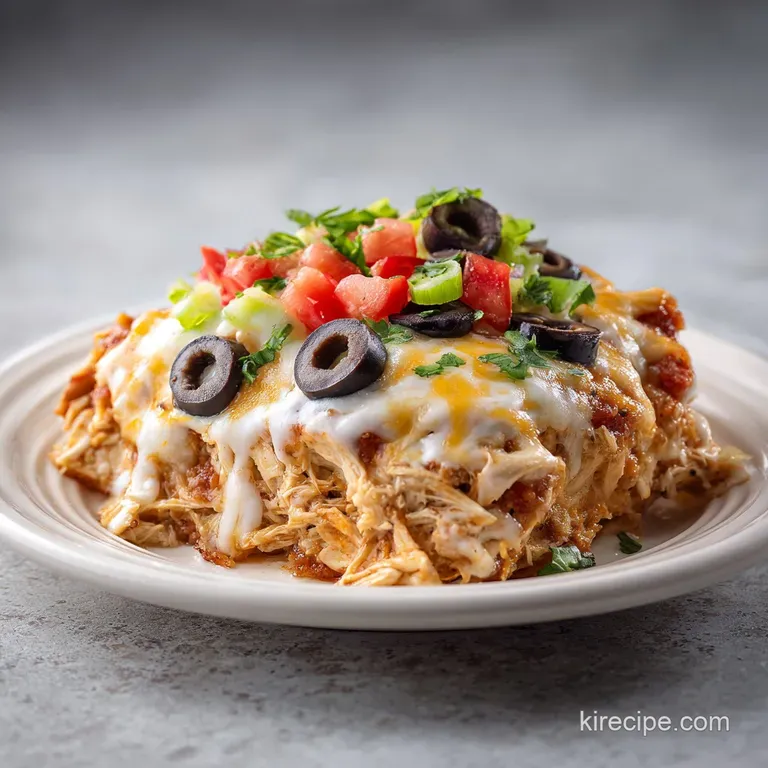
- Preheat the oven to 350°F (175°C). Note: This ensures the casserole starts cooking as soon as it goes in.
- Whisk the sour cream, green enchilada sauce, green chiles, cumin, garlic powder, and onion powder in a large bowl. until the mixture is uniform.
- Combine one cup of that sauce with the shredded chicken in a separate bowl. Note: This coats the protein so it stays moist.
- Spread a thin layer of the remaining plain sauce on the bottom of a 9x13 inch baking dish. until the surface is lightly coated.
- Layer half of the corn tortillas (cut into halves or quarters) over the base. until the bottom is fully covered.
- Distribute half of the saucy chicken over the tortillas in an even layer.
- Sprinkle a generous handful of the cheese blend over the chicken.
- Repeat the layers with the rest of the tortillas, chicken, and remaining sauce.
- Finish with the remaining cheese on top.
- Bake for 30 minutes until the cheese is golden and bubbling.
- Garnish with fresh cilantro and let it sit for a few minutes before slicing.
Fixing Common Casserole Issues
One of the biggest frustrations with a Chicken Enchilada Casserole is the potential for sogginess. If your tortillas turn into a textureless paste, it usually means there was too much liquid or the tortillas were too fresh and soft. Another issue is the sauce "breaking" or separating, which looks oily.
This usually happens if you use low-fat or fat free sour cream, which lacks the stability to hold up under heat.
Why is my casserole watery?
This usually happens because of the chicken or the chiles. If you use canned chicken, make sure it is drained completely. If you're using frozen chicken that you've thawed, pat it dry with paper towels. Excess water from the protein will thin out your sauce during the 30 minutes of baking.
The tortillas are too chewy.
If the tortillas didn't soften enough, you might not have used enough sauce between the layers. The tortillas need to be "bathed" in the liquid to undergo that starch gelatinization. Make sure you are spreading the sauce all the way to the edges of the dish.
| Problem | Root Cause | Solution |
|---|---|---|
| Separated Sauce | low-fat dairy used | Stick to full fat sour cream for heat stability. |
| Dry Chicken | Not pre mixed with sauce | Always toss chicken in a cup of sauce before layering. |
| Rubbery Cheese | Overbaked or pre shredded | Bake only until bubbling; grate your own cheese. |
Common Mistakes Checklist
- ✓ Don't skip the base layer of sauce; it prevents the tortillas from fusing to the pan.
- ✓ Avoid over mixing the chicken once it's sauced, or it will turn into a mushy paste.
- ✓ Let the casserole rest for at least 10 minutes; this allows the layers to "set" so you can cut clean squares.
- ✓ If using flour tortillas, reduce the sauce slightly as they are more absorbent than corn.
- ✓ Ensure your oven is fully preheated; a cold start leads to uneven cooking.
Easy Ways to Scale This
If you are cooking for a smaller crowd, this recipe is incredibly easy to cut in half. Use an 8x8 inch square pan and follow the same layering process. The cook time will stay roughly the same because the thickness of the layers doesn't change much, but start checking it at 20 minutes just in case.
For the egg based components often found in other bakes, you'd have to whisk and split, but here, you just divide the sauce and chicken by weight or volume.
Scaling up for a party is just as simple. You can double the recipe and use two 9x13 dishes. When baking two at once, you might need to add 5-10 minutes to the total time and rotate the pans halfway through to ensure even browning.
I recommend sticking to the 1.5x rule for the spices (cumin, garlic, onion) when doubling, as they can become overpowering in larger quantities.
| Servings | Ingredient Adjustments | Pan Size | Cook Time |
|---|---|---|---|
| 4 people | 0.75 lb chicken, 1 cup sour cream | 8x8 inch | 25-30 mins |
| 8 people | 1.5 lb chicken, 2 cups sour cream | 9x13 inch | 30 mins |
| 16 people | 3 lb chicken, 4 cups sour cream | Two 9x13 inch | 35-40 mins |
Debunking Common Kitchen Myths
One common myth is that you must dip tortillas in hot oil (passillas) to make a "real" enchilada. While that is traditional for rolled versions, it is completely unnecessary for a casserole.
The layering method allows the tortillas to steam and soften within the sauce, achieving a similar texture without the added grease and mess of frying. It's a win for your health and your cleaning schedule.
Another misconception is that the sauce will be too spicy for kids because of the green chiles. Canned mild green chiles are actually quite sweet and earthy, with almost zero "burn." Most of the "heat" in commercial green enchilada sauce comes from vinegar and spices rather than raw pepper heat.
If you're worried, you can always swap half the green chiles for sautéed bell peppers.
Smart Storage and Zero Waste
Your Chicken Enchilada Casserole will stay fresh in the fridge for up to 4 days if kept in an airtight container. In fact, many people (myself included) think it tastes better on day two once the flavors have had a chance to fully marry.
To reheat, I recommend a splash of water or a little extra sauce on top before microwaving to keep it from drying out.
This dish also freezes beautifully. You can freeze the entire casserole (unbaked or baked) for up to 3 months. If freezing unbaked, wrap it tightly in plastic wrap and then aluminum foil. When you're ready to eat, let it thaw in the fridge overnight before baking as directed.
For a zero waste tip, don't throw away those tortilla scraps! If you have extra corn tortillas, cut them into strips, toss them with a little oil and salt, and air fry them at 350°F for 5 minutes for homemade salad toppers.
Best Ways to Serve Your Casserole
While this bake is a meal in itself, a few fresh toppings can really make the flavors pop. I love adding a scoop of cool guacamole or a few slices of fresh avocado. The creamy fat of the avocado complements the tang of the green sauce perfectly.
Some extra lime wedges on the side are also a must; a squeeze of fresh juice right before you eat provides a hit of acid that brightens the whole dish.
If you're looking for side dishes, a simple Mexican slaw with lime vinaigrette or a side of cilantro lime rice works wonders. Since the casserole is quite rich and creamy, you want sides that are crisp and acidic. If you want to keep the theme going for a full feast, you could even serve this alongside a seafood starter like an Ina Garten Cioppino for a surf and turf dinner party. Whatever you choose, just make sure there is plenty of extra cilantro for everyone to grab.
Very High in Sodium
980 mg 980 mg of sodium per serving
(43% 43% of daily value)
The American Heart Association recommends limiting sodium intake to less than 2,300 mg per day, with an ideal limit of less than 1,500 mg per day for most adults.
Tips to Reduce Sodium
-
Choose Low-Sodium Enchilada Sauce-20%
Swap the standard canned green enchilada sauce for a low-sodium version. This is often the biggest contributor to sodium in this recipe.
-
Opt for Reduced Sodium Cheese-15%
Use a reduced sodium blend of Monterey Jack and Sharp Cheddar cheese. While cheese naturally contains sodium, reduced sodium options can make a difference.
-
Rinse Canned Chiles-5%
Drain and rinse the canned diced green chiles under running water before adding them. This can help remove excess sodium from the canning liquid.
-
Boost Flavor with Herbs and Spices
Continue to use aromatic spices like cumin, garlic powder, and onion powder. Consider adding fresh herbs like cilantro, lime juice, or a pinch of red pepper flakes for extra flavor without sodium.
-
Add Acidity for Brightness-5%
Incorporate fresh lime juice into the chicken mixture. The acidity can enhance flavors, making you less reliant on salt.
Estimated Reduction: Up to 45% less sodium
(approximately 539 mg per serving)
Recipe FAQs
Why is my casserole stuck to the bottom of the pan?
You skipped the base layer of sauce. Spreading a thin layer of sauce on the bottom of the 9x13 inch dish is necessary to prevent the tortillas from fusing to the pan surface during the 30-minute bake.
Is it true I should use flour tortillas instead of corn?
No, this is a common misconception. While you can use flour tortillas, you must reduce the amount of enchilada sauce used, as they are significantly more absorbent than corn tortillas and can become soggy.
How to ensure the casserole slices into clean squares?
Rest the dish for at least 10 minutes after removing it from the oven. This allows the cheese and sauce layers to settle, ensuring the structural integrity of your portions when you serve.
How to prevent the shredded chicken from becoming mushy?
Avoid over mixing the chicken once it is tossed with the sauce. If you enjoyed mastering this ingredient preparation, you might apply the same delicate handling logic when prepping the proteins for our Cheesy Chicken Sloppy Joes.
Can I bake this at a higher temperature to save time?
No, stick to the 350°F (175°C) setting. Baking at this specific temperature for 30 minutes ensures the cheese melts into a golden, bubbling top without drying out the chicken or burning the tortilla edges.
How to achieve even cooking throughout the dish?
Preheat your oven fully before placing the dish inside. A cold oven start will lead to uneven cooking, potentially leaving the center of the casserole cool while the edges become overcooked.
Is it necessary to use a specific type of cheese blend?
Yes, use a mix of Monterey Jack and Sharp Cheddar. The Monterey Jack provides superior meltability, while the Sharp Cheddar contributes the necessary savory depth to balance the green chiles and cumin.
Chicken Enchilada Casserole
Ingredients:
Instructions:
Nutrition Facts:
| Calories | 575 kcal |
|---|---|
| Protein | 41 g |
| Fat | 31 g |
| Carbs | 33 g |
| Fiber | 4 g |
| Sugar | 4 g |
| Sodium | 980 mg |
